
Total visibility across the entire facility is eliminating the black hole effect in distribution centers, where assets were once difficult to track with pinpoint accuracy in real time. The global smart warehousing sector is currently undergoing a major transformation, moving away from manual, labor-intensive storage toward digitally integrated ecosystems that function with unprecedented precision. Market intelligence suggests that the industry will grow from its base of $29 billion in 2024 to an estimated $46.42 billion by 2030, driven by a compound annual growth rate of 8.3 percent. This shift represents a fundamental redesign of logistics where artificial intelligence and robotics converge to create facilities capable of autonomous decision-making and real-time optimization. Rather than seeing warehouses as simple storage sheds, modern enterprises view them as high-speed nodes in a digital supply chain. This transition is not merely about replacing people with machines; it is about creating a symbiotic relationship between data and physical movement to meet the crushing demands of a globalized economy. As the industry moves forward from 2026 to 2030, the emphasis will increasingly remain on the integration of these technologies into a single, cohesive unit that can respond to market fluctuations without the need for manual intervention or lengthy downtime for reconfiguration.
The Economic Drivers: E-commerce and Operational Efficiency
The explosion of e-commerce and the rise of omnichannel retail are the primary catalysts for this rapid expansion within the global logistics landscape. Modern consumers expect nearly instant delivery, creating a demand for operational speed that traditional manual processes simply cannot meet in a cost-effective manner. To stay competitive, businesses are increasingly adopting smart warehousing solutions to bridge the gap between order placement and final delivery, effectively shrinking the fulfillment window from days to hours. This pressure is felt most acutely in urban distribution centers where space is at a premium and the volume of individual parcels has surpassed the capacity of legacy sorting systems. Companies are no longer looking for incremental improvements; they are seeking radical shifts in throughput that only automated systems can provide. The ability to handle a massive influx of small, varied orders with perfect accuracy has become the new benchmark for success in the retail sector, forcing even medium-sized enterprises to consider high-level automation strategies to maintain their market share against global giants.
Rising labor costs and the constant need to minimize human error also play significant roles in this transition toward a more automated future. By utilizing vertical space more effectively and streamlining the movement of goods through high-density storage and retrieval systems, smart technologies transform warehouses from static cost centers into strategic assets. These improvements allow for a level of flexibility and responsiveness that is essential in the modern global supply chain, where disruptions can occur without warning. When a facility can operate with minimal light and heat while maintaining peak efficiency, the overhead savings become a powerful incentive for capital investment. Furthermore, the reduction in workplace accidents and the associated insurance premiums provides a secondary economic benefit that often accelerates the return on investment for these technologies. As the workforce demographics shift and specialized labor becomes harder to retain, the move toward autonomous systems provides a necessary buffer against regional labor shortages and the rising costs of traditional warehouse management.
Technological Foundations: Robotics and the Internet of Things
The market is defined by a mix of specialized hardware and the sophisticated software required to manage it effectively across diverse environments. Beyond automated vehicles and sorting systems, there is a growing demand for professional services like system integration and technical support to keep these complex networks running smoothly. Modern businesses are increasingly looking for long-term service partnerships to ensure their automated systems remain agile and optimized for peak performance as their inventory needs evolve over time. This trend has led to the rise of Warehouse-as-a-Service models, where the initial capital expenditure is mitigated by subscription-based software and maintenance agreements. This approach allows companies to deploy state-of-the-art technology without the burden of maintaining an internal team of robotics engineers. The integration phase is often the most critical period, as the software must communicate seamlessly with existing enterprise resource planning systems to ensure that data flows as freely as the physical products themselves.
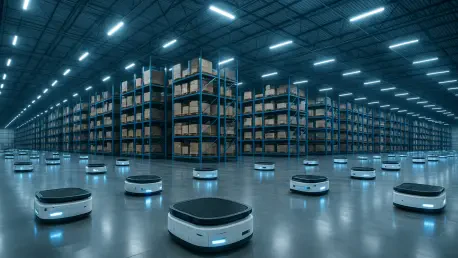
Robotics and automation currently hold the largest market share, with autonomous mobile robots becoming a standard feature in modern logistics hubs. Unlike older, fixed automation systems that required miles of conveyor belts and permanent floor modifications, these mobile units can navigate busy environments without the need for extensive infrastructure. This flexibility supports continuous operations, which significantly increases throughput while reducing the physical strain on human employees who previously spent hours walking miles of warehouse aisles. These robots utilize lidar and advanced computer vision to build dynamic maps of their surroundings, allowing them to avoid obstacles and adapt to changing floor layouts in real time. Because these systems can be deployed in waves, businesses can scale their robotic fleets in proportion to their actual growth, avoiding the risk of over-investing in static machinery that might become obsolete or redundant. This modularity is a key selling point for logistics providers who must remain nimble in a volatile market where consumer trends change by the week.
Intelligent Coordination: Artificial Intelligence and Data Visibility
Artificial intelligence and the Internet of Things serve as the brain and nervous system of these modern distribution facilities. AI uses machine learning to predict maintenance needs and optimize inventory levels, while IoT sensors provide real-time visibility into the location and condition of every asset in the building. Together, these technologies eliminate stock discrepancies and allow managers to respond instantly to any disruptions in the workflow before they escalate into systemic failures. By analyzing historical data patterns, these systems can predict peak demand periods and pre-position inventory closer to the shipping docks, further reducing the time required to fulfill an order. This predictive capability transforms the warehouse from a reactive environment into a proactive one, where the system anticipates needs rather than just responding to them. The level of granularity provided by IoT sensors—tracking everything from the temperature of perishable goods to the battery health of an autonomous forklift—ensures that every resource is utilized to its maximum potential.
The smart warehousing market is further distinguished by its focus on predictive operations and total visibility across all levels of the supply chain. The seamless coordination between human labor and robotic fleets allows for a highly orchestrated environment that can scale quickly to meet seasonal demands without the traditional headaches of temporary hiring and training. As cloud-based platforms continue to evolve, businesses can expand their capabilities without undergoing massive, localized IT overhauls, making these technologies more accessible than ever to a wider range of industries. This democratization of high-tech logistics means that smaller players can now compete with larger corporations by leveraging the same data-driven insights and automation tools. The result is a more resilient global economy where the flow of goods is less susceptible to local bottlenecks. By centralizing the management of multiple facilities through a single digital interface, stakeholders can gain a holistic view of their entire operation, enabling better decision-making at the executive level and more efficient execution on the warehouse floor.
Strategic Leadership: Regional Trends and Competitive Moves
North America is expected to remain the dominant market through 2030, thanks to the early adoption of emerging tech and a robust logistics infrastructure that spans the continent. The region is home to many of the world’s leading technology providers and e-commerce giants who act as the main drivers of innovation, setting the standard for global logistics practices. Favorable government policies and heavy investment in digital transformation further solidify North America’s leadership in the sector, as companies look to reshore manufacturing and shorten their supply chains. The concentration of venture capital in tech hubs has also spurred the growth of numerous startups focusing on niche automation challenges, such as automated trailer unloading and high-speed robotic picking. This ecosystem of innovation ensures that the North American market remains at the forefront of the industry, constantly pushing the boundaries of what is possible in automated material handling and data-driven warehouse management.
The competitive landscape features a blend of industrial heavyweights and specialized software firms that are constantly vying for market dominance through innovation. Major players like Dematic and SSI Schaefer focus on high-precision robotics and integrated management software tailored for industries like pharmaceuticals and retail, where accuracy and speed are non-negotiable. These companies often use strategic acquisitions to provide comprehensive, end-to-end solutions that cover all aspects of warehouse automation, from the initial design phase to long-term operational support. By acquiring smaller firms with specialized technology in areas like machine vision or sensor fusion, these industry leaders can offer a unified platform that reduces the complexity for the end-user. This consolidation trend is expected to continue as the market matures, leading to more standardized protocols and better interoperability between different types of hardware. For the end-user, this means a more cohesive experience where various automated components work together as a single, unified machine.
Conclusion: Implementing Resilient Warehousing Strategies
The global push toward smart warehousing reached a critical tipping point as organizations recognized that traditional methods could no longer sustain the velocity of modern trade. Businesses that successfully transitioned to these automated environments focused heavily on the integration of data and physical movement, ensuring that every piece of hardware served a specific operational goal. They prioritized the adoption of flexible robotics and scalable software platforms that allowed for rapid expansion without the need for structural changes to their facilities. By investing in professional services and long-term maintenance partnerships, these companies ensured their systems remained functional and optimized against the backdrop of shifting consumer demands. The transition was characterized by a move toward predictive maintenance and real-time inventory tracking, which effectively eliminated the inefficiencies that once plagued large-scale distribution centers. Decision-makers learned that the true value of a smart warehouse lay not in the individual machines, but in the intelligent orchestration of those machines through advanced AI and cloud-based management systems.
For organizations looking to capitalize on this $46 billion market opportunity, the next logical steps involved a thorough audit of current workflows to identify the most impactful areas for automation. Rather than attempting a complete overnight overhaul, successful leaders implemented modular solutions that addressed specific bottlenecks, such as order picking or outbound sorting, before scaling these systems across the entire facility. It became essential to foster a culture of technical literacy within the workforce, preparing employees to work alongside robotic systems rather than in competition with them. Companies also looked toward diversifying their technology providers to avoid vendor lock-in, while demanding higher standards for data interoperability between different software suites. Looking forward, the focus remained on sustainability and energy efficiency, as automated systems offered the ability to reduce the carbon footprint of logistics operations through optimized routing and lower facility energy requirements. The journey toward a fully autonomous warehouse was recognized as an iterative process, requiring constant refinement and a willingness to embrace the latest developments in machine learning and sensor technology to stay ahead of the competition.