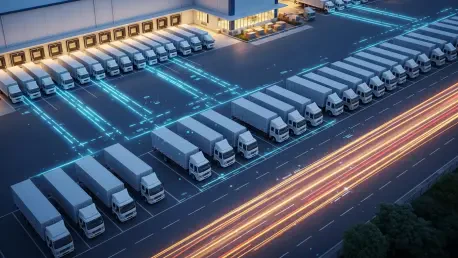

The rhythmic hum of a delivery motorcycle weaving through Mumbai traffic is no longer the primary heartbeat of Indian trade; it is merely the final mechanical echo of a silent, digital nervous system orchestrating every movement from behind a screen. As the nation grapples with the immense logistical challenges of its vast and varied geography, the measure of a company’s strength has shifted away from the sheer number of vehicles in its fleet and toward the depth of the algorithms that manage them. For businesses operating within this high-pressure environment, the transition from traditional, labor-heavy shipping to a data-centric model is no longer a choice. It has become the fundamental prerequisite for surviving the intense shift toward near-instantaneous fulfillment.
Beyond the Delivery Bike: Why Software Is the New Engine of Indian Commerce
The physical act of transporting a package from point A to point B remains a logistical necessity, but the strategic advantage in the current market belongs to those who control the flow of information. In the past, success was defined by the density of a distribution network or the reliability of a driver, yet today, those physical assets are only as effective as the software that directs them. Artificial intelligence has emerged as the new engine of commerce, allowing for a strategic pivot that prioritizes precision over brute force. This technological layer acts as a vital bridge between the slow-moving supply chains of the past and the hyper-responsive systems required to satisfy contemporary consumer expectations.
As the Indian market continues to mature, the focus has moved toward a more sophisticated orchestration of resources. Logistics providers are realizing that adding more motorcycles to a congested city does little to improve delivery times if the inventory is not correctly positioned or the route is not optimized. By investing in digital infrastructure, companies can manage the inherent volatility of the subcontinent’s trade routes with unprecedented agility. This shift represents a move toward a “software-first” mentality, where every physical movement is preceded by a calculated digital decision, ensuring that speed is achieved through intelligence rather than simply through increased labor.
The Decentralization Crisis: Why Traditional Supply Chains No Longer Suffice
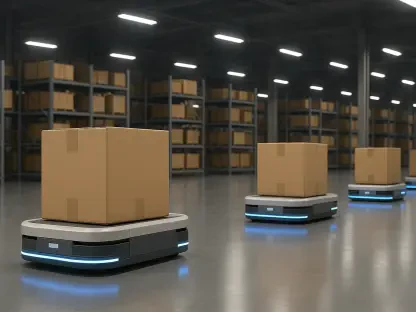
The rapid ascent of quick commerce has fundamentally broken the traditional, centralized warehousing model that served the industry for decades. Historically, goods were housed in massive regional distribution centers located far from urban centers, requiring a multi-day journey to reach the end consumer. However, the modern consumer is no longer willing to wait for days or even hours for their purchases. This shift has forced a radical transformation of the landscape, turning last-mile delivery stations into hyper-localized mini-fulfillment centers. This move toward proximity is essential for speed, but it introduces a layer of complexity that manual planning cannot possibly navigate.
Managing inventory across hundreds of these localized hubs creates an exponential challenge for logistics managers. When thousands of unique products are distributed across a decentralized network, the risk of stockouts or overstocking increases significantly. Human planners, regardless of their experience, cannot effectively balance inventory levels across such a fragmented system while also accounting for the unpredictable nature of urban demand. Without digital intervention, the dream of decentralized, rapid fulfillment quickly turns into an operational nightmare of wasted space and missed deliveries. The crisis of decentralization has thus made the adoption of advanced coordination tools an absolute necessity for anyone hoping to maintain a competitive edge.
Navigating Chaos With Hyper-Local Forecasting and Address Intelligence
Artificial intelligence is effectively solving these high-stakes hurdles by predicting consumer behavior at a granular, hyper-local level. By analyzing demand patterns across individual pin codes and specific times of the day, AI models allow brands to anticipate what a neighborhood will need before the orders are even placed. This precision allows for the optimization of inventory placement, which drastically reduces the amount of time goods spend sitting in a warehouse. Consequently, this frees up working capital and ensures that the delivery journey starts just a few miles from the buyer’s doorstep, turning the chaos of urban demand into a predictable and manageable flow.
Furthermore, specialized AI-driven address engines are finally overcoming the lack of standardized addressing systems in India. By interpreting billions of historical data points and mapping them against imprecise or fragmented address descriptions, these systems can pinpoint locations with remarkable accuracy. This technological layer ensures that the middle and last miles of the delivery process are connected through dynamic orchestration, rather than being hindered by geographical ambiguity. The ability to shift resources in real-time to meet unpredictable spikes caused by monsoon weather or local festivals has transformed logistics from a rigid process into a fluid, responsive system that thrives on data.
The “Fast Commerce” Philosophy: Expert Perspectives on Sustainable Speed
Industry leaders, including ElasticRun CEO Sandeep Deshmukh, suggest that the future of the sector lies in “fast commerce” rather than just the narrow focus of quick commerce. While quick commerce is often synonymous with the ten-minute delivery of groceries, fast commerce represents a more sustainable and broader evolution. It prioritizes the delivery of a wide range of product categories with same-day or next-day efficiency, moving beyond perishables to include electronics, fashion, and home goods. The emerging consensus among experts is that the real competitive advantage is not necessarily delivering faster, but delivering smarter and more reliably across diverse categories.
This maturity in the industry reflects a move toward intelligent, distributed inventory management where the reliability of an algorithm is viewed as being just as critical as the reliability of a delivery vehicle. Experts argue that the pursuit of speed must be balanced with operational sustainability. By focusing on “fast commerce,” companies can build a model that supports high fulfillment accuracy and low operational costs simultaneously. This philosophy acknowledges that true market leadership is achieved by creating a system that can scale across hundreds of cities without the need for an infinite supply of manual labor, relying instead on the predictive power of a well-trained machine learning model.
Strategies for Building a Scalable and AI-Led Logistics Infrastructure
To achieve operational excellence in this new landscape, firms must apply Large Language Models to their internal processes, automating the creation and maintenance of the software systems that govern their physical expansion. A successful framework involves bypassing traditional, multi-layered distribution networks that often slow down the movement of goods and inflate costs. By allowing brands to offer rapid delivery directly through their digital storefronts, companies can create a more direct and efficient path to the consumer. This requires a robust orchestration engine that monitors the entire network simultaneously, ensuring that every fulfillment center and delivery partner is working in perfect harmony.
The evolution of the Indian supply chain reached a critical milestone as businesses finally moved away from purely physical metrics toward algorithmic precision. This transformation signaled a victory for data-driven commerce, ensuring that speed and sustainability were no longer at odds. The shift in organizational mindset established a new benchmark for global logistics performance, as the industry realized that the only path forward involved a deep integration of predictive intelligence. By the time the transition was complete, the logistical network functioned as a seamless, automated entity that anticipated needs and solved problems before they even manifested. The era of manual logistics was officially relegated to history, replaced by a sophisticated digital architecture that prioritized efficiency above all else.