
Rohit Laila is a seasoned veteran in the logistics and supply chain sector, having spent decades optimizing how goods move and stay stored across global markets. His expertise is particularly relevant today as we discuss a massive warehouse project in Wolverhampton that pushes the boundaries of vertical storage and resource efficiency. We explore how engineering precision, such as reaching heights of 11,500 mm, transforms a standard warehouse into a high-density production hub. The conversation covers the technicalities of high-rise racking, the logistical orchestration required for tight deadlines, and the innovative reuse of materials to enhance operational sustainability.
When designing a facility that reaches 11,500 mm in height, what are the primary engineering challenges you must overcome to ensure both safety and operational speed?
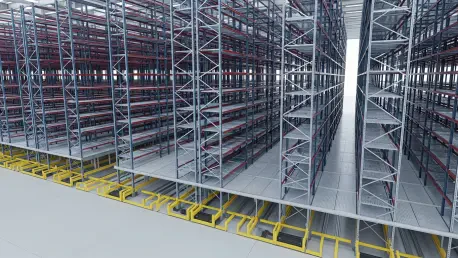
To reach a height of 11,500 mm, you have to think about more than just stacking steel; you are balancing the physical weight of 5,370 pallet positions against the need for total accessibility. In this project, the engineering team had to ensure that while we maximized the building’s vertical footprint, we did not sacrifice the selectivity that allows a forklift operator to grab any Euro pallet instantly. You can almost feel the scale of the operation when you stand at the base of these racks, knowing that ground-floor picking locations are integrated to keep daily operations agile and responsive. We also prioritized a safety-first environment by installing mesh decking, rack-end barriers, and upright protectors to shield both the inventory and the people navigating those high-altitude aisles.
The project featured a specialized solution involving the reuse of previously supplied components; how does this approach change the typical warehouse installation process?
This was far from a standard setup because the engineering team developed a specialized solution to integrate previously supplied beams into the new configuration. It adds a significant layer of complexity to the design phase because you are not just ordering new parts; you are auditing existing inventory to ensure it meets the structural demands of a facility this size. This customized approach is incredibly rewarding because it reflects a commitment to efficiency and resourcefulness that is often missing in large-scale industrial builds. It requires a deep level of collaboration between the engineers and the installation crews to ensure those older components sync perfectly with the new uprights and safety structures without compromising the integrity of the 405,000 m² facility.
Completing a project of this scale within a seven-week window is a significant feat; how do you manage the logistics of delivery and on-site installation to meet such a tight schedule?
Speed is of the essence in the chemical and adhesive industry, where production delays can ripple through the entire construction supply chain, so we had to be incredibly precise. Managing a three-week on-site installation program within a seven-week total timeline from the order stage requires a symphony of logistics where every delivery and technician is perfectly synchronized. You have to visualize the massive space not just as a floor plan, but as a living site where components arrive and are assembled in a seamless, non-stop flow. This success really highlights the value of the partnership between the racking manufacturer and the mezzanine experts, ensuring that everything from the first beam to the last protector is in place without a single day of wasted movement.
What is your forecast for the future of high-density warehouse solutions?
I believe we are entering an era where verticality and modular flexibility will be the twin pillars of warehouse design across the globe. As land becomes more expensive and scarce, reaching that 11,500 mm height will become the standard rather than the exception for industry leaders who need to maximize every inch of their 405,000 m² footprint. We will see more facilities that do not just store goods but act as hybrid production hubs, utilizing every square meter to support complex, agile operations that can change on a dime. The future belongs to those who can combine this physical height with smart, sustainable engineering—like the reuse of structural materials—to create storage solutions that are as robust as they are adaptable for long-term growth.