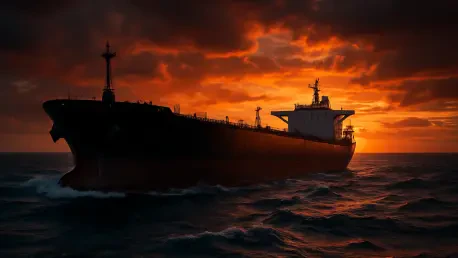

The cost to move a single Very Large Crude Carrier from the Middle East to Asia has skyrocketed from $5.4 million to a staggering $36 million. This unprecedented surge in freight rates serves as a visceral reminder of how the geopolitical crisis surrounding Iran and the subsequent closure of the Strait of Hormuz have shattered the traditional energy landscape. With nearly 20 percent of the world’s hydrocarbon supply previously flowing through this narrow corridor, its sudden unavailability has forced a fundamental restructuring of global logistics. What used to be a routine commercial service has transformed into a high-stakes strategic battlefield where nations and corporations are no longer just competing for profit, but for the very survival of their energy supply chains. This radical shift has triggered an aggressive scramble for tanker capacity that transcends typical market behavior, as the scarcity of available vessels creates a volatile environment where prices are no longer tethered to historical norms.
Shift in Strategy: The Transition to Sovereign Ownership
Historically, the maritime shipping industry operated on a flexible chartering model, allowing energy conglomerates and oil-producing nations to rent vessel capacity based on fluctuating demand. This liquid market provided efficiency and minimized capital expenditure; however, the current regional instability has rendered this predictability obsolete. Today, the reliability of the charter market has effectively evaporated, leading to a profound shift where owning a fleet is now viewed as an essential pillar of national security. When the physical movement of a nation’s primary export can no longer be guaranteed by third-party operators, the decision to acquire tankers moves from the CFO’s office to the halls of sovereign power. This “just-in-case” philosophy has sparked a fierce race among major exporters to secure their own hull capacity. Industry analysts observe that this transition is not merely a trend but a permanent structural change designed to bypass the volatility and prohibitive costs of the modern chartering environment.
By pivoting toward direct ownership, state-owned entities are effectively insulating their economies from the whims of a fractured maritime market. This movement is particularly evident among Middle Eastern and Asian powers that cannot afford to have their resources stranded at shore due to a lack of available transport. The strategic value of a vessel now matches the value of the crude it carries, as a ship under national control ensures that trade can continue even when traditional insurance and logistics frameworks fail. This departure from the standard commercial logic has led to a consolidation of assets, where the ability to maintain a continuous flow of energy takes precedence over short-term financial optimization. As more nations realize that maritime access is no longer a given, the demand for tankers has decoupled from actual oil production figures, instead becoming a function of strategic stockpiling and logistical independence, ensuring that those who control the hulls control the flow of energy.
Valuation Anomalies: The Premium on Immediate Deployment
The urgency created by the energy crisis has produced a striking economic anomaly within the shipping sector, where second-hand tankers are currently trading at much higher prices than brand-new builds. Standard financial logic suggests that newer, more efficient vessels should command a higher price tag, yet the immediate need for transport has inverted this relationship. Currently, a second-hand Very Large Crude Carrier (VLCC) is valued at approximately $182 million, representing a staggering $52 million premium over the $130 million cost of a new order. Similar disparities are being observed in the Suezmax and Aframax sectors, where used vessels are commanding premiums of $41 million and $20 million, respectively. This price inversion highlights a “buy now” mentality among global exporters who are unwilling to wait for shipyards to catch up with the sudden demand. In a world where every day of delay results in millions in lost revenue, the ability to move oil today is far more valuable than a fuel-efficient ship in the future.
The bottleneck in global shipyards further exacerbates this trend, as the lead time for a new vessel delivery now stretches between two and three years. This multi-year delay is a luxury that modern energy exporters simply cannot afford given the volatility of the Strait of Hormuz and the precarious state of global energy routes. Consequently, the existing global fleet has become the target of intense bidding wars, driving valuations to levels that would have seemed unthinkable just a few years ago. This prioritization of immediacy over efficiency reflects a broader market-wide consensus that the current high-return environment justifies the massive premiums paid for older assets. Buyers are choosing to absorb the higher maintenance and fuel costs associated with older ships because the alternative—having no way to export their product—is far more catastrophic. This trend has fundamentally altered the secondary market, turning aging tankers into some of the most sought-after assets in the global economy and creating a windfall for those who held large fleets.
Navigating Risks: Operational Challenges and Market Rivals
Operating in the shadow of the Iranian crisis has pushed maritime logistics into uncharted and high-risk territory, characterized by the adoption of “dark” tactics to maintain the flow of hydrocarbons. To bypass blockades or avoid detection in volatile zones, many ship operators have resorted to deactivating their satellite-based Automatic Identification Systems (AIS) and conducting ship-to-ship cargo transfers in open water. While these maneuvers allow for a degree of operational continuity, they are fraught with legal and environmental risks that have significantly increased the complexity of maritime trade. The financial burden is immense, with TotalEnergies estimating the cost of a single voyage through these high-risk areas at roughly $20 million. Beyond these physical risks, the scramble for capacity has sparked intense competition between state enterprises and private shipping magnates like South Korea’s Sinokor, which acquired 70 vessels this year, and ADNOC, which spent $1.1 billion on nine VLCCs to secure its own supply chains.
The radical transformation of the maritime industry reflected a permanent shift from a “just-in-time” logistics model to a “just-in-case” ownership strategy. Major oil producers and sovereign states concluded that relying on a volatile charter market was no longer a viable path toward energy security. With Brent crude maintaining a high valuation and primary maritime chokepoints remaining restricted, the tanker market stayed in a state of hyper-inflation where vessels became as valuable as the commodities they carried. Industry leaders moved to integrate their supply chains vertically, ensuring that transportation assets were controlled directly rather than leased through third parties. This strategic pivot provided a clear roadmap for future energy logistics, emphasizing that control over the physical means of transport remained the ultimate guarantor of national economic resilience. Future considerations necessitated investing in decentralized fleet management and secondary transit corridors to mitigate the risks of future blockades.