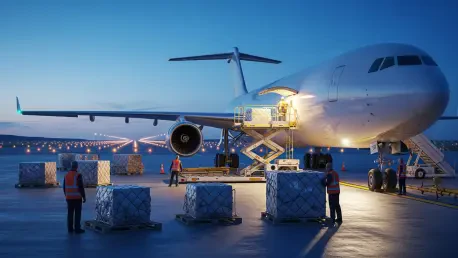

The sight of a three-engine McDonnell Douglas MD-11 climbing into the morning horizon has become an increasingly rare spectacle in an aviation industry that is now dominated by ultra-efficient twin-engine jets. While many competitors have pivoted toward newer, more fuel-efficient airframes, FedEx Express has chosen a different path by extending the operational lifespan of its MD-11 fleet until 2032. This decision represents a calculated gamble that seeks to maximize the utility of heavy-lift assets that are already fully paid for, even as the global shipping landscape shifts toward more diverse delivery timelines. By bucking the trend of immediate retirement for legacy tri-jets, the company is attempting to carve out a niche in a market that prioritizes volume and reliability over the sheer speed of overnight express services. This strategy requires a delicate orchestration of engineering precision, financial discipline, and logistical reimagining to remain viable.
Overcoming Structural Vulnerabilities: Enhancing Fleet Safety
Restoring confidence in the MD-11 required addressing a series of significant technical risks that once threatened to ground the entire three-engine fleet permanently. The primary concern centered on a critical structural vulnerability involving engine pylon cracks, which presented a risk of catastrophic engine separation if left unaddressed. Following an incident where an engine assembly detached during a takeoff roll, engineering teams from Boeing and the Federal Aviation Administration collaborated to develop a comprehensive reinforcement solution. This fix involves a sophisticated retrofit of the pylon structures to withstand the high-torque stresses inherent in the aircraft’s powerful tail-mounted and wing-mounted engines. FedEx has committed to a systematic rollout of these upgrades across its remaining heavy lifters to ensure every plane meets the most modern safety benchmarks. This rigorous approach is essential for maintaining operational integrity in a high-stakes industry.
The physical execution of these safety upgrades has necessitated a massive, multi-continental maintenance operation that tests the limits of the company’s technical infrastructure. Specialized crews are tasked with stripping down massive engine mounts and transporting critical components to primary maintenance hubs located in Memphis and Indianapolis. These facilities have been transformed into high-throughput repair centers where technicians perform precision bearing replacements and structural welding under strict quality controls. The timeline for these repairs is incredibly tight, as the company aims to have two dozen modernized heavy lifters fully operational for the surge in global air freight demand during the peak shipping months. By centralizing these complex repairs, the logistics giant can maintain a higher degree of oversight and ensure that each refurbished aircraft adheres to a uniform standard of airworthiness, effectively extending the service life of a jet.
Navigating the Financial Intersection: Legacy and Modern Fleets
While the MD-11 is seeing its service life extended, the broader fleet strategy remains anchored in a philosophy of aggressive financial discipline and operational efficiency. The company has recorded significant write-downs totaling hundreds of millions of dollars as it moves to retire older, less efficient aircraft like the Boeing 757 and the Airbus A300. These retirements are not merely about aging airframes but are part of a larger effort to eliminate underused capacity that bloats overhead costs during periods of fluctuating global demand. By consolidating its mainline operations around a leaner selection of aircraft types, the organization can reduce the complexities associated with parts inventories and specialized pilot training. This shift marks a transition toward a more agile business model where every asset in the sky must justify its presence through high utilization rates and a clear contribution to the bottom line, leaving no room for sentimental attachment to legacy metal.
Integration of modern freighters like the Boeing 767-300 continues at a steady pace to provide a baseline of fuel efficiency that older models simply cannot match on standard routes. However, the MD-11 retains a unique role in this ecosystem because its massive internal cargo volume and lifting capacity are difficult to replicate with smaller, mid-range twin-jets. For certain international lanes that require the transport of oversized pallets or exceptionally heavy machinery, the older three-engine jets remain the most cost-effective tool available. The financial advantage lies in the fact that these aircraft are fully depreciated, meaning the company avoids the massive capital expenditures associated with purchasing brand-new heavy freighters. By blending refurbished legacy jets with a growing fleet of modern aircraft, the company achieves a balance of high-volume capability and overall fuel economy, ensuring that the global network remains both powerful and fiscally responsible.
Capturing Growth: The Global Deferred Cargo Market
The strategic logic behind maintaining the MD-11 is increasingly tied to the explosive growth of the deferred air cargo market, a sector that is now valued at approximately $90 billion. This market segment caters to shippers who require the reliability of air transport but do not necessarily need the lightning-fast delivery times associated with premium express services. By moving away from a rigid overnight model, FedEx can utilize its heavy-lift capacity to transport non-urgent freight on more flexible schedules that optimize fuel burn and labor costs. This approach has proven particularly attractive to high-value industries such as global pharmaceuticals, automotive manufacturing, and consumer electronics, where consistency in the supply chain is more important than a few hours of transit time. Utilizing older aircraft for these deferred routes allows the company to capture a massive share of the international trade market while maintaining a higher profit margin on each pound of cargo.
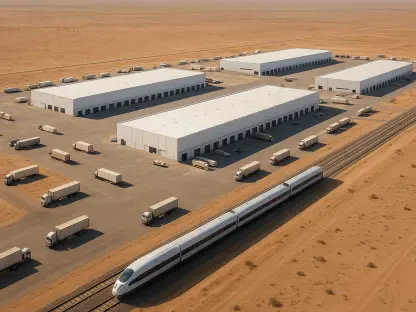
This evolving logistics framework relies heavily on a sophisticated truck-fly-truck system that integrates aerial routes with ground transportation networks more seamlessly than ever before. Under this model, heavy loads are transported by air during daylight hours or off-peak periods, with road transport handling the initial and final legs of the journey to maximize efficiency. This system reduces the pressure on airport hubs during the traditional nighttime sorting peaks and allows the company to offer a more diverse range of pricing tiers to its global customer base. The MD-11 serves as the backbone of this operation, providing the heavy-lift middle mile that connects international manufacturing centers with domestic distribution points. By leveraging the aircraft’s immense payload capacity in a less time-sensitive environment, the company has found a way to make aging technology a key driver of modern revenue growth, ensuring that its global logistics footprint remains competitive.
The decision to maintain a legacy fleet proved to be a pivotal moment in the evolution of global logistics, as it balanced technical ingenuity with market necessity. Industry analysts observed that the successful mitigation of structural risks allowed these aircraft to serve as a bridge between the era of high-speed express and the new reality of high-volume deferred cargo. Stakeholders recognized that specialized maintenance and strategic route planning transformed what were once considered liabilities into essential profit centers. Moving forward, the lessons learned from this operation suggested that organizations should prioritize asset versatility over simple modernization. Companies found that a hybrid fleet composed of both cutting-edge technology and well-maintained legacy assets provided the necessary resilience to withstand economic volatility. Ultimately, the focus shifted toward maximizing the return on existing infrastructure while slowly transitioning to a more sustainable, long-term aviation strategy.