
The rugged, mountainous terrain of Southeast Asia, once a barrier to international commerce, is now the foundation of a sophisticated railway network that redefines the geopolitical identity of Laos from a secluded state to a central logistical artery. This shift represents a calculated move to capitalize on the increasing volatility of global maritime trade routes, which have recently faced unprecedented disruptions. As traditional sea lanes through the Suez Canal and the Malacca Strait grapple with congestion and security risks, the emergence of an overland alternative through the Indochinese Peninsula offers a compelling narrative of adaptation. By positioning itself as a land-linked rather than landlocked nation, Laos is effectively shortening the distance between the manufacturing powerhouses of East Asia and the vast consumer markets of Europe. This strategic pivot does not merely involve laying down tracks; it reflects a broader ambition to integrate into the global supply chain as a reliable, high-speed conduit that bypasses the historical limitations of maritime-dependent trade. The transformation is already yielding results as logistics firms seek more predictable transit times to stabilize their operations in an era of global uncertainty.
Establishing the Legal Framework: A Foundation for Connectivity
To ensure that the physical tracks translate into seamless trade, the government of Laos has prioritized the establishment of a robust legal and regulatory environment through international cooperation. By formally joining the Dushanbe Accord and the Organisation for Railway Cooperation (OSJD), the nation has adopted a standardized set of rules that governs cross-border rail traffic across thirty different member states. This move is critical because it addresses the soft infrastructure requirements that often act as a bottleneck in international logistics. Previously, moving goods across multiple borders required navigating a patchwork of conflicting technical standards and customs protocols, which added significant time and cost to every shipment. With the adoption of these unified standards, trains can now transit from the heart of Southeast Asia through Central Asia and into the European Union under a single legal regime. This harmonization reduces the bureaucratic friction at border crossings, allowing for faster customs clearance and ensuring that technical specifications, such as signaling and safety protocols, are consistent across the entire length of the transcontinental journey.
Furthermore, these international agreements provide a level of legal certainty that is essential for attracting large-scale foreign investment in the logistics sector. Multinational corporations are more likely to commit to long-term shipping contracts when they know that the transit rules are governed by transparent, internationally recognized treaties rather than unpredictable local regulations. This legal integration also facilitates the development of intermodal transport solutions, where rail is seamlessly linked with trucking and air freight. By aligning its national laws with those of the OSJD, Laos has effectively created a “common language” for trade that allows it to communicate with global markets on equal footing. This regulatory modernization is a prerequisite for the high-tech logistics ecosystem that the country aims to build, including the implementation of digital manifests and automated tracking systems. As more nations in the region look toward overland alternatives, the proactive stance taken by Laos in securing these legal foundations serves as a template for how smaller, inland nations can leverage international law to overcome geographic constraints.
Strategic Projects: Linking the Pacific to the Heart of Europe
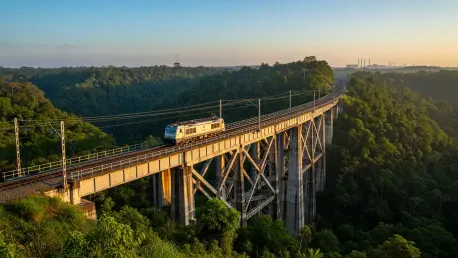
The cornerstone of this logistical revolution is the Laos-China Railway, a massive engineering feat that stretches from the Chinese border to the capital city of Vientiane. Since it became operational, this line has served as a critical proof of concept, demonstrating that modern, high-capacity rail can thrive even in the most challenging geographical conditions. The project required the construction of hundreds of tunnels and bridges to navigate the dense jungles and steep mountain ranges of northern Laos, but the resulting infrastructure has completely changed the country’s economic geography. It has provided the first direct link between the agricultural and manufacturing sectors of Laos and the vast railway network of China, which in turn connects to the Trans-Siberian and Trans-Caspian corridors. This connection means that goods produced in Southeast Asian special economic zones can reach cities like Moscow, Warsaw, or Duisburg without ever touching a cargo ship. The success of this initial line has stimulated domestic industry and encouraged the development of new industrial parks along the rail corridor, turning previously isolated provinces into burgeoning trade zones.
Building on the momentum of the northern connection, the country is now turning its attention toward the east with the highly anticipated Laos-Vietnam Railway. With construction scheduled to begin in 2026, this ambitious project will link the existing Vientiane terminal to the deep-water port of Vung Ang on the Vietnamese coast. This eastern extension is a game-changer because it provides a direct outlet to the South China Sea, effectively turning the Laotian rail network into a bridge between the Pacific and Indian Oceans. Once this line is fully operational by 2030, manufacturers in central Vietnam will have a faster, more direct route to send their products through Laos and China to European customers, bypassing the long and often congested maritime route around the Malay Peninsula. This project represents a vital piece of the regional integration puzzle, as it creates a multi-directional hub where goods can flow north to China, east to the sea, and south toward Thailand. The development of this corridor ensures that the country is not just a transit point for Chinese goods, but a central node in a truly regional network that benefits all of its neighbors.
Economic Advantages: Speed and Predictability in Global Supply Chains
The primary driver behind the shift toward rail is the significant reduction in transit times compared to traditional ocean freight. While a standard cargo ship may take anywhere from thirty-five to forty-five days to travel from a Southeast Asian port to a destination in Northern Europe, the rail corridor through Laos can complete the same journey in roughly two to three weeks. This drastic reduction in time is a critical advantage for companies operating on just-in-time manufacturing models or those dealing with high-value, time-sensitive products such as electronics and automotive components. In a global economy where speed translates directly into competitive advantage, the ability to shave weeks off a delivery schedule allows businesses to react more quickly to market demands and reduce the amount of capital tied up in transit. Furthermore, the rail route offers a level of predictability that maritime shipping currently struggles to match, as it is less susceptible to the seasonal weather patterns and port congestion that frequently disrupt sea lanes.
In addition to speed, the rail corridor provides a safer and more stable environment for high-value cargo that might be at risk in certain maritime passages. Geopolitical instability in key shipping lanes and the persistent threat of piracy in specific regions have made many logistics managers wary of relying solely on the sea. Rail transport, by contrast, moves through relatively stable inland territories where security can be more tightly managed and monitored. This makes it an ideal choice for the transport of high-end consumer goods, precision machinery, and specialized chemicals that require consistent handling and tracking. The economic benefits also extend to the environmental realm, as modern electric rail systems typically have a lower carbon footprint per ton of cargo compared to heavy fuel oil-powered container ships. As global corporations face increasing pressure to meet stringent sustainability targets, the rail hub in Laos offers a greener alternative that aligns with the broader push toward decarbonizing the global supply chain. This combination of efficiency, security, and sustainability makes the overland route an increasingly attractive proposition for the world’s leading brands.
Shifting Geopolitical Influence: Laos as a Continental Crossroads
The physical transformation of the Laotian landscape is mirrored by a significant shift in the region’s geopolitical and economic power dynamics. By evolving into the “spine” of a continental transport network, the nation is attracting a level of foreign direct investment that was previously unthinkable for a landlocked country. Major logistics companies, warehousing firms, and manufacturing giants are setting up operations in Laos to take advantage of its central position. This influx of capital is not limited to transport infrastructure but extends into energy, telecommunications, and urban development, as the rail corridors create demand for a whole suite of supporting services. As the country becomes more integrated into the global economy, its diplomatic leverage increases, as its neighbors now rely on the Laotian rail system to facilitate their own trade. For instance, Thailand has seen the benefit of connecting its northeastern provinces to the rail hub, providing Thai exporters with a faster route to China and beyond. This interdependence fosters a more resilient regional trade network where cooperation becomes a matter of economic necessity.
This new role as a crossroads for international trade also helps to alleviate the pressure on overcrowded coastal ports in neighboring countries. By offering an alternative inland path, the rail hub helps to distribute the volume of global trade more evenly across the region, reducing the bottlenecks that often occur at major maritime gateways. This diversification of trade routes is essential for building a more robust global supply chain that can withstand localized shocks or regional conflicts. The emergence of Laos as a logistics powerhouse demonstrates that a nation’s geographic location does not have to be a permanent disadvantage if the right infrastructure and partnerships are in place. Instead of being trapped between larger neighbors, the country has positioned itself as the essential link that connects them all. This strategy has turned a historical weakness into a modern strength, creating a stable economic foundation that will support the nation’s growth for decades to come. The transformation is a testament to the power of strategic planning and the ability of a small nation to redefine its place in the world through infrastructure.
Building the Future: Integrated Logistics and the 2030 Vision
The strategy for the remaining years of this decade shifted from the initial phase of laying tracks to the complex task of building a comprehensive logistical ecosystem. Stakeholders recognized that physical rails alone were insufficient, so they focused on developing a network of advanced freight terminals and inland “dry ports” that could handle the massive volume of transcontinental trade. These facilities were designed to function as high-tech hubs, incorporating automated sorting systems and blockchain-based tracking to ensure that every container was accounted for in real time. The integration of third-party logistics companies became a priority, as these firms brought the expertise needed to manage complex multi-modal shipments. By creating these sophisticated transit points, the nation transformed simple railway stations into major economic engines that drove domestic growth through warehousing, distribution, and value-added services. The vision was to ensure that the country did not just witness goods passing through but actively participated in the value chain, creating thousands of skilled jobs for its population.
Looking toward the early 2030s, the groundwork was laid to ensure the rail system remained a permanent and powerful alternative to traditional maritime trade routes. Policymakers leaned into digital transformation by implementing unified electronic customs systems that eliminated the need for paper-based documentation at every border. This commitment to modernization was supported by international initiatives such as the Belt and Road, which provided the long-term financing necessary to maintain and expand the network. Investors responded by pouring capital into local industries that could now reach global markets with ease, effectively diversifying the national economy away from a reliance on raw material exports. The transition required a multifaceted approach that prioritized international cooperation over isolationist policies, ensuring that the rail hub remained open and efficient for all global partners. These actions successfully redefined the movement of goods across the Eurasian continent, proving that through technology and strategic partnership, geographic limitations were effectively overcome. Over the coming years, the focus will remain on optimizing these routes to serve a more resilient and interconnected global economy.