
The global maritime industry stands at a critical juncture where the traditional reliance on heavy fuel oil must give way to radical energy alternatives to meet decarbonization targets that once seemed unreachable. The International Atomic Energy Agency (IAEA) recently introduced the Agency-led Task Force on Nuclear-Powered Ships, known as ATLAS, to catalyze this transition by providing a comprehensive framework for the deployment of small modular reactors on commercial vessels. This initiative represents a departure from experimental prototypes, moving toward a standardized regulatory environment that addresses the historical hurdles of safety and liability. By establishing a centralized platform for cooperation, the IAEA intends to harmonize the disparate national standards that currently prevent nuclear propulsion from becoming a mainstream reality. The maritime sector currently accounts for nearly three percent of global emissions, making this shift a vital component of global energy policy.
Standardizing Regulatory Frameworks and Technological Integration
A significant barrier to the widespread adoption of nuclear vessels has always been the complex web of maritime laws that differ significantly from one jurisdiction to another, often leading to restricted access in many regions. The ATLAS initiative focuses on creating a unified safety assessment methodology that enables member states to evaluate the risks and benefits of nuclear-powered commercial ships with greater confidence. By leveraging existing expertise from decades of nuclear submarine and icebreaker operations, the task force aims to translate military-grade safety into a civilian context that insurance companies and port authorities can support. This involves drafting new guidelines for emergency response and waste management that are specific to the unique environment of the open sea. Furthermore, the initiative seeks to solve the liability insurance dilemma by proposing a multinational treaty that provides financial security for operators while ensuring that coastal nations are protected.
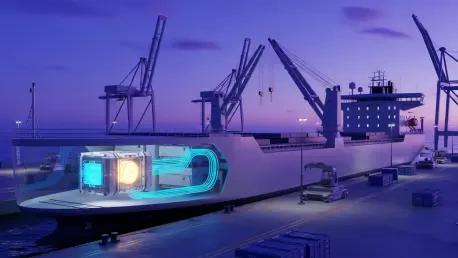
Beyond the legal hurdles, the integration of small modular reactors into commercial shipping requires a fundamental shift in how naval architecture and marine engineering are approached by modern shipyards. These compact reactors offer the promise of high-speed transit and increased cargo capacity because they eliminate the need for massive fuel tanks that occupy valuable space on traditional vessels. The task force is working closely with marine engineers to ensure that these power plants can be modularized for easy installation, creating a plug-and-play environment for nuclear cores. This technological push is also driving innovations in shielding materials and autonomous monitoring systems that reduce the required on-board crew specialized in nuclear operations. As these designs move from the drawing board to reality, the industry is seeing a surge in interest from global logistics firms that want to future-proof their operations against fluctuating fuel prices and carbon taxes.
The path forward required a dedicated commitment to pilot programs that tested the integration of small modular reactors within shipyard infrastructures to prove commercial viability. Stakeholders analyzed the results of early feasibility studies, concluding that the transition necessitated a fundamental redesign of vessel hulls to accommodate the shielding and weight distribution of modern reactor cores. Governments and private investors established a collaborative fund to subsidize the initial costs of reactor installation, recognizing that the long-term savings in fuel costs would eventually outweigh the upfront expenditure. Educational institutions launched specialized training programs for a new generation of maritime engineers. These proactive measures transformed the theoretical potential of atomic propulsion into a tangible roadmap. The industry moved toward a decentralized refueling model where reactor modules were exchanged in specialized facilities, ensuring that the global supply chain remained efficient.