
Commercial fleet operators often struggle with fragmented tools for fuel card controls and site operations, a challenge that the Vontier-EKOS merger is designed to eliminate. For years, the industry operated in silos where hardware at the fueling station rarely communicated effectively with the accounting software in the home office. This lack of cohesion frequently led to discrepancies in inventory records and delayed responses to equipment malfunctions. By bringing EKOS into its portfolio, Vontier has created a comprehensive ecosystem that links physical fueling assets directly to cloud-based management platforms. This integration enables a level of visibility that was previously unattainable for mid-sized and large-scale fleets. Managers can now oversee the entire lifecycle of a gallon of fuel, from the moment it is delivered to the storage tank to the second it is dispensed into a vehicle. This holistic approach significantly reduces the administrative burden on staff and minimizes the risk of human error that typically plagues manual data entry processes. As the market demands higher efficiency, this synergy provides a scalable solution for diverse energy needs across the logistics sector.
Seamless Synergy: The Convergence of Assets and Analytics
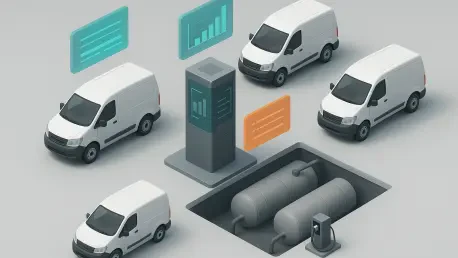
The technical backbone of this partnership relies on the sophisticated interplay between Vontier’s established hardware brands, such as Gilbarco Veeder-Root, and the streamlined digital interface provided by EKOS. When a vehicle arrives at a fueling point, the system automatically captures telematics data, fuel levels, and driver identification without requiring disparate third-party patches. This seamless flow of information ensures that every transaction is validated against real-time fleet schedules and vehicle health reports. Consequently, the platform can flag unusual consumption patterns immediately, allowing for rapid intervention before mechanical issues escalate. Furthermore, the ability to centralize data from both on-site tanks and off-site retail networks creates a unified source of truth for financial reporting. This convergence not only simplifies the day-to-day operations but also provides executives with the granular insights needed to make informed decisions regarding infrastructure investments and asset deployment strategies. By removing the friction between field data and office analytics, the system creates a truly responsive management environment.
Beyond mere connectivity, the integration offers a robust solution for optimizing total cost of ownership through predictive maintenance and inventory accuracy. In the past, fleet managers often relied on historical averages to estimate fuel needs, which frequently resulted in overstocking or critical shortages during peak operational periods. The Vontier-EKOS framework utilizes advanced sensors and software algorithms to provide live inventory updates, enabling just-in-time fuel delivery schedules that maximize capital efficiency. Additionally, the system monitors the health of dispensing equipment and underground storage tanks, sending automated alerts to technicians when performance metrics deviate from the norm. This proactive stance prevents costly downtime and ensures that the fueling infrastructure remains compliant with environmental regulations. By shifting from a reactive maintenance model to a data-driven strategy, organizations can extend the lifespan of their physical assets while maintaining a high level of operational readiness for their entire vehicle fleet. This transition ensures that resources are allocated where they are most needed, driving long-term profitability.
Strategic Execution: Lessons from Modern Infrastructure Integration
The successful deployment of these advanced management tools required a deliberate strategy that prioritized the unification of data streams across the organization. Fleet managers who led this transition focused on eliminating the technical debt associated with aging, disconnected hardware. They realized that the true power of the Vontier-EKOS partnership lay in its ability to provide a single pane of glass for both fuel procurement and asset maintenance. These leaders moved away from the fragmented approach of the past, opting instead for a centralized model that rewarded transparency and accuracy. By standardizing training protocols, they ensured that staff at every level could interpret and act upon real-time data. This shift in operational culture was not just about adopting new software; it was about reimagining how a fleet should function in a digital-first economy. The results were evident in the significant reduction of administrative overhead and the near-total elimination of manual reporting errors that had previously hindered organizational growth and clear decision-making.
To capitalize on these advancements, organizations took specific steps that solidified their market position and ensured long-term sustainability. They conducted comprehensive audits of their existing infrastructure to identify the most critical points for sensor integration and automated monitoring. By establishing a phased rollout plan, these companies avoided the pitfalls of sudden, large-scale overhauls, allowing for iterative improvements based on initial performance metrics. They also prioritized the development of a cross-functional team that bridged the gap between information technology and fleet operations, ensuring that the technology served the practical needs of the drivers and technicians. Furthermore, proactive firms leveraged the analytical capabilities of the platform to negotiate better fuel contracts and optimize their energy mix. This strategic foresight transformed fuel management from a cost center into a source of competitive advantage. The focus remained on continuous improvement, as these entities used their newfound visibility to drive efficiency and meet evolving environmental mandates with absolute confidence.