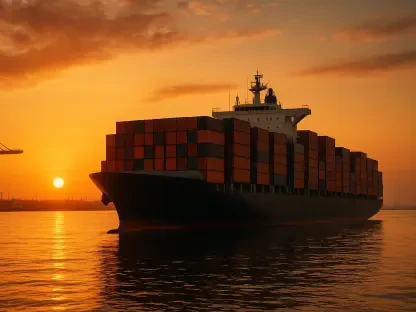

The vast expanse of the Malacca Strait serves as a constant reminder that global trade hinges on the efficiency of maritime corridors, yet today these waters are also the front lines for a monumental shift toward sustainable energy. This transition represents far more than a simple substitution of diesel for a cleaner alternative; it is a fundamental reimagining of how vessels are designed, powered, and maintained within a regional context. As global pressure to reach net-zero emissions intensifies, the Malaysian maritime sector is forced to balance the rigid requirements of international environmental standards with the practical economic constraints of a developing economy. The current landscape is defined by two primary technological trajectories that are moving at different speeds: the integration of liquid transition fuels for long-haul shipping and the aggressive pursuit of electrification for short-distance domestic vessels. Success in this endeavor requires a deep synchronization between technological innovation, port infrastructure, and regulatory clarity, ensuring that the country remains a competitive hub in the global logistics chain while significantly reducing its carbon footprint.
Strategic Segmentation: Customizing Solutions for Diverse Marine Fleets
A primary challenge in decarbonizing the Malaysian maritime landscape lies in the inherent diversity of its fleet, which makes a universal solution for energy transition nearly impossible to implement. The sector comprises a wide variety of vessels, ranging from offshore support vessels that serve the critical oil and gas industry to tugboats, barges, and passenger ferries that facilitate local trade and transportation. Because each category of vessel operates under distinct power requirements and logistical constraints, the industry has moved toward a segmented strategy. For offshore support vessels, the emphasis remains on high-density energy sources that can withstand the rigors of open-sea operations and long durations away from port. In contrast, the domestic logistics sector, which includes tugs and port-based craft, is looking toward more agile solutions that prioritize rapid turnaround and localized infrastructure. This tiered approach ensures that the transition is grounded in the operational realities of each sub-sector, preventing the adoption of technologies that might be theoretically green but practically unworkable for specific maritime missions.
Building on these operational distinctions, electrification has emerged as a particularly promising pathway for short-sea operations and harbor-based activities. Small vessels like passenger ferries and port logistics craft operate on predictable, short-range routes that allow for frequent charging intervals, making battery-electric propulsion both technically feasible and economically attractive. The deployment of electric harbor craft reduces localized air pollution and noise in busy port areas, directly improving the environmental health of coastal communities. However, the adoption of battery power is fundamentally tethered to the advancement of shore-based charging infrastructure. Without a synchronized rollout of high-capacity “green” power at major terminals, even the most advanced electric vessel becomes a stranded asset. Consequently, there is an increasing focus on developing integrated port ecosystems where the availability of renewable electricity aligns with the vessel’s docking schedule. This synergy between the ship and the shore is what will ultimately determine the scalability of electric propulsion in the Malaysian context, turning individual pilot projects into a broader industry standard.
Liquid Fuel Innovations: Bridging the Gap With LNG and Biofuels
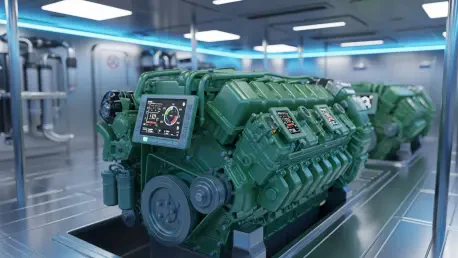
For the massive vessels that navigate international trade routes, liquid fuels remain the only viable medium for energy storage due to their high energy density and ease of handling compared to current battery technologies. Liquefied Natural Gas has solidified its position as the primary bridge fuel for the region, offering a cleaner combustion profile than traditional heavy fuel oils while utilizing mature storage and bunkering technology. Malaysian shipyards are increasingly specializing in dual-fuel engine retrofits, a technical solution that provides ship owners with the flexibility to navigate fluctuating fuel prices and availability. By enabling ships to run on both LNG and conventional marine gas oil, the industry creates a safety net that encourages the adoption of cleaner tech without exposing operators to the risks of a single-fuel supply chain. This pragmatic approach allows for an immediate reduction in sulfur and nitrogen oxide emissions while the global market matures toward even lower-carbon alternatives, ensuring that the fleet remains compliant with tightening international regulations.
Beyond the use of gaseous fuels, Malaysia is uniquely positioned to leverage its robust agricultural sector to produce sustainable biofuels and methanol as homegrown energy solutions. The abundance of palm-based residues and other agricultural biomass provides a steady feedstock for the production of biodiesel and green methanol, which can be integrated into existing engine designs with relatively minor modifications. Methanol, in particular, has gained significant traction due to its ease of storage at ambient temperatures and its compatibility with the next generation of dual-fuel engines. Recent successful bunkering operations at major hubs like the Port of Tanjung Pelepas have demonstrated that the infrastructure for these liquid alternatives is no longer a theoretical concept but a functional reality. By focusing on biofuels that can be produced domestically, Malaysia not only reduces its reliance on imported energy but also creates a circular economy that benefits both the maritime and agricultural industries. This localized fuel strategy provides a distinct competitive advantage, offering a sustainable pathway that aligns with the country’s natural resources and industrial strengths.
Risk Management: Addressing Technical Maturity and Operational Safety
While the long-term vision for a zero-emission maritime sector often includes green ammonia and hydrogen, the Malaysian industry currently treats these as future horizons that require substantial research before they can be deployed at scale. These fuels introduce significant safety and engineering hurdles, ranging from the extreme toxicity of ammonia to the cryogenic storage requirements and high volatility of hydrogen. The corrosive nature of these substances also demands a complete overhaul of engine materials and onboard safety protocols, which adds layers of complexity to vessel maintenance. For now, the focus remains on rigorous research and development and small-scale testing to understand how these fuels behave in the humid, high-salinity environment of Southeast Asian waters. By taking a measured approach to these highly experimental technologies, the industry avoids the pitfalls of premature adoption, ensuring that the move toward net-zero does not compromise the safety of the crew or the integrity of the vessel during heavy-load operations.
In the immediate term, the industry is mitigating operational risks by prioritizing efficiency gains and hardware optimizations that do not require a total change in fuel type. Improving hull designs to reduce drag, implementing advanced anti-fouling coatings, and utilizing digital twin technology for real-time engine monitoring can lead to emission reductions of up to 20% across the existing fleet. These “low-hanging fruit” solutions are vital because they provide immediate environmental benefits and cost savings while the market for alternative fuels continues to stabilize. Furthermore, there is a growing recognition that even the most advanced fuel is useless if the engine fails in the middle of a high-traffic lane like the Malacca Strait. Reliability remains the paramount concern for ship owners, who are understandably cautious about switching to unproven propulsion systems. This focus on incremental improvement alongside long-term innovation ensures that the transition is sustainable from both an engineering and a financial perspective, protecting the uptime of the regional supply chain.
Economic Frameworks: Overcoming Investment Barriers and Policy Gaps
The primary obstacle preventing a faster acceleration of the maritime energy transition in Malaysia is not a lack of technological options but rather the absence of a cohesive economic and regulatory framework. Unlike the land-based automotive sector, which has seen significant government intervention through tax breaks and subsidies for electric vehicles, the marine industry has largely had to fend for itself. This has created a classic “chicken and egg” dilemma where ship owners are hesitant to invest in expensive green vessels without a guaranteed supply of alternative fuels, while fuel suppliers are reluctant to build bunkering infrastructure without a confirmed customer base. To break this impasse, there is a pressing need for a national maritime decarbonization roadmap that provides long-term certainty for investors. Clearer policy signals would allow regional lenders to develop more favorable financing terms for green maritime projects, lowering the capital expenditure barriers that currently prevent many small and medium-sized operators from modernizing their fleets.
Moving forward, the establishment of long-term offtake agreements and public-private partnerships was seen as the most effective method for securing the “bankability” of the maritime transition. The industry required a unified strategy that brought together government agencies, fuel producers, shipbuilders, and port authorities to align their investment cycles toward a common decarbonization goal. By creating dedicated green shipping corridors and offering targeted incentives for the local production of sustainable marine fuels, the country began to foster an environment where environmental responsibility and profitability could coexist. This phased evolution prioritized practical, scalable solutions over idealistic targets, ensuring that the maritime sector remained an engine of economic growth. As the global maritime community continues to evolve, the lessons learned from these early initiatives provided a foundation for a more resilient and sustainable shipping industry that was capable of meeting the demands of a low-carbon future.