
The International Air Transport Association projects a massive financial swing for Middle Eastern airlines, moving from a multi-billion dollar profit to a $4.3 billion net loss. This fiscal downturn reflects a seismic shift in a region that previously served as the world’s most critical transit hub for long-haul travel. As geopolitical tensions escalate, the traditional super-connector model pioneered by major Gulf carriers faces unprecedented pressure. Flight corridors that once linked Europe, Asia, and Africa with seamless efficiency are now fraught with logistical barriers, forcing airlines to reconsider their long-term growth strategies. This disruption is not merely a regional concern but a global phenomenon that affects ticket pricing, cargo reliability, and the environmental footprint of the entire industry. The ripple effects extend to aircraft manufacturers and leasing firms, as carriers delay deliveries or seek narrow-body jets capable of more flexible routing. Understanding this transformation requires a close look at how the sky is being remapped by ground-level instability.
Operational Hurdles: Navigating Restricted Airspace
Rerouting around active conflict zones has fundamentally altered the geometry of global flight paths, adding significant duration and complexity to standard operations. For instance, flights between London and Southeast Asia that once utilized direct corridors now frequently detour thousands of miles, leading to an increase in fuel consumption of up to fifteen percent on certain legs. These detours do not just affect the bottom line; they disrupt the delicate balance of crew duty hours and aircraft utilization rates. When a flight is extended by two hours, it can trigger mandatory rest periods that prevent the same crew from operating the return leg, forcing airlines to station additional personnel at expensive layover ports. Moreover, the increased engine wear and tear from longer flight times accelerate maintenance schedules, further tightening the availability of active fleets. The cumulative effect is a reduction in total capacity across major international networks, making air travel more expensive for the end consumer.
Beyond the physical barriers of closed airspace, the rise of electronic interference has introduced a new layer of technical risk for modern flight decks. Pilots operating near sensitive borders now report a surge in GPS spoofing incidents, where false signals mislead navigation systems, potentially steering commercial jets into restricted zones. This phenomenon has necessitated a return to more traditional navigation methods and heightened reliance on ground-based radio beacons, forcing flight crews to maintain a level of manual vigilance that was becoming less common in the era of automated digital routing. Airlines are currently investing heavily in upgraded interference-resistant avionics to safeguard their passengers, but these retrofits come at a steep cost during a time of dwindling revenue. Furthermore, the psychological impact on travelers cannot be ignored, as concerns over safety and predictability lead to a decline in bookings for routes passing anywhere near contested territories. These technological and psychological factors are reshaping safety protocols.
Strategic Adaptations: Logistics and Fleet Management
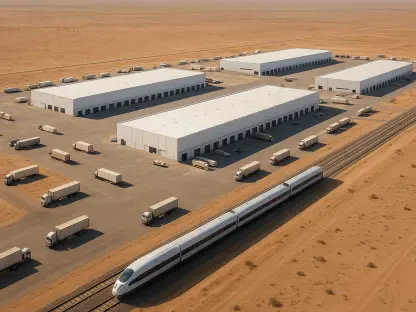
While passenger travel faces significant headwinds, the global cargo sector has experienced a paradoxical surge in demand due to the instability of maritime trade routes. With traditional shipping lanes in the Red Sea becoming increasingly hazardous, logistics companies are shifting high-value goods from ocean freight to air transport to ensure supply chain continuity. This pivot has placed immense pressure on air cargo capacity, prompting airlines to convert older passenger aircraft into freighters at a record pace. Strategic hubs in North Africa and Central Asia are gaining prominence as alternative staging grounds for these goods, diverting traffic away from traditional Gulf transshipment points. The shift is particularly evident in the transport of consumer electronics and perishables, where the risk of delay is too costly to bear. This reliance on air freight provides a temporary revenue cushion for some carriers, but it also highlights the fragility of global trade when land and sea options are compromised. Consequently, the industry is witnessing a reshuffling of logistics partnerships that may last for years.
The industry successfully navigated these challenges by prioritizing agility over traditional expansion, proving that resilience was the most valuable asset in a volatile market. Airlines that survived the downturn from 2026 to 2028 adopted a dual-track strategy: they diversified their hub locations to avoid geographical bottlenecks while simultaneously investing in ultra-long-range narrow-body aircraft. These smaller, more fuel-efficient planes allowed carriers to maintain point-to-point connections without relying on high-risk mega-hubs. Decision-makers also integrated sophisticated geopolitical risk modeling into their scheduling software, enabling real-time adjustments to flight paths as ground conditions shifted. For future stability, it became clear that carriers must hedge not only against fuel price volatility but also against the sudden closure of sovereign airspace. The lessons learned during this era suggested that the future of aviation lies in decentralized networks and robust electronic defenses. By moving toward a more modular operational structure, the sector ensured that local disruptions no longer paralyzed the entire global transit system.