
Rohit Laila is a seasoned veteran in the logistics landscape, possessing a wealth of knowledge accumulated over decades of navigating the complexities of global supply chains and last-mile delivery. His career has been defined by a relentless pursuit of operational excellence and a deep-seated passion for how cutting-edge technology can transform traditional freight models. Having managed large-scale distribution networks, he understands the delicate balance between maintaining a dedicated internal fleet and the strategic necessity of outsourcing to meet the volatile demands of modern retail. In this conversation, we explore the nuances of hybrid transportation strategies, the importance of brand representation on the open road, and how data-driven partnerships are redefining peak season success.
We delve into the strategic evolution of fleet management, focusing on how companies can overcome capacity bottlenecks through collaborative logistics models. The discussion highlights the critical role of asset-lite solutions in scaling operations during high-demand periods, the logistical precision required to maintain 24-hour delivery standards, and the psychological impact of brand visibility in a third-party partnership.
Many companies view purchased transportation as a backup plan, but how does integrating an external partner into a private fleet strategy actually shift the needle during high-pressure peak seasons?
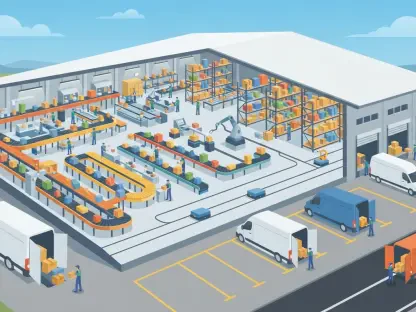
When you look at a major operation like the Reno distribution center, which serves as a vital artery for the West Coast, Arizona, Idaho, and Utah, the pressure during peak season is immense. Traditionally, many managers saw bringing in outside help as a necessary evil, but the modern approach is to treat it as a flexible extension of your own culture. By blending a private fleet with a partner like ITS Logistics, a company can see a significant outbound volume boost—as high as 11%—without the capital-heavy burden of purchasing more trucks that might sit idle during the off-season. It allows a business to maintain a consistent core of internal drivers while having the “valve” to release pressure when demand spikes. This hybrid model ensures that the supply chain remains fluid, preventing the kind of gridlock that can happen when a distribution center’s capacity is pushed to its absolute breaking limit.
With the logistical demand of moving over 56 million pounds of freight to hundreds of retail locations, what are the primary challenges in maintaining speed and consistency?
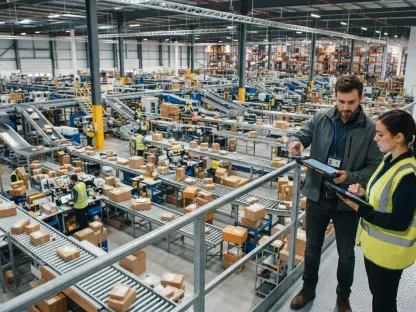
The sheer scale of moving 56 million pounds across 400 U.S. retail locations requires a level of orchestration that goes far beyond just putting a driver behind the wheel. To achieve a benchmark where 90% of loads are delivered within a strict 24-hour window, every second of the dispatch process must be optimized. You are dealing with massive weight, complex routing, and the constant threat of delays that could derail a retailer’s inventory levels. In the first half of 2026 alone, moving an additional 11.7 million pounds shows that the momentum doesn’t stop after the holidays; it’s a year-round battle for efficiency. Success here depends on a partner who handles the nitty-gritty details—driver briefings, real-time ETA communication, and proactive delay advice—so the retailer can focus on their core business of selling products rather than tracking trucks.
When an external driver is pulling a trailer branded with your company’s logo, how does that change the expectations for service standards and brand representation?
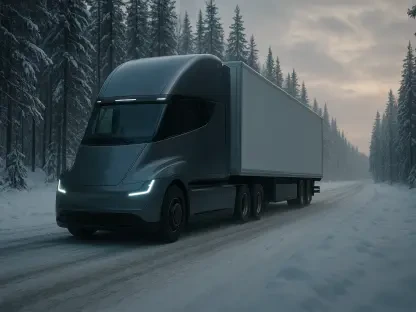
That blue trailer is essentially a 48-foot billboard traveling down the highway, and it carries the weight of the company’s reputation with every mile it covers. It is absolutely vital that an external partner recognizes and reflects the same high standards as the internal team because, to the customer at the loading dock, there is no difference between the two. You aren’t just hiring a tractor unit; you are hiring an ambassador for your brand who must handle the equipment and the delivery with professional care. This sensory connection to the brand—the sight of a clean, branded trailer arriving on time—builds trust with retail managers who depend on those shipments to keep their shelves stocked. If the driver doesn’t mirror the company’s internal culture, the brand equity you’ve spent decades building can be tarnished in a single afternoon.
How is the shift toward asset-lite models and dedicated logistics hubs changing the way retailers approach the volatility of omnichannel fulfillment?
The logistics industry is moving toward an asset-lite trucking model because it offers the agility that traditional, heavy-asset models simply cannot match in today’s volatile market. By leveraging a nationwide network of fulfillment and distribution hubs, companies can scale rapidly to manage seasonal surges without the long-term risk of owning every asset. This is especially critical for omnichannel needs where you have a mix of smaller, high-frequency orders and the need for lightning-fast replenishment. Shippers are no longer looking for just a carrier; they are looking for a solutions engineer who can advise them on how to navigate supply chain speed and consistency. This evolution allows for a more cost-efficient coverage area, ensuring that even when consumer behavior shifts overnight, the infrastructure is already in place to adapt and deliver.
What is your forecast for the future of private fleet management in the retail sector?
I anticipate a move toward “intelligent co-dependency,” where the lines between private fleets and third-party providers become almost invisible through shared data and integrated technology. We will see more retailers moving away from the “all or nothing” approach to fleet ownership, instead opting for a core internal fleet supplemented by asset-lite partners who can provide instant capacity. As distribution centers like the one in Nevada continue to face geographic expansion, the ability to move millions of pounds of freight with 24-hour precision will become the minimum standard for survival. Ultimately, the winners will be those who use these partnerships not just to survive the peak season, but to create a permanent, scalable advantage that can handle the next ten million pounds of growth with ease.