
The global thermal logistics sector is currently grappling with a monumental shift as the traditional reliance on synthetic materials collapses under the weight of international environmental mandates. Expanded Polystyrene (EPS), long the undisputed champion of temperature-sensitive shipping, has finally met its match in the form of aggressive legislative bans and a global push for circularity. In 2026, the transition is no longer a matter of corporate social responsibility but a prerequisite for operational survival. This shift demands a radical reimagining of how heat transfer is managed across thousands of miles.
Navigating the Thermal Logistics Revolution and the Decline of Synthetic Insulation
The historical dominance of Expanded Polystyrene in the cold chain was built on its exceptional thermal resistance and low production costs. For decades, it provided a lightweight and rigid barrier that effectively shielded sensitive goods from the vagaries of ambient temperatures during transit. However, as the environmental cost of non-biodegradable waste becomes impossible to ignore, the industry is witnessing the sunset of synthetic foams. The shift is moving from a convenience-based model to one that prioritizes end-of-life disposal without sacrificing the integrity of the thermal barrier.
In the current landscape of global trade, the requirements for pharmaceutical transport and food safety have never been more stringent. Maintaining a consistent temperature range, such as the standard two to eight degrees Celsius for biologics, remains non-negotiable. The challenge lies in replacing the reliable performance of EPS with sustainable alternatives that can survive the rigors of multi-modal international shipping. Current infrastructure, which was largely designed around the dimensions and properties of foam coolers, is now being recalibrated to accommodate a new generation of thermal materials.
Major market players are rapidly pivoting their research and development budgets toward material science that emphasizes recyclability. This technological shift is driven by the realization that future market share depends on the ability to offer plastic-free solutions. Established logistics giants are collaborating with biotech startups to validate the efficacy of organic insulators, ensuring that the move away from petroleum-based products does not lead to an increase in product spoilage. This collective effort is reshaping the competitive landscape, where sustainability credentials are now as important as shipping speeds.
International environmental treaties and local waste management mandates are acting as the final catalysts for this transformation. As landfills reach capacity and ocean plastic pollution continues to dominate political agendas, the traditional shipping method of “use and discard” is being dismantled. Regulatory pressure is forcing a transition toward materials that fit into existing municipal recycling streams, effectively ending the era of specialty waste handling for cold chain packaging. The result is a more integrated approach to logistics where packaging is viewed through the lens of its entire lifecycle.
Analyzing the Macro Trends and Market Velocity of Sustainable Packaging
Emerging Technologies and the Rise of High-Performance Paper Insulation
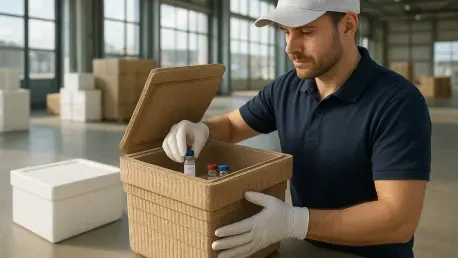
The transition from petroleum-based foams to engineered cellulose and multi-layered paper thermal systems is now the primary focus of packaging innovation. These new systems leverage the natural insulating properties of trapped air within fiber matrices, providing thermal protection that rivals traditional EPS. By utilizing corrugated structures and recycled paper pulp, manufacturers have created high-performance liners that are both sturdy and fully curbside recyclable. This shift represents a move toward renewable resources that can be replenished far more easily than the fossil fuels required for plastic production.
Changing consumer expectations are also playing a significant role in forcing brands to rethink their secondary packaging. Modern recipients, particularly in the direct-to-consumer food and healthcare sectors, are increasingly vocal about their disdain for bulky, non-recyclable foam waste. Brands that fail to adapt risk significant reputational damage as “green” delivery becomes a standard expectation rather than a premium feature. This pressure from the end of the supply chain is vibrating back toward the manufacturers, creating a massive pull-through demand for fiber-based insulation.
Complementing these new materials is the integration of Internet of Things (IoT) sensors and smart monitoring tools. These devices provide real-time data on temperature, humidity, and location, offering a digital safety net as companies experiment with new insulation types. The synergy between sustainable materials and high-tech monitoring allows for more precise thermal modeling, which reduces the need for over-packaging. By using data to optimize the amount of insulation required for a specific route, companies are further reducing their environmental impact while maintaining product safety.
Early adopters in the logistics sector are already capturing significant market share by positioning themselves as leaders in eco-friendly shipping. These organizations are not just following regulations but are proactively setting new industry standards for what a sustainable cold chain looks like. By securing supply chains for high-quality paper insulation early, they are avoiding the bottlenecks and price spikes that occur when the rest of the market tries to catch up. This strategic foresight is proving to be a powerful competitive advantage in a market that increasingly values agility and environmental stewardship.
Market Projections and the Economic Indicators of the Foam-Free Transition
Growth forecasts for the global sustainable cold chain market through 2030 indicate a steady compound annual growth rate as companies move away from regulated plastics. The valuation of the sector is increasingly tied to the development of fiber-based and bio-derived materials that can be produced at scale. As the cost of plastic production rises due to carbon taxes and raw material scarcity, the price parity between sustainable and traditional packaging is narrowing. This economic shift is making the transition financially viable for even the most cost-conscious shipping operations.
In the current high-inflation environment, performance indicators are increasingly favoring paper-based solutions over traditional plastics. Paper packaging often allows for more efficient storage and transport because many fiber-based liners can be shipped flat, reducing inbound freight costs. In contrast, rigid EPS coolers occupy the same volume whether they are empty or full, leading to significant logistical inefficiencies. The ability to minimize warehouse footprints and reduce transport emissions is making paper the more attractive option for large-scale operations.
Furthermore, the valuation of companies that prioritize circular economy principles is rising among institutional investors. Financial markets are beginning to penalize firms with high environmental liabilities, including those reliant on non-recyclable packaging. As a result, logistics providers that transition to a foam-free model are seeing improved access to capital and more favorable insurance rates. This intersection of finance and sustainability is creating a powerful incentive for the industry to accelerate its departure from the traditional plastic-heavy model.
Overcoming Technical Hurdles and Operational Friction in Green Logistics
There is a persistent perceived performance gap between traditional EPS and sustainable alternatives that must be addressed through rigorous thermal validation. While some stakeholders remain skeptical of paper’s ability to withstand extreme external temperatures, modern testing has shown that high-density fiber systems can maintain internal temperatures for up to 72 hours. These validation studies are critical for gaining the trust of the pharmaceutical industry, where even a minor temperature excursion can result in the loss of life-saving medications. Evidence-based performance is the key to overcoming institutional inertia.
Solving the challenge of “cost-shifting” is another operational priority for green logistics. While the initial investment in sustainable materials can be higher than the cost of mass-produced plastic, these expenses must be balanced against long-term regulatory savings. Companies that remain tethered to EPS face rising disposal fees, potential fines, and the costs associated with Extended Producer Responsibility laws. When viewed as a total cost of ownership, sustainable packaging often emerges as the more economical choice over the lifespan of a shipping program.
Retooling existing supply chain workflows to accommodate the physical properties of fiber-based insulation requires careful planning. Unlike rigid foam, paper systems may have different moisture resistance profiles and structural integrity levels when exposed to high humidity. Operational managers must adjust their packing procedures and sometimes the types of refrigerants used to ensure the packaging remains intact throughout the journey. These adjustments, while technically demanding, are necessary for creating a robust system that can handle the unpredictability of global shipping routes.
Navigating global supply chain disruptions while sourcing eco-friendly raw materials remains a complex task in the current market. The demand for high-quality recycled paper and specialized cellulose fibers has surged, leading to competition for limited resources. To mitigate this risk, companies are diversifying their supplier bases and investing in regional sourcing to reduce the carbon footprint associated with moving the packaging itself. Building a resilient supply chain for sustainable materials is as important as the design of the packaging, ensuring that green initiatives do not stall due to material shortages.
The Regulatory Framework: Adapting to Global Legislative Mandates
The European Union’s Packaging and Packaging Waste Regulation (PPWR) has set a new global benchmark for international shippers. This regulation mandates that all packaging in the EU market be recyclable and that manufacturers take full responsibility for the end-of-life processing of their products. For cold chain operators, this means that every component of a shipping container, from the outer box to the internal thermal barrier, must meet strict sustainability criteria. Compliance with PPWR is no longer optional for any company wishing to participate in the lucrative European market.
In the United States, the legal landscape is more fragmented but equally challenging due to the rise of state-specific Extended Producer Responsibility (EPR) laws. States like California, Oregon, and Maine have implemented their own frameworks that require companies to pay fees based on the amount and type of packaging they produce. These laws are specifically designed to discourage the use of materials like EPS by making them the most expensive options for producers. Shippers must now manage a complex matrix of state-level compliance to avoid heavy penalties and ensure uninterrupted service.
Compliance has become a prerequisite for market access in strictly regulated jurisdictions such as California. Under the Plastic Pollution Prevention and Packaging Producer Responsibility Act, materials that do not meet high recycling rate thresholds face an eventual ban from the market. For temperature-controlled logistics, this means that failing to innovate is equivalent to exiting the market. The regulatory environment is essentially picking winners by creating an ecosystem where only the most sustainable and recyclable materials are allowed to circulate.
Security standards and food safety certifications are also evolving to reflect the adoption of non-plastic thermal barriers. Regulators are ensuring that new materials do not introduce any risks of contamination or compromise the physical security of the products. As these certifications become standardized, they provide a clear path for the broad adoption of sustainable materials across all sectors of the cold chain. Navigating these regulatory requirements is a critical task for compliance officers, who must ensure that every new material meets the high standards required for human health and safety.
Innovation Frontiers and the Future Direction of Temperature-Controlled Shipping
Biotechnological breakthroughs are currently paving the way for the next generation of insulation materials, including mycelium and seaweed-based panels. These materials offer unique thermal properties and can be grown using agricultural waste, making them highly sustainable and potentially carbon-negative. Mycelium, the root structure of mushrooms, can be molded into various shapes, providing a bio-based alternative to the rigidity of traditional foam. These innovations represent the frontier of material science, where the goal is to create packaging that can be composted in a backyard or dissolved in water.
The shift toward decentralized “micro-fulfillment” centers is also disrupting traditional packaging needs. As companies move inventory closer to the end consumer to facilitate faster delivery, the duration of the thermal journey is often reduced. This allows for lighter-weight and less intensive insulation, further lowering the environmental impact of each shipment. These micro-centers require a different type of logistical support, emphasizing smaller, more agile packaging solutions that can be easily handled in urban environments. This trend is driving the development of specialized insulation for the “last mile” of delivery.
Global economic conditions and the implementation of carbon taxes will continue to accelerate the phase-out of non-recyclable materials. As governments seek new ways to fund environmental restoration, the “polluter pays” principle is being applied more aggressively to the logistics industry. High taxes on virgin plastics and non-recyclable waste are making traditional foam financially untenable for many businesses. This economic pressure is a more powerful driver of change than voluntary sustainability goals, as it directly impacts the bottom line of every shipping operation.
The evolution of the “circular cold chain” is moving toward a future where packaging is fully integrated into municipal recycling streams. The goal is to eliminate the need for specialized disposal by using materials that are already widely accepted by local waste management systems. This integration simplifies the process for the consumer and ensures that high-quality materials are recovered and reused in the production of new packaging. By closing the loop, the cold chain can transition from a linear “take-make-waste” model to a truly sustainable and regenerative system.
Strategic Roadmap for a Resilient and Compliant Thermal Supply Chain
The logistics industry recognized that the transition away from plastic-based cold chain components was an inevitable consequence of shifting global priorities. It became clear that the historical reliance on Expanded Polystyrene was no longer compatible with a world that demanded high levels of environmental accountability and circularity. Stakeholders who acted early to phase out synthetic foams found themselves in a much stronger position than those who waited for the full weight of regulation to take effect. The transition proved to be a defining moment for the sector, separating the innovators from the legacy operators.
Paper-based thermal innovation served as the primary vehicle for this industry-wide transformation, providing a bridge between performance and sustainability. The successful development of multi-layered fiber systems allowed for a seamless move away from plastic without compromising the safety of temperature-sensitive goods. This shift was supported by advancements in material science that allowed paper to achieve R-values previously thought to be the exclusive domain of synthetic foams. As a result, the cold chain was able to modernize its infrastructure while simultaneously reducing its total environmental footprint.
Investment in sustainable infrastructure became a critical defensive strategy to avoid market exclusion and escalating financial penalties. Companies that integrated sustainability into their core operational philosophy were able to navigate the complex regulatory landscapes of the European Union and the United States with greater ease. These organizations successfully avoided the pitfalls of cost-shifting by viewing packaging as a strategic asset rather than a disposable commodity. The implementation of circular supply chains allowed for better resource management and improved long-term financial stability.
Ultimately, the alignment of environmental stewardship with operational excellence emerged as the most viable path forward for the global logistics industry. The move toward a foam-free cold chain demonstrated that it was possible to meet the rigorous demands of temperature-controlled shipping while respecting the limits of the planet’s resources. By embracing innovation and proactive compliance, the industry secured its place in a more sustainable global economy. The lessons learned during this period of transition now serve as a blueprint for other sectors looking to reconcile the demands of commerce with the necessities of environmental protection.