
The current transition into Control Period 7 represents a defining moment for the United Kingdom’s railway infrastructure, as managers attempt to navigate a massive forty-four-billion-pound investment strategy amidst tightening fiscal constraints and increasingly unpredictable environmental pressures. This five-year funding cycle, which guides the industry through the late twenties, demands a radical departure from traditional engineering paradigms that have historically treated the railway as a fragmented collection of hardware. Instead of focusing solely on the structural integrity of isolated tracks or signals, the sector is moving toward a system-level approach that prioritizes the delivery of a reliable and safe service above all else. This shift acknowledges that the value of the network does not reside in the physical age of a bridge or the shine on a rail, but in the ability of the entire interconnected grid to move passengers and freight efficiently. By embracing this holistic perspective, infrastructure managers can move away from reactive maintenance and toward a strategic model where every pound spent is measured against its contribution to the overall stability of the national transport system. This evolution is essential for maintaining public trust and economic vitality in an era where resource scarcity and climate volatility have become the primary drivers of industrial decision-making.
Shifting Focus from Individual Assets to Route Performance
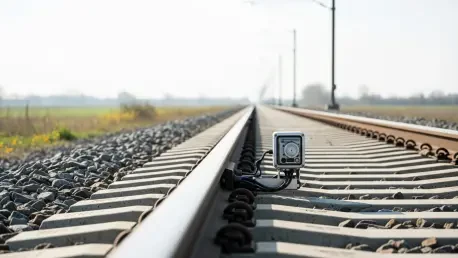
Historically, the rail industry suffered from a deep-seated fragmentation that saw civil, electrical, and signaling engineers working within their own specific silos, often following independent standards that rarely intersected. This discipline-specific focus meant that maintenance was frequently performed based on the age of a component rather than its actual impact on the reliability of the line it served. Under the new system-level framework, the priority has shifted toward the performance of specific routes, such as the vital arteries connecting London to the north or the critical commuter belts in the southeast. By analyzing the reliability of an entire line, managers can identify that a perfectly functioning signal is of little use if the drainage system next to it fails during a heavy downpour, causing a total service halt. This approach allows for more nuanced financial decisions, such as opting to install advanced sensors on a Victorian-era bridge to extend its safe operational life by several years, thereby freeing up capital to invest in high-capacity drainage solutions that prevent the weather-related delays that passengers find most frustrating.
Implementing this strategy effectively requires the adoption of a level of control framework, which serves as a negotiated agreement between stakeholders regarding acceptable levels of disruption for any given route. It is a pragmatic admission that not every mile of track requires the same level of gold-standard investment, as a high-frequency urban transit corridor has vastly different performance requirements than a rural branch line with lower traffic density. By establishing these expectations at the outset of the funding cycle, rail organizations can align their engineering interventions with the actual needs of the people using the service. This prevents the over-specification of low-priority assets while ensuring that high-traffic “linchpins” receive the intensive monitoring and rapid-response resources they require to stay operational. Moving the conversation away from the theoretical life cycles of steel and concrete toward the practical outcomes of journey times and seat availability ensures that the railway remains a customer-centric enterprise rather than an engineering project for its own sake, ultimately driving a more efficient use of the forty-four-billion-pound budget.
Building Resilience Through Adaptability and Climate Planning
The reality of climate change has fundamentally altered the wear and tear patterns of the United Kingdom’s rail network, with extreme heatwaves and flash flooding occurring with a frequency that traditional maintenance schedules were never designed to handle. However, the industry has recognized that attempting to “climate-proof” every single asset across thousands of miles of track is a financial impossibility that would exhaust even the largest budgets. The focus has therefore turned to operational resilience, which emphasizes the network’s ability to absorb environmental shocks and recover quickly rather than simply trying to withstand them through brute force. This might involve using sophisticated weather modeling to implement proactive, temporary schedule changes that protect infrastructure during peak stress periods, or investing in modular components that can be quickly replaced if a failure occurs. This strategic flexibility ensures that even when the environment becomes hostile, the impact on the national economy and the daily lives of passengers is kept to an absolute minimum through a combination of physical upgrades and intelligent management.
The shift toward adaptable design is perhaps best exemplified by the recent coastal defense works at Dawlish, where engineers moved away from the idea of building static structures intended to last for a century without modification. Because future environmental demands and funding levels are inherently difficult to project with absolute certainty, the new philosophy prioritizes infrastructure that can be easily modified, expanded, or reinforced as conditions change over time. By planning for shorter, more manageable windows of twenty to thirty years while maintaining a clear upgrade path for the future, rail organizations can avoid the trap of over-investing in rigid solutions that might become obsolete as technology or climate risks evolve. This iterative approach to engineering allows the network to stay “current” with the challenges it faces, ensuring that the heavy civil works of today do not become the expensive liabilities of tomorrow. It represents a more humble and realistic form of engineering that values flexibility and the ability to pivot in response to new data over the pursuit of permanent, unchanging solutions.
Leveraging AI and Data to Manage Network Connectivity
Modern rail management is increasingly reliant on advanced technology like Artificial Intelligence, but the industry has learned that these tools are most effective when they are deployed to solve specific, high-stakes operational challenges. Predictive analytics platforms are now used to sift through the mountain of data generated by thousands of sensors, identifying patterns that would be invisible to the human eye. For instance, the Loupe 360 machine learning system has been instrumental in monitoring tunnel health, allowing engineers to detect microscopic structural defects or early signs of water ingress long before they pose a safety risk or require a costly emergency closure. This technology does not replace human expertise; rather, it acts as a force multiplier that allows specialized teams to focus their attention on the specific points where intervention will yield the greatest benefit for the lowest cost. By moving from a “find and fix” mentality to a “predict and prevent” model, the rail sector can significantly reduce the amount of reactive maintenance that typically disrupts passenger schedules.
Furthermore, the highly interconnected nature of the railway means that a single point of failure can have a disproportionate impact on the entire system, creating a ripple effect of delays that can span the entire country. To mitigate this risk, infrastructure managers are utilizing digital twins—highly accurate virtual models of the physical network—to simulate various failure scenarios and identify which assets act as critical nodes or “linchpins.” This data-driven perspective reveals that a seemingly minor culvert or a small signaling relay station might actually be essential for the stability of a major regional corridor. By prioritizing the maintenance of these high-impact assets, the industry can create a more robust network where the failure of a non-critical component does not lead to a total systemic collapse. This level of visibility into the hidden dependencies of the network allows for a more strategic allocation of resources, ensuring that the most vital connections are protected by redundant systems and intensive monitoring, thereby insulating the wider network from localized disruptions.
Aligning Industry Culture with Passenger Outcomes
Transitioning to a system-wide mindset required a profound cultural transformation within the rail industry, necessitating the removal of long-standing barriers between infrastructure owners, train operating companies, and government regulatory bodies. Historically, these groups often operated with conflicting incentives, but the move toward a more integrated model has fostered a collaborative environment where all parties are focused on the same set of passenger-centric outcomes. This cultural alignment moved the industry away from a purely technical focus on asset health and toward a holistic understanding of how the railway functions as a vital social and economic utility. By encouraging open communication and data sharing across different organizations, the sector was able to develop a unified vision for the future, ensuring that every strategic decision was vetted for its impact on the end-user. This spirit of cooperation was essential for navigating the complexities of the current funding period, as it allowed for a more agile response to the various financial and operational challenges that emerged during the implementation of the new system-level strategy.
The success of these efforts was ultimately measured by the industry’s ability to define and deliver the specific service levels that the public required for their daily lives. Leaders in the sector recognized that true future-proofing was not just about the strength of the rails, but about the resilience of the organizational structures that managed them. They established new protocols for cross-discipline cooperation and prioritized investments that directly improved the passenger experience, such as enhanced communication systems and more reliable journey times. These actions determined that a more efficient, data-driven, and collaborative approach was the only viable path forward in a resource-constrained world. Consequently, the rail sector became more than just a provider of tracks and trains; it evolved into a sophisticated service organization that used system-level thinking to navigate uncertainty and provide a stable foundation for the nation’s transport needs. This strategic realignment provided the necessary framework for the network to remain a high-performing and essential part of the national infrastructure for years to come.