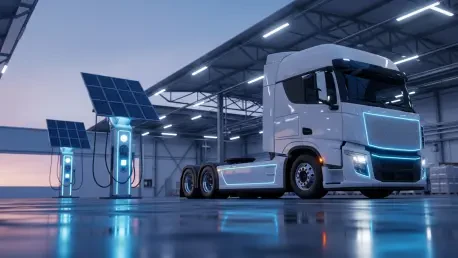

The silent hum of a forty-tonne tractor-trailer gliding through a production facility without a trace of diesel exhaust marks a definitive break from a century of industrial tradition. This transition reflects a broader recognition that the automotive industry cannot achieve true carbon neutrality by focusing solely on the vehicles sold to consumers. Instead, the focus has shifted toward the sprawling network of heavy-duty transport that feeds the production lines. In this context, industrial shipping has emerged as one of the most significant frontiers for decarbonization, moving from a background operational necessity to a foreground priority for corporate sustainability.
The global automotive value chain depends on the movement of millions of components, often requiring heavy trucks that traditionally rely on high-output combustion engines. However, as global climate goals intensify, the reliance on internal combustion engines for industrial hauling is being replaced by zero-emission alternatives. Major market players are now integrating sustainability directly into their production-related logistics, acknowledging that the environmental footprint of a vehicle begins long before it reaches the dealership. By decarbonizing both internal plant movements and the external corridors connecting various suppliers, manufacturers are addressing the total life cycle of their products.
The Global Paradigm Shift Toward Sustainable Heavy-Duty Transport
The current transformation in heavy-duty transport represents a total reconfiguration of how logistics systems are valued. Historically, the primary metrics for success in industrial shipping were cost and speed, with environmental impact often treated as an external factor. Today, the integration of green logistics is a strategic imperative that influences everything from site selection to supplier contracts. This paradigm shift requires a deep analysis of how parts move across continents, identifying every opportunity to swap diesel-powered legs for electric or hybrid solutions.
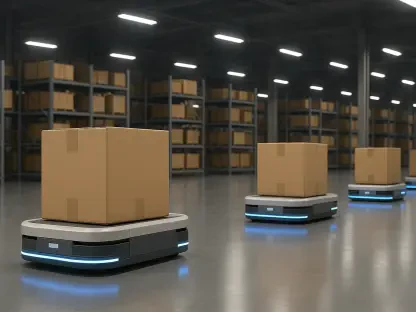
As manufacturers move toward zero-emission logistics, they are tackling the challenge of both local and regional transport. Internal plant movements, or intralogistics, provide a natural starting point because they involve predictable routes and frequent stops that are ideal for battery-electric vehicles. In contrast, the external supplier corridors involve greater distances and more complex variables. Successfully decarbonizing these paths requires a coordinated effort across the supply chain, ensuring that the infrastructure at every node can support the energy demands of a heavy fleet.
Navigating the Evolution of Modern Supply Chain Electrification
Bridging Short-Haul and Long-Distance Requirements With Diverse Drive Systems
The complexity of modern logistics demands a technology-open philosophy that avoids the pitfalls of a one-size-fits-all solution. For predictable, high-frequency movements within production hubs, fully electric trucks have proven highly effective, offering high torque and zero tailpipe emissions. These vehicles thrive in environments where charging can be integrated into the loading and unloading cycles, ensuring that the trucks remain operational throughout multiple shifts. This application serves as the foundation for broader electrification efforts, proving the reliability of battery systems in high-load scenarios.
Addressing the complexities of long-distance hauling requires a different approach, often involving hybrid-electric systems equipped with range extenders. These systems allow trucks to maintain electric drive while carrying a compact combustion generator that recharges the battery during transit. This strategy mitigates the risks associated with inadequate charging infrastructure on long routes and provides the flexibility needed for the modern just-in-time manufacturing model. Moreover, this shift aligns with evolving corporate behaviors that prioritize transparently green supply chains to satisfy both investors and environmentally conscious consumers.
Measuring the Success of Real-World Pilots and Efficiency Projections
Performance data from the logistics corridor between Berlin and Munich, alongside regional plant hubs, has provided a clear picture of what heavy-duty electrification can achieve. High-capacity battery systems in forty-tonne trucks have demonstrated that electric propulsion is no longer limited to light-duty urban delivery. Growth projections suggest that electric fleet integration will continue to expand across global production networks, as the data shows these vehicles can meet the demanding payload capacities required for automotive components.
Key operational indicators reveal that trucks equipped with range extenders have been able to operate in purely electric mode for over eighty percent of their total travel distance. This high percentage of electric-mode operation validates the long-term economic and environmental viability of the technology, even on routes that exceed the native range of current batteries. These real-world pilots serve as the evidence base needed to justify large-scale capital investments in new fleets and the specialized maintenance facilities they require.
Overcoming the Critical Barriers to Large-Scale Fleet Electrification
Solving the persistent challenge of range anxiety has been a primary focus of recent engineering efforts in the logistics sector. By utilizing onboard generator technology, operators can bridge the gap between current battery limitations and the needs of a continental supply chain. This approach provides a safety net that allows for the immediate adoption of electric drive systems while the underlying battery density continues to improve. It also prevents the logistical bottlenecks that would occur if heavy trucks were forced to wait for hours at insufficient charging points.
Developing high-capacity charging infrastructure tailored for heavy-duty operational cycles is equally critical to the success of this transition. Standard charging stations are often ill-equipped to handle the massive energy draws and the physical size of industrial tractors. Therefore, strategies for managing energy sourcing have become paramount, with a focus on ensuring that 100 percent of the power comes from renewable sources. Balancing the immense weight of high-capacity battery systems with the load requirements of heavy components remains a technical challenge, but innovations in materials science are beginning to offset these weight penalties.
The Regulatory Framework Driving Zero-Emission Logistics Standards
Local and international CO2 emission mandates are exerting significant pressure on the heavy-duty transport sector to modernize. These regulations are no longer just suggestions; they are becoming hard constraints that dictate where and how trucks can operate. Furthermore, noise reduction regulations have become a major driver for the adoption of electric trucks in urban areas. Because electric motors are significantly quieter than diesel engines, manufacturers can operate logistics 24/7 in facilities located near residential zones, improving operational efficiency without disturbing the local community.
Compliance with green energy standards and corporate sustainability reporting requirements has also necessitated a more rigorous approach to data collection within the supply chain. Companies must now account for the carbon footprint of every mile traveled by their parts, making the use of zero-emission trucks a necessity for meeting annual targets. Security and safety protocols for high-voltage battery operation have also been standardized for industrial environments, ensuring that the transition to electric power does not introduce new risks to the workforce or the production facilities.
Charting the Next Frontier for Carbon-Neutral Global Logistics
Looking ahead, the potential of hydrogen fuel-cell technology is being explored as a complementary zero-emission solution for the most demanding long-haul routes. Hydrogen offers the advantage of rapid refueling and high energy density, which could be ideal for routes where even hybrid systems might struggle. Future market disruptors, such as autonomous electric freight and smart grid integration, are expected to further optimize how energy is used across the logistics network. These technologies could allow fleets to charge during periods of low grid demand, reducing costs and maximizing the use of renewable energy.
The pace of infrastructure investment will inevitably be influenced by global economic conditions, but the momentum toward electrification appears resilient. Anticipated innovations in energy density and rapid-charging capabilities will likely reduce the need for range extenders over time, leading to a purely battery-electric future for most heavy fleets. As the technology matures, the cost of ownership for electric trucks is expected to drop below that of diesel equivalents, creating a powerful economic incentive that aligns with environmental goals.
Forging a Sustainable Legacy Through Strategic Logistics Innovation
The pilot programs in Regensburg and Leipzig established a definitive blueprint for a holistic, emission-free production cycle. These initiatives proved that heavy-duty logistics could maintain peak operational efficiency while significantly reducing the carbon footprint of the automotive supply chain. The data indicated that the combination of fully electric vehicles for short-haul tasks and hybrid systems for long-distance routes provided the necessary flexibility for a global manufacturer. Stakeholders were encouraged to adopt a multi-technology approach, recognizing that the transition required a diverse array of tools rather than a single solution.
The successful integration of these technologies demonstrated that environmental responsibility was no longer an obstacle to industrial mobility. Future considerations suggested that the focus must now shift toward expanding the charging network and refining hydrogen storage capabilities to accommodate even larger fleet sizes. Industry leaders observed that the most effective strategies involved the simultaneous modernization of both the vehicles and the energy infrastructure supporting them. These efforts ensured that the path toward carbon neutrality was both technologically sound and economically sustainable for the long term.