
In the high-stakes world of global trade, Rohit Laila stands as a seasoned veteran with decades of experience navigating the complexities of supply chain logistics and delivery innovation. His career has been defined by a commitment to integrating cutting-edge technology with traditional shipping models to solve the persistent “bottlenecks” that plague international commerce. Currently focusing on the evolution of cross-border fulfillment, Rohit offers a unique perspective on how the physical proximity of inventory to manufacturing hubs is reshaping the financial and operational strategies of modern e-commerce brands.
The following discussion explores the strategic shift toward origin-based storage, the mechanics of reducing lead times through integrated logistics, and the burgeoning competitive landscape that is forcing platforms to offer more robust, end-to-end supply chain solutions for small and medium-sized enterprises.
Shenzhen has become a critical hub for merchants seeking to store inventory near the source. How does keeping bulk stock at the point of origin improve a seller’s cash flow, and what specific risks are mitigated by delaying the transit of goods to U.S. fulfillment centers?
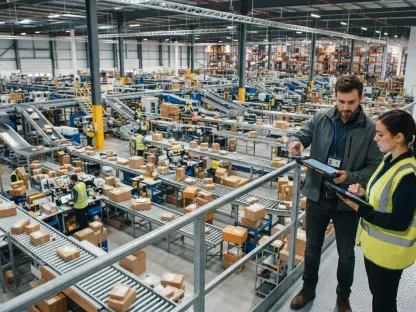
By utilizing a facility like the one in Shenzhen, sellers can wait to pull products into the U.S. market until demand actually builds, which keeps their capital from being tied up in landed goods that might sit unsold. This strategy is fundamentally about cash flow and flexibility; instead of paying for expensive international shipping and domestic duties upfront for a massive haul, you only trigger those costs for the specific volume needed. Within just two days of announcing this capability, we saw an immediate wave of bookings, proving that merchants are desperate to avoid the risk of overstocking in high-cost domestic warehouses. By delaying transit, you mitigate the risk of market shifts—if a trend dies out while your goods are still at the origin, you haven’t wasted the significant capital required to move them across the ocean. It allows a business to remain nimble, testing the waters with smaller batches while the bulk of their assets remains safely and affordably stored at the source.
Combining origin storage with integrated global logistics can shave up to seven days off replenishment times. Could you walk through the step-by-step workflow of moving goods from an overseas facility into the domestic network, and what metrics should sellers track to ensure this speed is actually maintained?
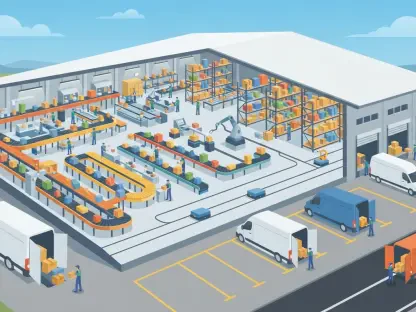
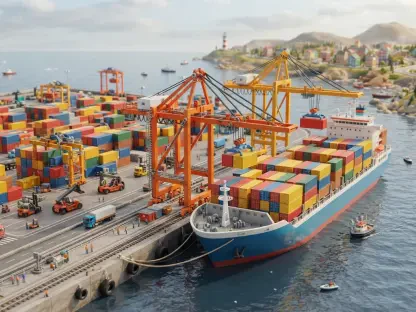
The workflow begins directly in the Seller Central portal, where a merchant creates a delivery request for the Shenzhen facility to initiate the “seamless replenishment” cycle. Once the goods are staged there, Amazon Global Logistics takes over, handling the cross-border transportation and bypassing the typical friction points of uncoordinated third-party carriers. The goods move from the origin hub directly into the U.S. fulfillment network, essentially creating a high-speed conveyor belt from the factory floor to the American consumer. To ensure this seven-day speed advantage is realized, sellers must track “click-to-ready” times at the origin and the “transit-to-stow” duration at the domestic fulfillment center. These metrics reveal exactly where any friction exists, allowing the merchant to see the real-time efficiency of an end-to-end provider compared to a fragmented supply chain.
Storage costs in overseas origin hubs can be 45% lower than domestic bulk storage options. Considering the competition between major e-commerce platforms for merchant loyalty, what financial trade-offs must sellers weigh when deciding between localized storage and immediate international shipping?
The financial trade-off is a balance between the 45% savings in storage costs and the need for immediate product availability in a “prime-speed” world. If a seller chooses localized storage in China, they are betting that the lower overhead will outweigh the potential lost sales if they cannot replenish their domestic stock fast enough. However, the competition is fierce, with rivals like Walmart scaling their own international logistics to win over the half of the active seller base that is currently China-based. Sellers must weigh the long-term cost of warehouse fees—which can eat up margins during slow seasons—against the risk of “out-of-stock” penalties on major platforms. Ultimately, the lower storage costs at the origin provide a “safety valve” for profit margins, especially for items with seasonal demand or those still in the market-testing phase.
There is a growing push to help merchants sell globally from day one, with planned expansions into the Yangtze River Delta and Europe. How does this end-to-end supply chain model change the way small businesses test new international markets and manage their global inventory levels?
This model effectively levels the playing field, allowing a small business to function with the logistical sophistication of a multi-national corporation from their very first sale. By expanding this model to the Yangtze River Delta and eventually Europe and Japan, we are building a global connectivity that removes the traditional barriers to entry like finding local warehouses or navigating foreign customs alone. Small businesses can now test a new region without the “excessive risk” of a massive capital layout, as they can store goods centrally and distribute them to whichever global network shows the most promise. It shifts the focus from managing physical boxes to managing data; a merchant can look at their global inventory levels and pivot their stock from one continent to another based on real-time demand. This “end-to-end” visibility means that a brand in its infancy can realistically target a global audience without needing a massive logistics department to handle the back-end complexity.
What is your forecast for global e-commerce logistics?
I believe we are entering an era of “borderless fulfillment” where the physical location of a warehouse becomes secondary to the digital integration of the entire supply chain. In the coming years, the distinction between “domestic” and “international” shipping will blur as platforms offer more unified, origin-to-door services that eliminate the 10-to-14-day delays we once took for granted. We will see a massive consolidation of services, where a single entity manages everything from the factory gate in China to the porch in a U.S. suburb, driven by the need for 70% faster delivery speeds and lower operational overhead. My advice for readers is to stop viewing logistics as a back-office expense and start seeing it as a competitive weapon; those who master “origin-side” flexibility will be the ones who can survive the price wars and inventory fluctuations of the future.