
The global logistics landscape is currently grappling with a fundamental paradox where increasing consumer demand for ultra-fast fulfillment is being met by rigid, legacy warehouse management systems that cannot scale without massive injections of expensive temporary labor. Most traditional facilities operate under a restrictive “one-size-fits-all” architectural model that forces every aisle and every worker into a single, static workflow, regardless of the specific inventory density or order velocity of a particular zone. This systemic inflexibility creates predictable but damaging bottlenecks, where high-speed robotics are often throttled by software limitations that treat a slow-moving bulk item exactly the same as a high-velocity consumer good. To solve this, Ocado Intelligent Automation has introduced a sophisticated evolution of its proprietary software, leveraging nearly two decades of deep operational data to replace global, static settings with granular, adaptive orchestration that responds to the unique physical realities of the warehouse floor in real-time. By moving away from these legacy constraints, operators can finally align their digital strategy with the messy, unpredictable nature of physical commerce, ensuring that assets are never idle due to poor task allocation or rigid routing.
Orchestrating Hardware with Adaptive Intelligence
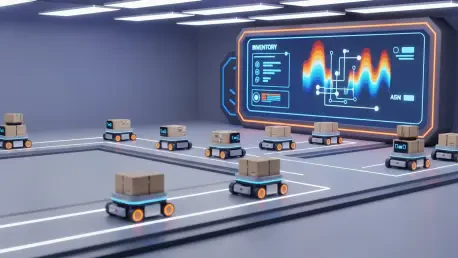
A significant breakthrough within this software update is the introduction of concurrent pick modes, allowing warehouse managers to move beyond the limitations of a single facility-wide workflow. Instead of forcing a uniform strategy across an entire site, the platform enables aisle-by-aisle customization that takes into account the specific layout and inventory characteristics of each zone. This technological efficiency is further enhanced by a feature known as Smart Bypass, which targets the high responsiveness required for modern fulfillment by enabling direct-to-pick routing. This specific mechanism eliminates the traditional administrative delays and unnecessary transit points that often plague automated systems, effectively streamlining cycle times to their absolute physical minimums. Managers now interact with this complex ecosystem through a unified “single pane of glass” interface, which synchronizes tasking and error resolution across diverse hardware types, such as the Chuck and Porter robotic units. This hardware-agnostic approach ensures that the intelligence layer remains the central nervous system of the operation, allowing the software to dictate the most efficient path for both human labor and autonomous machines without being tethered to a specific manufacturer’s rigid ecosystem or a predetermined hardware configuration.
The financial implications of this transition toward data-driven intelligence were starkly evident in the operational data released this year, showing that the adaptive model could triple picking productivity while securing a full return on investment in as little as six months. From 2026 to 2028, forward-thinking logistics providers prioritized the synchronization of human workers and sophisticated robotics through AI-driven orchestration to combat tightening profit margins. These organizations moved toward a unified effort where warehouse floors were optimized for specific operational realities rather than theoretical averages, effectively neutralizing the need for seasonal labor surges. Leaders in the space adopted these hardware-agnostic platforms to maintain long-term flexibility, ensuring that their infrastructure could evolve as quickly as consumer expectations changed. The focus shifted from merely acquiring faster robots to implementing smarter software layers that could resolve errors and reallocate tasks on the fly. By integrating these adaptive workflows, facilities successfully mitigated the risk of obsolescence and established a foundation for sustainable, high-velocity growth. Companies that invested in these granular control systems found themselves better positioned to handle the complexities of modern commerce, turning their logistics centers from cost-heavy liabilities into high-performance assets that consistently outperformed traditional benchmarks.