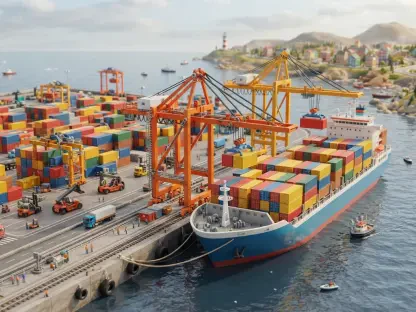

The rhythmic pulse of global trade depends on a delicate sequence of narrow passages where a single geopolitical tremor can freeze the movement of millions of tons of cargo within hours. The Strait of Hormuz, a narrow waterway handling a third of the world’s liquefied natural gas and twenty percent of its oil, has become the epicenter of a logistical storm that threatens to ground global markets. During a media briefing at the Port of Los Angeles, trade experts and geopolitical analysts issued a stark warning: what happens in the Middle East no longer stays in the Middle East.
As regional tensions escalate into systematic blockades, the very architecture of how goods move from East to West is being dismantled. This shift is forcing a radical reappraisal of maritime security and economic endurance among the largest players in the trade industry. The current atmosphere of instability suggests that the historical reliance on these predictable lanes is no longer a viable foundation for a modern economy.
The Fragile Arteries of International Trade
Understanding the current volatility requires looking beyond localized skirmishes to the ripple effect that disrupts thousands of vessel positions simultaneously. When a primary transit corridor becomes a no-go zone, the immediate impact is a chaotic relocation of assets that can take months to untangle. This matters to the average consumer because the instability directly correlates with the cost of energy and food.
The agricultural and energy sectors are currently the most vulnerable to these supply chain fissures. As the United States remains heavily invested in securing these routes, the lack of robust international coalition-building has left the global trade network in a state of profound uncertainty. Without a unified front, individual shipping companies are left to decide whether to risk transit or incur the massive costs of rerouting around entire continents.
Why a Regional Spark Ignites Global Inflation
The strategic mismatch between global powers and regional actors has created a high-stakes chess game of logistics. The United States often operates with a real estate mentality focused on rapid outcomes and immediate de-escalation. In contrast, regional actors like Iran utilize a protracted, slow-moving strategy where economic pain is leveraged over years rather than weeks. This divergence in pacing makes diplomatic resolutions difficult to sustain.
Washington’s current strategy involves a gamble regarding the China factor, restricting Chinese access to Iranian petroleum in the hope that Beijing will use its weight to force a resolution. However, an over-fixation on Middle Eastern waters has created strategic blind spots in other vital areas, specifically the South China Sea and Latin America. These regions are now facing decreased maritime oversight as resources are pulled toward the Persian Gulf.
The Strategic Mismatch and the Chess Game of Logistics
Domestic policy maneuvers have also struggled to keep pace with these global realities. Recent shifts, such as the 60-day Jones Act waiver, failed to produce the expected relief for American consumers. This highlights that legislative changes at home cannot easily bypass global geopolitical bottlenecks. The reality is that maritime industry leaders find it nearly impossible to plan cargo movements effectively when the landscape shifts daily.
Dr. Jerrold D. Green of the UCLA Burkle Center and Port of Los Angeles Executive Director Gene Seroka categorized this era as a global crisis disguised as a regional conflict. They argued that the concept of blockading the blockaders is failing to gain international traction, leaving the U.S. to shoulder the burden of maritime policing alone. This permanent state of reactive logistics has replaced the proactive trade planning of previous decades.
Expert Perspectives on the “Blockading the Blockaders” Doctrine
Navigating this volatile maritime landscape required a shift toward long-term resource relocation and dynamic inventory buffering. Organizations moved away from a reliance on single-point corridors and invested in multi-modal transport options that bypassed high-conflict zones. To counter the effect of vessel delays, businesses transitioned from just-in-time to just-in-case inventory models, specifically for critical energy and agricultural components.
Trade entities integrated real-time geopolitical intelligence into their supply chain software to predict bottlenecks before they resulted in stranded assets. Preparing for months-long disentanglement processes involved pre-positioning containers and tankers in neutral waters to ensure faster response times. These strategies eventually formed the blueprint for a more resilient, albeit more expensive, global commerce network that prioritized security over speed.