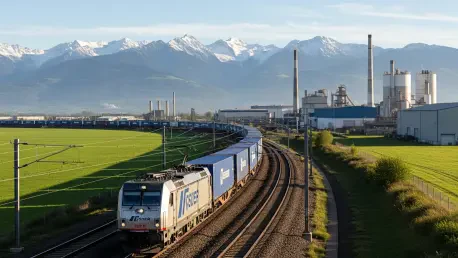

The recent inauguration of the Qinghai-Dong Nai freight rail corridor in June 2026 marks a transformative moment for continental trade, effectively bridging the vast industrial expanses of western China with the high-growth manufacturing clusters located in southern Vietnam. This four-thousand-kilometer artery is more than just a logistical achievement; it represents a fundamental shift in how supply chain managers approach the movement of bulk materials across Asia. Historically, the reliance on maritime routes and lengthy trucking segments created bottlenecks that hampered the growth of landlocked Chinese provinces. By utilizing a synchronized network that includes the Qinghai-Tibet Railway and the Vietnam Railways Corporation, this new route proves that inland logistics can compete with traditional shipping. The initial shipment of 1,000 tonnes of PVC plastic resin from Shuangzhai station to Trang Bom Station serves as a proof of concept for a future where rail is the backbone of Asian commerce.
Redefining Logistics: Speed and Predictability
The reduction in transit time from fifteen days to just seven represents a monumental leap in operational efficiency for regional manufacturers. Under the previous regime, goods moving from the interior of China to southern Vietnam were subjected to a fragmented journey involving long-haul trucking and sea freight transfers. This old model was notoriously susceptible to port congestion at major coastal hubs and the seasonal vagaries of maritime weather, which often led to costly delays and disrupted production lines. The direct rail link eliminates these variables by providing a scheduled, weather-independent alternative that guarantees a predictable flow of materials. For companies operating on thin margins, the ability to halve the time spent in transit translates directly into lower overhead and a more responsive supply chain. This reliability is vital for the chemical and raw material sectors, where large volumes must be moved consistently to keep downstream factories running. This corridor truly stabilizes the regional production cycle.
Beyond mere speed, the financial impact of this corridor lies in the optimization of working capital and the refinement of production schedules. When transit times are cut in half, the amount of inventory held in the transit pipeline is reduced, allowing businesses to reallocate capital toward research or facility expansion. This shift supports the wider adoption of just-in-time manufacturing across Southeast Asia, as factory managers can now order components with the confidence that they will arrive within a tight, seven-day window. Such agility is essential in a market where consumer preferences and demand cycles are becoming increasingly volatile. By streamlining the connection between Chinese resource hubs and Vietnamese assembly lines, the rail corridor acts as a catalyst for a leaner industrial ecosystem. This structural change encourages a move away from defensive stockpiling and toward a more dynamic, flow-based logistics strategy. This evolution will benefit the entire region and redefine manufacturing flexibility for years to come.
Strengthening Ties: Geopolitical and Economic Alignment
The strategic importance of this rail project extends far beyond logistics, reflecting a deeper level of economic and diplomatic alignment between Beijing and Hanoi. As a central component of the Belt and Road Initiative, the corridor strengthens China’s position as a primary logistical hub for the Asian continent while providing Vietnam with the infrastructure necessary to sustain its rapid industrial growth. By establishing a dedicated inland route, both nations are effectively creating a strategic buffer against the volatility often encountered in traditional maritime shipping lanes, such as fluctuations in fuel prices or geopolitical tensions. This terrestrial alternative ensures that trade can continue relatively unimpeded, regardless of external pressures affecting oceanic freight. The collaboration required to synchronize the technical standards and customs procedures underscores a shared commitment to long-term economic stability and mutual prosperity. This project serves as a model for future cross-border infrastructure initiatives.
Furthermore, the corridor serves as a vital economic lifeline for the landlocked provinces of western China, which have historically struggled to compete with the country’s prosperous coastal regions. For years, the lack of direct, efficient access to international markets has limited the industrial potential of provinces like Qinghai, making their exports more expensive and less competitive. The new rail link levels the playing field by connecting these inland industrial centers directly to the vibrant export markets of Southeast Asia, bypassing the need for long detours to eastern seaports. This development is a key part of a broader strategy to balance regional economic growth and reduce the wealth gap between the interior and the coast. As these western hubs become integrated into the global supply chain, they are likely to attract more investment, transforming them from peripheral players into central nodes of industrial activity. This shift revitalizes the local economy and creates a more resilient trade profile for the interior.
Industrial Synergy: Fueling the Manufacturing Heartlands
Selecting Dong Nai as the primary southern terminus for this corridor was a highly calculated decision designed to bolster one of Vietnam’s most critical industrial heartlands. The province is home to a massive concentration of electronics, automotive, and textile manufacturing clusters that serve as the backbone of the country’s export-driven economy. These industries require a steady and voluminous supply of raw materials, such as the PVC plastic resin carried on the corridor’s maiden voyage, to maintain high-capacity production. By providing a direct rail link to Chinese chemical and mineral centers, the project ensures that these manufacturing hubs remain globally competitive by lowering input costs and securing the supply chain. This infrastructure allows Dong Nai to process materials more efficiently, reinforcing its status as a top-tier destination for corporations looking to diversify their manufacturing bases. This synergy between resource extraction and assembly creates a powerful regional value chain that is difficult for others to replicate.
In addition to economic benefits, the transition from road and sea to rail transport addresses the urgent global demand for more sustainable and environmentally responsible supply chains. As international environmental standards become increasingly stringent, companies are under pressure to reduce the carbon footprint associated with their logistics operations. Rail transport is significantly more carbon-efficient than long-haul trucking, offering a green alternative that helps businesses meet their sustainability targets without sacrificing speed. By shifting bulk cargo from the highways to the tracks, the corridor contributes to a reduction in regional traffic congestion and lowers overall greenhouse gas emissions. This environmental advantage is becoming a major selling point for trade within the region, as eco-conscious investors and consumers prioritize brands that demonstrate a commitment to low-carbon logistics. Consequently, the rail corridor is a vital component of a forward-looking strategy for sustainable industrial development across the continent.
Scaling the Network: Future Connectivity and Strategic Expansion
The long-term vision for this corridor involves a rapid scaling of services and the inclusion of more industrial hubs, such as the manufacturing city of Suzhou. Plans are in motion to optimize return trips, ensuring that the trains do not return north empty but instead carry Vietnamese agricultural products, electronics, and textiles back to Chinese consumers. This circular trade model is essential for maximizing the economic viability of the rail line and fostering a more balanced relationship between the two nations. Looking ahead, there is potential to expand this network into neighboring Cambodia and Laos, creating a comprehensive trans-ASEAN freight system. Such an integrated rail network would allow for seamless land-based trade across the Indochinese Peninsula, reducing the region’s dependence on maritime routes. This expansion would turn inland rail into a strategic asset capable of rivaling the throughput of the world’s busiest ports, fundamentally altering the geography of Asian commerce and creating a new paradigm for continental logistics.
The successful implementation of the Qinghai-Dong Nai rail corridor established a new benchmark for cross-border cooperation and logistical innovation. It demonstrated that terrestrial routes could provide a viable, high-speed alternative to maritime shipping, prompting supply chain managers to re-evaluate their regional strategies. Moving forward, businesses were encouraged to integrate rail logistics into their core operational plans to capitalize on the reduced transit times and lower carbon emissions. Governments and private investors focused on upgrading secondary rail lines and port-to-rail infrastructure to eliminate remaining bottlenecks. The focus shifted toward digitizing customs processes and enhancing technical interoperability to ensure that goods moved across borders with minimal friction. By prioritizing the expansion of this inland network, regional players secured a more resilient future for Asian trade. This strategic pivot toward rail enhanced industrial competitiveness and laid the groundwork for a more integrated and prosperous economy.