
The seamless experience of receiving a parcel from halfway across the world within a few days often masks the incredibly complex and fragile dance of logistics that defines the modern Gulf Cooperation Council marketplace. While millions of shoppers in Riyadh, Dubai, and Kuwait City interact daily with sleek mobile applications and intuitive checkout processes, the physical movement of those goods relies on an invisible network of facilities, labor, and regulatory hurdles that operate far from the consumer’s sight. This ecosystem has matured significantly, moving past simple courier services to become a sophisticated multi-modal operation that connects global manufacturing hubs directly to the specialized demands of the local population. Whether it is a niche health supplement from the United States or high-end electronics from East Asia, the journey is dictated by a series of high-stakes hand-offs between independent actors who must maintain perfect synchronization to meet the expectations of an increasingly demanding consumer base. In this environment, the efficiency of the “invisible” back-end has become the primary differentiator for success, determining which retailers thrive in an era where brand loyalty is often secondary to delivery speed and reliability. Understanding this machinery requires looking beyond the digital interface and examining the intricate web of customs brokers, warehouse operators, and last-mile drivers who collectively bridge the vast distance between global supply and the regional doorstep.
The Logistics Architecture: From Free Zones to Front Doors
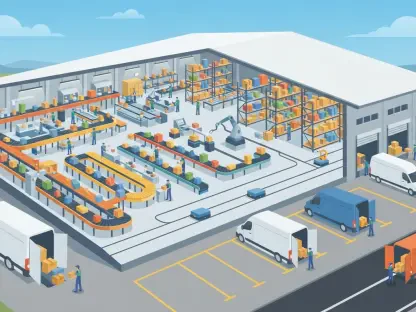
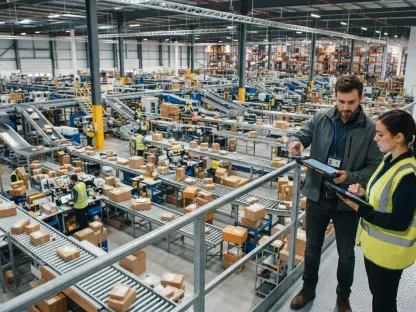
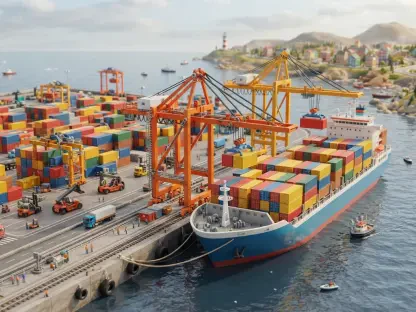
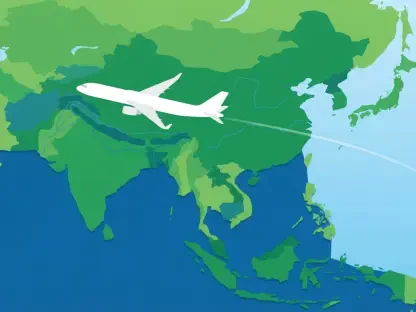
The initial stage of a parcel’s journey often begins in a specialized free-zone warehouse, such as those located in Dubai’s Jebel Ali or Dubai South, where goods exist in a state of jurisdictional suspension. These hubs serve as the nerve centers of regional trade, allowing international retailers to store inventory close to the end consumer without immediately triggering the payment of duties or taxes. In these high-tech facilities, automated sorting systems and human teams work in tandem to inspect incoming shipments, repackage them for individual delivery, and group them into consolidated loads to optimize transportation costs. This consolidation is a critical cost-saving measure, as shipping thousands of individual items separately would be economically unfeasible for most cross-border operations. Once a shipment is ready to move, freight forwarders take the lead, acting as the architects of the journey by navigating the complexities of global shipping lanes. In recent periods, this role has become even more vital as many logistics providers have shifted away from traditional sea routes, opting instead for more expensive but reliable air freight to bypass regional maritime disruptions and maintain the strict delivery windows that modern consumers expect.
Once a parcel arrives at its destination country, the focus transitions to the licensed customs broker and the land transportation fleet, both of which are essential for the “mid-mile” leg of the journey. The broker carries the heavy responsibility of accurately classifying every item within a shipment to ensure that the appropriate 5% tariff and Value Added Tax are applied correctly according to local laws. Even a minor discrepancy in documentation can cause an entire container to be flagged for inspection, leading to costly delays and potential fines for the retailer. After the goods have cleared the legal gatekeepers, bonded trucks take over the movement of cargo across internal GCC borders. These vehicles are designed to maintain the legal integrity of the items while they are in transit between different national jurisdictions, often navigating various checkpoints and weigh stations that require precise scheduling and coordination. This phase of the journey is characterized by a constant tension between the need for speed and the rigid requirements of national security and revenue protection, making the role of the customs broker one of the most intellectually demanding and high-pressure positions in the entire logistics chain.
The Invisible Chokepoints: Where Speed Meets Bureaucracy
The total duration of a delivery is rarely a reflection of the speed of the aircraft or the truck, but rather the cumulative effect of what industry experts call “dwell time.” This refers to the periods when a parcel sits idle in a warehouse or on a tarmac, waiting for a hand-off between two different companies or for a regulatory official to sign off on a digital manifest. These gaps, or “seams,” represent the most significant source of friction in the cross-border e-commerce industry, often accounting for more than half of the total time it takes for a product to reach its destination. For example, a parcel might fly from London to Riyadh in less than seven hours, but it could spend forty-eight hours sitting in a sorting center because it arrived on a Friday when certain administrative offices were closed. These administrative pauses are often invisible to the customer, who only sees a static “in transit” status on their tracking app. Addressing these inefficiencies requires a deep integration of digital systems between private logistics providers and government agencies to ensure that data moves faster than the physical goods themselves, allowing for pre-clearance and automated processing that can slash dwell times from days to mere hours.
The most notorious portion of the delivery process remains the “last-mile,” which is the final leg from a local distribution center to the customer’s doorstep. In many parts of the Gulf region, this stage is complicated by the historical absence of standardized street numbering systems and the rapid expansion of residential areas that digital maps sometimes fail to keep pace with. Consequently, delivery drivers often have to rely on a combination of landmark-based navigation and constant phone communication with the recipient to find the exact location. This manual approach introduces a high degree of variability and risk into the process, as a single failed delivery attempt can double the cost of the entire logistical operation. To combat this, many companies are now investing in advanced geocoding technology and localized addressing solutions that allow customers to pin their exact location on a map during the checkout process. Despite these technological advances, the last mile remains the most expensive and labor-intensive part of the journey, highlighting the persistent challenge of reconciling high-speed global trade with the granular and often unpredictable realities of local infrastructure.
Strategic Frameworks: Comparing Rented and Owned Networks
Retailers operating in the GCC must decide whether to leverage a “rented” network of third-party providers or to build an integrated model where they exert more control over the supply chain. The rented model is the most common choice for small to medium-sized enterprises, as it allows them to tap into the existing infrastructure of global giants like DHL, FedEx, or Aramex without the need for massive capital investment. By hiring a patchwork of specialized vendors to handle different stages of the process, these retailers gain a level of flexibility that is essential in a volatile market. However, this fragmented approach often results in a lack of central accountability and visibility. When a package is delayed at a border or lost in a warehouse, it can be notoriously difficult for the retailer to pinpoint exactly where the failure occurred among the multiple entities involved. This “finger-pointing” problem can lead to poor customer service experiences, as the retailer is often just as much in the dark as the customer until the logistics provider provides a manual update, which may take several business days to arrive.
In contrast, a smaller group of larger retailers and specialized platforms have opted for a more vertically integrated approach to manage their international operations. Companies like the regional e-commerce player Ubuy have sought to minimize the “seams” in the logistics chain by operating their own international consolidation centers in key global hubs such as the United States, the United Kingdom, and Japan. By controlling the inspection and packing process at the point of origin, these companies can ensure that all documentation is perfect before the goods ever leave the warehouse, significantly reducing the likelihood of customs delays. While they still rely on major airlines and couriers for the actual movement of goods, owning the handling and information flow allows them to provide more accurate tracking and faster resolution of issues. This model is not without its drawbacks, however, as it requires substantial fixed costs in terms of warehouse leases, staff, and localized software systems. Critics also point out that these costs are often passed on to the consumer, meaning that while the service might be more reliable, it is not always the most competitive option in terms of price for the end user.
Mitigating Risks: Digital Catalogs and Geopolitical Realities
One of the most persistent operational risks in the cross-border trade is the “dirty secret” of catalog management and legal compliance across different jurisdictions. Maintaining a digital storefront that stays in sync with the ever-changing import laws of multiple countries is a monumental task that requires sophisticated automated filters and constant human oversight. For instance, a product that is perfectly legal to sell in Europe might be restricted or require special licensing in Saudi Arabia or Kuwait due to religious, health, or safety regulations. If a retailer fails to prevent these items from appearing on their local website, they risk not only the seizure of the goods but also heavy fines and the potential loss of their operating license. Furthermore, machine-translated product descriptions can sometimes inadvertently use language that is culturally insensitive or legally problematic, leading to further complications at the border. Modern retailers must therefore invest heavily in localized compliance engines that can instantly cross-reference every SKU in their inventory against a database of regional restrictions to ensure that only compliant products are available for purchase.
External shocks such as geopolitical tensions and global shipping crises also represent a constant threat to the stability of the logistics network. When traditional shipping routes are compromised by regional instability, the entire industry is forced to pivot almost overnight, often leading to a massive spike in transportation costs and a sudden shortage of cargo space. These disruptions test the resilience of even the most well-established logistics models, as companies must find alternative routes or modes of transport to keep their promises to customers. In many cases, this has meant a strategic shift toward “near-shoring” or holding larger amounts of safety stock within the GCC itself, rather than relying entirely on just-in-time delivery from international warehouses. This shift represents a fundamental change in the economics of cross-border e-commerce, moving from a model of pure efficiency to one of “just-in-case” resilience. The ability to navigate these global disruptions effectively has become a core competency for any major e-commerce player in the region, proving that the digital economy is still very much at the mercy of the physical world’s infrastructure and politics.
Regional Integration: The Path to a Single Window System
The long-term growth of the e-commerce sector in the Gulf is inextricably linked to the ongoing efforts of GCC member states to harmonize their trade regulations and digital infrastructure. While a common customs law has been in place for years, the practical implementation of these rules often varies from one country to another, creating a complex regulatory landscape for logistics providers to navigate. Experts in the field argue that the ultimate solution to this complexity is the implementation of a “single window” system, where a single digital filing would satisfy the regulatory requirements of every country in the region simultaneously. This would eliminate the need for redundant paperwork and allow for a more fluid movement of goods between member states, effectively creating a unified internal market. Such a system would require an unprecedented level of data sharing and trust between national governments, but the economic rewards in terms of reduced friction and increased trade volume would be substantial, potentially positioning the GCC as one of the most efficient e-commerce markets in the world.
The regional transition toward a fully integrated logistical framework was eventually solidified through the collective adoption of harmonized digital protocols. Policy makers recognized that the high cost of fragmented bureaucracy acted as a hidden tax on consumers and a barrier to entry for small businesses. By streamlining the “invisible” side of trade, the industry successfully transformed from a series of disjointed national operations into a cohesive regional powerhouse. Logistics providers finally achieved a level of standardization where the complexity of international shipping was completely hidden from the user, making a delivery from a different continent feel as routine as a local purchase. This shift was supported by significant investments in automated customs clearing and AI-driven route optimization, which collectively reduced the error rates in documentation. As the systems became more reliable, the focus moved from merely delivering a parcel to optimizing the entire lifecycle of the product, including sustainable packaging and efficient return logistics. These improvements ensured that the GCC remained a competitive and attractive destination for global brands and local entrepreneurs alike, setting a new standard for cross-border trade efficiency.