
Navigating the complex skies of modern logistics requires balancing the immediate demands of overnight speed against the brutal reality of multi-billion-dollar operating costs. As traditional mail volumes continue to dwindle, a seismic shift is occurring in how national postal services manage their transportation networks. While consumers increasingly pivot toward ground-based shipping to save money, agencies find themselves caught in a high-stakes tug-of-war between maintaining expensive flight schedules and transitioning to more efficient surface routes. This analysis explores the friction inherent in the USPS-UPS strategic alliance and the broader implications for the future of global cargo.
Data Trends and Case Studies in Modern Postal Operations
Tracking the Decline of Premium Air Volumes and Operational Shifts
Priority Mail volume experienced a sharp 24.1% decline as of last year, signaling a clear market preference for economy over speed. Paradoxically, this drop led to an unexpected operational maneuver where First-Class Mail diverted to air transit spiked from a negligible 2% to nearly 50%. This surge highlights a reactive strategy where lower-priority letters are being flown across the country, not because the service requires it, but because the infrastructure is already paid for and underutilized.
Case Study: The USPS and UPS $10 Billion Strategic Agreement
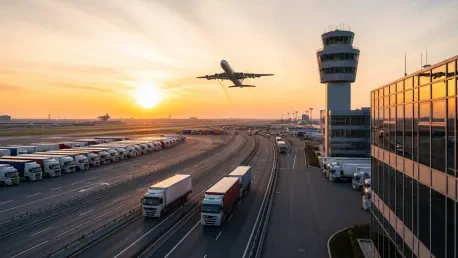
Central to this trend is the $10 billion strategic agreement between the USPS and UPS, which remains effective through 2030. This contract mandates minimum daily volume thresholds, creating a rigid financial environment where failing to fill planes results in heavy penalties. To avoid approximately $127 million in contractual surcharges, the postal service has been forced to push ground-destined mail into the sky, revealing a major disconnect between actual consumer behavior and long-term logistical commitments.
Industry Expert Insights and Regulatory Scrutiny
The OIG Perspective: Critiquing Forecast Accuracy and Strategic Consistency
The Office of Inspector General has raised alarms regarding this strategic contradiction, questioning why premium air networks are being utilized for mail that does not require expedited handling. Oversight reports emphasize that the current model lacks forecasting accuracy, having failed to predict the rapid pivot toward surface logistics. This misalignment suggests that the initial projections used to ink the UPS deal may have been overly optimistic regarding the longevity of air-dependent shipping volumes in a cost-conscious economy.
Leadership Perspectives: Defending the $1.7 Billion Savings Initiative
Conversely, postal leadership continues to champion the $1.7 billion in annual savings achieved through recent network initiatives. Management argues that utilizing the air network for First-Class Mail is a pragmatic solution that maintains favorable pricing tiers while simultaneously improving delivery reliability for the average customer. They view the current air-heavy model as a stabilizing force that prevents the agency from facing even steeper financial losses during a volatile transitional period for the shipping industry.
The Evolution of Global Postal Logistics Models
Balancing Contractual Obligations with Ground-First Initiatives
Tethering a national service to decade-long air cargo contracts creates a significant hurdle for ground-first initiatives. While surface transportation offers lower carbon footprints and reduced costs, the legal weight of existing agreements prevents a total pivot. Renegotiating these massive logistics deals is becoming a priority, as market realities require more flexibility than traditional, rigid cargo blocks allow.
Potential Risks and Rewards of Long-Term Air Cargo Commitments
The ripple effects of these decisions extend to the broader aviation industry, where traditional carriers rely on steady postal volumes for operational stability. If the trend of ground-to-air diversion continues solely to meet contract minimums, it risks propping up an obsolete infrastructure model that delays necessary innovation in green surface logistics. However, if managed correctly, these commitments could provide the bridge funding needed to modernize sorting facilities before a final transition to ground-based networks.
Summary and Final Strategic Outlook
The strategic assessment of postal air networks demonstrated that rigid contractual obligations often lagged behind rapid shifts in consumer preference. Experts identified that the most effective path forward involved the implementation of elastic logistics agreements that adjust to real-time volume fluctuations. By prioritizing algorithmic forecasting and diversifying transport modes, the industry successfully mitigated the risk of stranded assets in an increasingly ground-centric market. Leaders eventually recognized that the survival of postal networks depended on their ability to decouple service standards from specific transport methods, allowing for a more resilient and financially sustainable operation.