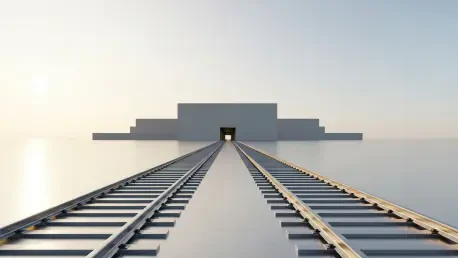

The fundamental mechanics of how corporations choose their physical footprints have shifted from a surface-level search for proximity to major highways toward a deep-rooted obsession with high-capacity rail connectivity. This transition represents a significant reorganization of the industrial site selection hierarchy, where rail service is no longer viewed as a secondary amenity but as a mandatory front-end requirement. As heavy manufacturing and energy-intensive sectors expand across North America, the ability to move massive volumes of raw materials via iron horse has become the primary filter for potential locations.
The Strategic Reversal of Priorities in Modern Industrial Real Estate
The surge in domestic reshoring efforts has intensified the demand for sites that can support high-capacity freight infrastructure. Industrial developers and Class I rail operators are increasingly collaborating to design shovel-ready mega-sites that integrate seamlessly with national networks. These massive plots of land are being optimized for the specific needs of large-scale production, ensuring that multi-modal connectivity is baked into the site’s DNA from the moment the first survey is conducted.
Modern logistics strategies now prioritize heavy manufacturing hubs that can leverage rail for bulk inbound supply. The role of multi-modal connectivity has evolved from a utility support function to a foundational pillar of operational viability. In the current economic climate, the speed at which a facility can reach its full production capacity depends heavily on the pre-existing rail infrastructure available at the chosen site.
Driving Force: The Rise of Transportation Optionality and Market Resilience
Strategic Flexibility and the Pivot Toward Multi-Modal Freight
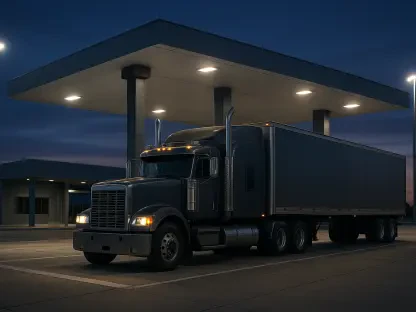
Strategic flexibility serves as the primary hedge against the inherent volatility of the trucking industry and fluctuating fuel prices. Major advisory firms identify transportation redundancy as a core competitive advantage that allows companies to navigate disruptions without halting production. Companies are moving away from the fragile lean supply chains of previous decades in favor of resilient networks that can pivot between freight modes at a moment’s notice.
Consumer behavior shifts have also played a role, requiring faster and more consistent replenishment of regional distribution hubs. Having the ability to switch between long-haul rail and regional trucking provides a necessary buffer against localized congestion or capacity crunches. This redundancy is now viewed as a strategic asset rather than a redundant cost, providing a level of operational security that single-mode facilities simply cannot match.
Economic Indicators and the Financial Performance of Rail-Centric Sites
Financial performance data reinforces the shift toward rail-centric properties as a primary investment vehicle. Moving bulk goods via rail continues to offer substantial cost savings compared to long-haul trucking, particularly for inbound raw material streams. Institutional investors have taken note, as properties with immediate intermodal access are seeing higher valuations and stronger long-term asset appreciation compared to their highway-only counterparts.
Regional logistics corridors, especially those within the Golden Triangle, are experiencing a renaissance as rail investment fuels a new wave of industrial growth. Data-driven forecasts indicate that the valuation of rail-served industrial properties will continue to outpace the broader market over the next three years. This correlation between connectivity and capital preservation has made rail-adjacent land some of the most sought-after real estate in the industrial sector.
Overcoming the Complexity of Legacy Infrastructure and Site Readiness
Despite the clear advantages, bridging the last mile rail gap remains a significant hurdle for many developers. The capital expenditure required for spur construction and the physical integration of tracks into a site layout can be staggering. Furthermore, managing the extended timelines of rail-related environmental impact studies and permitting processes requires a high degree of patience and technical expertise.
Modernizing older industrial parks to accommodate larger, higher-efficiency locomotives often necessitates complex retrofitting that many legacy facilities are not equipped to handle. Success in modern development requires a direct line of communication between private developers, public utilities, and railroad carriers. Bridging this communication gap is essential for ensuring that infrastructure remains compatible with modern freight standards.
The Regulatory Framework Steering the Future of Freight and Logistics
Navigating the regulatory landscape has become more complex as federal and state infrastructure acts prioritize the modernization of existing rail corridors. Impactful legislation has paved the way for faster permitting of intermodal terminals, though compliance with new safety standards remains a top priority. Local economic development agencies are also playing a larger role by using land-use incentives to prioritize rail-adjacent projects that promise long-term economic stability.
Cybersecurity and data-sharing protocols have also emerged as critical components of the regulatory framework for integrated logistics networks. Ensuring that automated rail yards and digital tracking systems are secure from external threats is now a prerequisite for large-scale industrial projects. These regulations ensure that the physical infrastructure is supported by a robust and secure digital backbone.
Innovation and the Long-Term Evolution of Industrial Connectivity
Looking toward 2027 and beyond, innovation is set to further redefine industrial connectivity. The emergence of autonomous rail technology and automated intermodal transfer systems is expected to reduce dwell times and improve track usage efficiency. Artificial intelligence is already being utilized to optimize scheduling at industrial sidings, ensuring that freight moves with the precision of a high-tech warehouse.
These advancements align perfectly with sustainable energy goals, as rail offers a significantly lower carbon footprint than traditional over-the-road transport. The shift toward logistics ecosystems where manufacturing, warehousing, and rail service coexist in unified zones represents the next phase of industrial evolution. This synergy between technology and infrastructure provides a sustainable template for future growth.
Synthesizing the New Standard for Industrial Site Selection
The final analysis established that rail connectivity was no longer a secondary consideration for large-scale industrial projects. Occupiers who sought to future-proof their supply chains for the years ahead recognized the enduring value of transportation redundancy in a volatile global economy. By viewing rail as a primary strategic lever rather than a background utility, organizations built the resilience necessary to withstand external market pressures. This shift represented a fundamental change in how the industry valued physical assets and infrastructure integration.
Moving forward, firms focused on securing sites that integrated directly with Class I carriers while simultaneously implementing automated logistics protocols to optimize track usage. The successful strategies involved deep collaboration with regional economic development agencies to capitalize on new infrastructure incentives. The industry eventually reached a consensus that the most valuable sites were those capable of functioning as multi-modal nodes within a larger, unified logistics ecosystem. These actions provided a clear pathway for sustainable growth and operational stability as the industrial market entered a new era of connectivity.