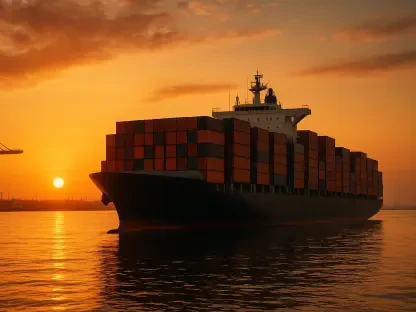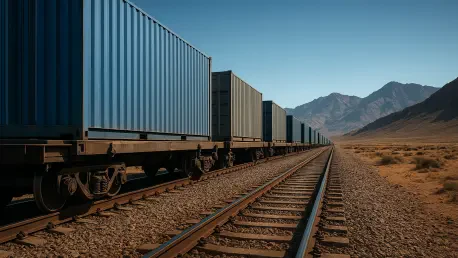

The rapid industrialization across the Maghreb region has forced a critical re-evaluation of how cargo penetrates the Moroccan market as traditional gateways struggle to keep pace with the current volume. As trade lanes tighten and demand for efficiency peaks, the reliance on a single maritime entry point has become a liability for high-stakes supply chains. Maersk has responded to this challenge by establishing a strategic logistics corridor that links the transshipment prowess of Tangier with the economic heartbeat of Casablanca. This initiative marks a pivot from standard shipping to an integrated logistics ecosystem designed to support the nation’s burgeoning industrial output.
Transforming the Moroccan Maritime and Logistics Landscape
The Tangier-Casablanca corridor acts as a vital economic artery, facilitating the movement of industrial materials and consumer goods into the interior. By utilizing the Port of Tangier, which serves as a primary Mediterranean hub, the new rail link effectively bypasses the high-density coastal congestion. This transformation allows for a more seamless integration between deep-sea maritime routes and domestic rail networks, ensuring that goods do not remain stagnant at the docks.
Moreover, this shift signifies a departure from port-centric models that often fail during peak traffic periods. Diversified intermodal networks offer the flexibility needed to maintain trade fluidity. The “Morocco Bridge” strategy is not merely about transportation; it is a calculated move to stabilize regional supply chains and ensure that trade remains resilient against external shocks and internal infrastructure limitations.
Evolving Dynamics in North African Supply Chain Management
Shifting Toward Intermodalism and Customer-Centric Logistics
The transition from road-dependent transport to synchronized rail-sea solutions reflects a broader trend Toward logistics modernization. By reducing the reliance on long-haul trucking, companies can achieve more predictable transit times and lower carbon footprints. Ruben Moratinos, a key sales manager for the region, has noted that this intermodal shift is complemented by value-added services such as customs clearance and interior storage, which remove the administrative burden from the importer.
Furthermore, the integration of final-mile delivery ensures that the supply chain remains uninterrupted from the vessel to the warehouse. Predictive transit times have transitioned from a luxury to a competitive necessity, allowing industrial players to plan their inventory with higher precision. This customer-centric approach addresses the specific hurdles faced by businesses operating in the increasingly complex Maghreb trade environment.
Quantifying Trade Surges and Future Infrastructure Capacity
National Ports Agency (ANP) data highlights the urgency of this transition, showing that cargo volume reached approximately 17 million tons through mid-2026. This represents a 7% increase over the previous year, placing immense pressure on existing terminal throughput. June 2026 alone experienced a 32% year-on-year traffic spike, underscoring the volatility and rapid growth of the Moroccan maritime sector.
The Port of Tangier is projected to continue its trajectory as the primary gateway for Mediterranean transshipment, absorbing the overflow that traditional hubs cannot manage. Rail links are expected to play a critical role in managing this growth from 2026 to 2028, providing the necessary capacity to handle higher volumes without compromising speed. Long-term viability depends on the ability of these rail networks to scale alongside the expanding port infrastructure.
Navigating Bottlenecks and Enhancing Regional Connectivity
Operational constraints within the Port of Casablanca have long impacted the efficiency of national trade, as the facility handles roughly 35% of Morocco’s total port traffic. This heavy concentration creates a single point of failure during periods of high demand or equipment maintenance. By strategically diverting arrivals to Tangier, the logistics chain mitigates the risks associated with this bottleneck, offering an alternative route that bypasses the traditional delays.
Overcoming last-mile hurdles involves more than just moving containers; it requires integrated inland logistics packages that synchronize rail schedules with local delivery fleets. This connectivity develops a level of resilience against global trade pressures and localized occupancy fluctuations. Businesses that adopt these diversified routes find themselves better positioned to weather the unpredictability of modern maritime logistics.
Aligning Intermodal Operations With National Maritime Standards
Adherence to the regulatory framework governed by the National Ports Agency (ANP) is essential for maintaining smooth intermodal operations. Compliance requirements for cross-regional rail transit ensure that cargo handling meets international safety and security benchmarks. These standards provide a reliable baseline for the movement of sensitive industrial freight across the country.
Standardized customs protocols also play a vital role in accelerating the flow of goods from the port to the hinterland. By streamlining these processes at the point of entry in Tangier, the delay between arrival and delivery is significantly reduced. Ensuring high safety standards across the rail network protects the integrity of commercial freight, fostering a secure environment for trade expansion.
Anticipating the Next Phase of Integrated Maghreb Logistics
Expansion of the Morocco-Europe trade corridor is expected to rely heavily on the continued enhancement of both maritime and land connectivity. Potential for digital disruptors and automated logistics systems could further streamline the link between Tangier and Casablanca, reducing manual errors and transit delays. These technological advancements will likely define the next era of regional trade.
Future growth areas include the diversification of routes to serve emerging industrial zones that lie beyond the established economic heartland. Sustainable rail transport will be a key factor in meeting global environmental efficiency benchmarks, making it an attractive option for multinational corporations. As the network matures, the integration of greener logistics solutions will become a standard requirement for regional competitiveness.
Synthesizing the Strategic Impact on North African Trade
The strategic pivot Toward high-capacity rail links successfully bypassed the persistent congestion at major maritime hubs. This transition provided businesses with a predictable and scalable supply chain, which was instrumental in maintaining economic momentum during a period of unprecedented trade growth. The integration of maritime and rail systems offered a robust blueprint for future infrastructure projects across North Africa.
Investors and stakeholders recognized the value of intermodal flexibility as a means to hedge against port-specific disruptions. The economic advantages for companies seeking to optimize their logistics costs became increasingly evident as the “Morocco Bridge” matured. Ultimately, the shift toward integrated solutions reshaped the regional trade landscape, setting a new standard for efficiency and resilience in the Maghreb.
Future considerations for the sector involved the adoption of decentralized warehousing to further reduce pressure on urban centers. By shifting the focus toward inland ports, the logistics industry successfully decoupled economic growth from coastal limitations. This evolution ensured that the Moroccan market remained a premier destination for international investors looking for reliable access to African and European consumers.