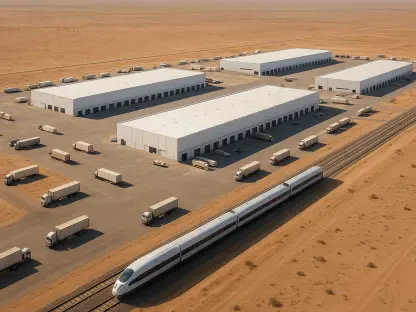

The Cabinet Committee on Economic Affairs has sanctioned 94.5 billion rupees to modernize India’s railway infrastructure through the construction of four high-capacity multitracking projects. This decisive investment marks a pivotal shift in the nation’s strategy to streamline its supply chain, targeting the industrial heartlands of Odisha, Jharkhand, West Bengal, and Chhattisgarh. For years, the reliance on saturated rail networks has bottlenecked the movement of essential commodities, often forcing industries to choose more expensive and carbon-intensive road transport. By expanding the physical footprint of the railway, the government intends to facilitate the seamless transit of iron ore, coal, and finished steel to domestic markets and international shipping ports. This initiative aligns with the vision of making the Indian economy more competitive by significantly lowering the overhead costs associated with moving goods. It is part of a synchronized effort to ensure that infrastructure keeps pace.
Strategic Infrastructure for Economic Resilience
Capacity Expansion: Strengthening the Industrial Corridors
The current expansion focuses on the doubling and tripling of lines in regions that serve as the primary source of the nation’s mineral wealth. By increasing the number of tracks, the Indian Railways can effectively separate slow-moving freight traffic from high-speed passenger services, which has historically been a significant cause of congestion and delays. This multi-tracking approach is expected to improve the average speed of freight trains, which currently lags behind many other developed rail networks. Faster transit times directly translate to higher turnover for rolling stock, allowing the same number of wagons to complete more trips in a given month. Furthermore, the inclusion of advanced signaling technologies during this phase ensures that the new tracks will be ready for automated train protection systems. This modernization effort is crucial for the eastern regions, where the density of industrial activity demands a robust logistics backbone for growth.
Resource Allocation: Linking Mining Hubs to Power Plants
Beyond just physical tracks, the projects are strategically located to link major mining hubs with power plants and manufacturing units. For instance, the improved connectivity between the coal fields of Odisha and thermal power stations across central India will reduce the risk of fuel shortages during peak cycles. By ensuring a steady supply of raw materials, the government is insulating the economy from supply chain disruptions that previously led to price volatility in the energy sector. The economic ripple effect of this 94.5 billion rupee investment is estimated to generate thousands of direct and indirect jobs during the construction phase from 2026 to 2028. This employment surge provides immediate benefits to rural and semi-urban communities located along the new rail paths. Additionally, the improved infrastructure creates a more attractive environment for private investment in warehousing and specialized machinery, fostering a deeper integration with the global markets.
Operational Integration and Future Sustainability
Logistical Synergy: Aligning with the National Master Plan
These railway projects serve as a core component of the PM Gati Shakti National Master Plan, which emphasizes a multimodal approach to national development. By integrating the expanded rail lines with existing road networks and inland waterways, the government is creating a cohesive ecosystem where goods can transition between different modes of transport with minimal friction. This synergy is essential for reducing the national logistics cost, which currently sits at a level that places a burden on Indian exports. The goal is to shift a larger portion of the freight load from highways to the tracks, a move that offers substantial environmental benefits by reducing the carbon footprint per tonne-kilometer of cargo moved. Modernized terminals and automated loading facilities at key junctions will further enhance this transition, ensuring that the “last mile” connectivity issues are addressed. This results in a more sustainable and resilient industrial framework by 2028.
Network Resilience: Planning for Long-term Scalability
Stakeholders in the manufacturing sector observed that the transition to high-capacity multitracking provided the necessary stability for long-term production planning. The government successfully utilized these infrastructure upgrades to foster a competitive domestic market, ensuring that small and medium enterprises gained better access to the national grid. By focusing on the high-demand corridors of the eastern states, the administration mitigated historical imbalances in regional development and paved the way for decentralized economic growth. Moving forward, the focus shifted toward the implementation of digital twin technology to monitor rail health and predict maintenance needs before they caused systemic delays. Future considerations should include the expansion of these multitracking models to the southern corridors to complete a nationwide loop. Maintaining this momentum required a commitment to continuous technological adoption and training a specialized workforce to manage complex rail systems.