
While the sight of a delivery van remains a staple of suburban life, the high-pitched hum of autonomous rotors is quickly becoming the definitive soundtrack of a modern, hyper-efficient logistics infrastructure. The autonomous drone delivery industry represents a significant advancement in last-mile logistics and retail efficiency. This review explores the evolution of the technology, its key features, performance metrics, and the impact it has on various applications. The purpose of this assessment is to provide a thorough understanding of the technology, its current capabilities, and the potential trajectory for its continued development.
The Shift Toward Autonomous Last-Mile Logistics
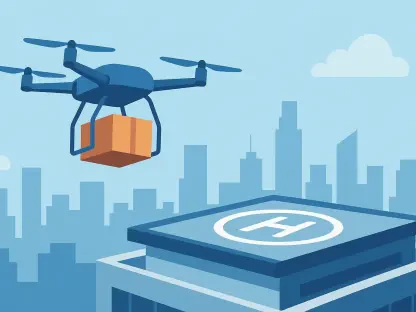
Transitioning from ground-based couriers to vertical takeoff and landing (VTOL) aircraft represents more than a speed upgrade; it is a fundamental shift in fulfillment architecture. By utilizing unmanned aerial vehicles (UAVs), high-density networks can bypass traditional traffic congestion entirely. This shift reduces delivery times from hours to minutes, positioning automated flight as a disruptive force in the broader technological landscape. Unlike traditional delivery trucks that are bound by road networks and traffic signals, these aircraft create a direct point-to-point bridge between the warehouse and the consumer.
Core principles of UAV technology are now being integrated into the heart of fulfillment networks to create a seamless flow of goods. This emergence is particularly relevant in suburban areas where traditional delivery methods are often slowed by complex street layouts. Automated flight does not merely complement existing systems; it actively replaces inefficient segments of the supply chain. This transition highlights a move toward a decentralization of delivery hubs, allowing for more localized and responsive distribution models.
Technical Components of the MK30 Ecosystem
The MK30 Aerial Platform and Flight Performance
The MK30 aircraft stands as a marvel of engineering with a six-rotor configuration that allows for precise vertical movement and stability. Its ability to transition from vertical lift to horizontal flight at speeds of 70 mph makes it significantly faster than traditional city transit. Performance metrics indicate a reliable five-pound payload capacity, which is sufficient for millions of consumer items ranging from pharmacy supplies to household essentials.
Operating in diverse weather conditions like light rain and wind has been a major focus for this hardware generation. Unlike previous iterations that were grounded by a light drizzle, the MK30 utilizes specialized motor shielding and aerodynamic refinements to maintain stability. This increased resilience ensures that delivery windows remain consistent, even when local weather conditions are less than ideal.
Intelligent Navigation and Detect-and-Avoid Systems
Safety in suburban environments depends on an intricate suite of sensors and artificial intelligence. These systems identify obstacles, other aircraft, and residential structures in real time to ensure reliable operation without human intervention. The intelligent navigation system essentially creates a dynamic digital map of the airspace, allowing the drone to make split-second decisions to avoid power lines, trees, or even birds that may cross its path.
This detect-and-avoid capability is the primary differentiator between the MK30 and its predecessors. By processing vast amounts of visual and radar data locally, the drone operates with a level of autonomy that requires zero pilot oversight. This technological leap is essential for scaling operations, as it allows a single ground controller to monitor a fleet of aircraft rather than operating one at a time.
Integrated Robotics and Fulfillment Automation
Behind every flight is an integrated robotics ecosystem, led by the Hercules autonomous robot and automated packing systems. These machines streamline the transition from warehouse shelves to the flight line by automating the picking and packing process. Once an item is selected, it is placed into a specialized container that is aerodynamically optimized for the drone’s underside.
Ground handlers perform rigorous pre-flight inspections and health checks on batteries and propellers, ensuring every craft meets strict airworthiness standards. This combination of robotic fulfillment and manual oversight creates a redundant safety loop. The integration of these robots ensures that the speed gained during flight is not lost during the loading process, maintaining the integrity of the 60-minute delivery promise.
Recent Advancements in International Operations
Recent developments include the expansion of services into international markets like the United Kingdom, specifically at the Darlington fulfillment center. This move was facilitated by the Civil Aviation Authority (CAA), which certified thousands of test flights to establish safety standards. These regulatory milestones demonstrate that drone technology is ready for global deployment beyond the initial trial phases in the United States.
International operations have also required the adaptation of software to comply with varying airspace restrictions and local noise ordinances. The successful integration into the UK’s airspace marks a turning point for global logistics, proving that the technology is adaptable to different regulatory environments. This progress has set a precedent for other nations to follow, accelerating the global adoption of autonomous aerial delivery.
Real-World Applications in Modern Retail
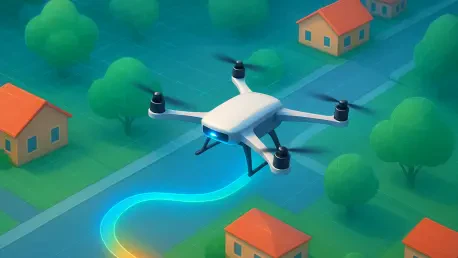
Within a 7.5-mile radius of major hubs, 60-minute delivery is now a reality for eligible customers. Digital mapping and AI-driven property assessment determine landing suitability for driveways and yards, removing the need for manual site surveys or consumer-placed markers. This service is integrated into standard subscription models, making ultra-fast delivery a consumer expectation rather than a luxury.
The mapping technology evaluates the topography and potential hazards of a customer’s property before the drone even leaves the warehouse. If a landing site is deemed unsuitable due to overhanging trees or uneven terrain, the system automatically redirects the order to a traditional delivery method. This high level of integration ensures that the customer experience remains smooth and predictable, regardless of the delivery platform used.
Regulatory, Technical, and Environmental Challenges
Despite progress, hurdles remain, particularly regarding strict airspace regulations and the constant need for weather monitoring. Noise concerns in residential areas and the limitations of current battery technology for longer missions present significant obstacles. While the MK30 is quieter than previous models, the collective hum of a large fleet still poses a challenge for community acceptance in quiet neighborhoods.
Environmental obstacles such as extreme heat and heavy precipitation still limit the operational window of these aircraft. Battery density remains a bottleneck, as increasing the weight of the battery to extend range simultaneously reduces the payload capacity. Ongoing efforts to refine noise-reduction engineering and enhance sensor reliability in adverse conditions are essential for the next phase of widespread adoption.
The Future of Aerial Delivery Infrastructure
Scaling drone networks to global locations and high-density urban environments requires breakthroughs in battery density and autonomous traffic management. Such advancements could allow for heavier payloads and longer flight durations, eventually replacing larger delivery trucks for more than just small parcels. The long-term impact of drone technology aims to reduce carbon footprints by moving light logistics to the sky.
Developing a more robust autonomous traffic management system is the next logical step for the industry. This system would function like a digital air traffic control, coordinating the paths of thousands of drones from different companies to prevent mid-air collisions. As these networks mature, they will likely become a standard component of global logistics, deeply integrated into the fabric of urban planning and retail infrastructure.
Conclusion and Final Assessment
The technical sophistication of the MK30 system and its integration into the global supply chain proved that autonomous delivery was no longer a conceptual experiment. By 2026, the transition to aerial logistics successfully redefined consumer convenience and established a new benchmark for delivery speed. The drone’s performance in international markets like the UK demonstrated that the technology was capable of meeting diverse regulatory and environmental standards.
Moving forward, the industry must prioritize the standardization of noise-abatement protocols and the expansion of heavy-lift capabilities to solidify drone delivery as a permanent fixture. Future considerations should include the development of multi-modal hubs where drones and autonomous ground vehicles work in tandem. This progression ensured that the logistics sector remained resilient and capable of meeting the increasing demands of a globalized economy.