
Shippers frequently find themselves trapped between two extremes: paying for a full 53-foot trailer that remains half-empty or navigating the complex surcharges of Less-than-Truckload (LTL) networks. This inefficient “no man’s land” of freight—typically ranging from 6 to 12 pallets—has created a significant operational vacuum in the logistics industry. As market volatility becomes the daily standard, the medium-duty box truck is no longer a peripheral asset but a critical bridge for specialized transport. This analysis explores how right-sized equipment solves the economic and physical challenges of contemporary shipping while providing a more resilient backbone for the evolving global supply chain.
The Evolution of Specialized Freight Movement
Historically, the American logistics sector was built on the principle of maximum scale, prioritizing the massive hub-and-spoke systems that dominated the late 20th century. For decades, the industry operated under the assumption that bigger was always better, pushing freight into the largest possible containers to maximize regional efficiency. This setup worked well when cargo was predictable and uniform, but the rise of “just-in-time” manufacturing has rendered this rigid architecture increasingly obsolete. The tipping point arrived when the costs associated with excessive handling and “dead space” began to outweigh the benefits of massive consolidation. Today, the industry is witnessing a shift toward decentralized distribution, where the agility of a vehicle matters more than its total cubic volume. Understanding this transition from a volume-centric to a velocity-centric model is vital for navigating the current market.
Strategic Advantages of Mid-Sized Equipment
Navigating the Economic Dilemma: Underutilized Capacity
One of the most persistent financial drains in modern logistics is the failure to align equipment size with specific shipment volumes. When a cargo load consists of roughly 10,000 pounds, it often triggers a price penalty in both LTL and Full Truckload (TL) models. LTL carriers frequently impose linear foot rules or excessive space surcharges because these shipments disrupt their density-focused terminal operations. Conversely, TL carriers charge a premium for a 53-foot trailer, even if half of that trailer is transporting nothing but air. Box trucks resolve this economic tension by offering a right-sized alternative that maximizes utility without the overhead of wasted space. This alignment ensures that logistics budgets are spent on actual transport rather than paying for the unused capacity of a larger vehicle.
Protecting Assets: High-Value and Irregular Freight
Product integrity remains a top priority, especially as shipments become more specialized and expensive. Traditional LTL shipping involves a high-touch environment where freight moves through multiple transload points, significantly increasing the probability of transit damage. For sensitive electronics, medical equipment, or custom retail fixtures, every forklift interaction represents a potential insurance claim or delay. Box trucks bypass this risk by offering a “point-to-point” delivery model that minimizes handling from origin to destination. Since the cargo stays on a single vehicle for the duration of the trip, the likelihood of mishaps is drastically reduced. This direct-move capability is particularly effective for irregular items that do not fit onto standard sorting belts, ensuring that fragile goods arrive without the wear and tear associated with industrial hub transfers.
Solving Constraints: The Last-Mile and Urban Access Challenge
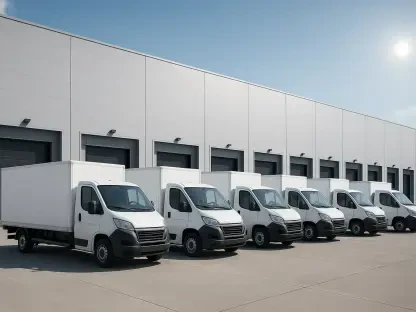
The geographical landscape of delivery has shifted away from isolated industrial parks toward congested urban centers and non-traditional drop-off points. Navigating narrow city streets or accessing active construction sites is a logistical nightmare for a tractor-trailer, often requiring expensive permits or specialized escorts. Box trucks, typically equipped with liftgates and high-maneuverability chassis, provide the physical flexibility needed to reach these challenging destinations with ease. They allow for ground-level offloading in areas without loading docks, making them indispensable for retail storefronts and small business delivery zones. Furthermore, because these vehicles are not tied to the strict schedules of terminal networks, they offer the operational freedom to meet tight appointment windows and provide same-day service that heavy trucking simply cannot match.
Emerging Trends: The Future of Agile Distribution
The current distribution landscape is evolving toward a “buffer” strategy, where small and medium-sized fleets serve as a hedge against unpredictable market spikes. Shippers are increasingly utilizing box trucks to manage seasonal surges that would otherwise overwhelm their dedicated contract carriers or primary LTL partners. Looking ahead from 2026 to 2028, the industry anticipates a significant surge in the adoption of electric box trucks, as city-specific emissions regulations become more stringent in major metropolitan hubs. These vehicles are ideal candidates for electrification due to their predictable routes and stop-and-go urban usage patterns. Additionally, testing for autonomous short-haul delivery is focusing heavily on this weight class, suggesting that the middle ground of logistics will be the primary testing ground for the next generation of transportation technology.
Implementing a Freight-First Logistics Strategy
Achieving peak efficiency requires a fundamental shift in how professionals approach mode selection and resource allocation. Rather than defaulting to traditional shipping methods, organizations must adopt a “freight-first” philosophy where the specific needs of the cargo dictate the equipment. This involves a rigorous assessment of seven key factors: weight, dimensions, pallet count, fragility, delivery site constraints, urgency, and total shipment value. By maintaining a diverse portfolio of carrier options, including reliable box truck capacity, businesses can mitigate the risks of driver shortages or sudden price hikes in the truckload market. This proactive approach allows logistics managers to remain flexible, ensuring that they can pivot their strategy in real time based on fluctuating regional demand and availability.
Strengthening the Supply Chain Through Flexibility
The box truck proved itself to be more than a local delivery tool; it functioned as a strategic necessity that addressed the persistent “middle ground” gap. By providing a viable alternative to the rigid constraints of LTL and TL shipping, these vehicles offered the precision and maneuverability required by a complex global marketplace. Organizations that prioritized equipment versatility achieved greater reliability and reduced their overall exposure to transit risks. The focus shifted toward a more responsive model where right-sizing became the standard for maintaining a competitive edge. Ultimately, the integration of medium-duty assets ensured that the supply chain remained resilient even as consumer expectations and urban delivery challenges intensified.