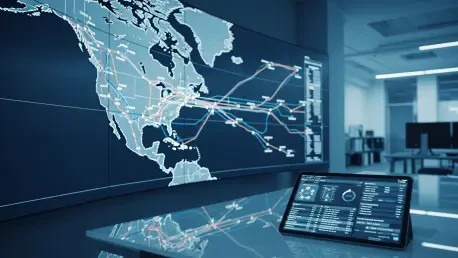

The fragmented nature of the North American Class I rail network has long served as a bottleneck for efficient coast-to-coast logistics, forcing freight to undergo time-consuming interchanges in congested hubs like Chicago or St. Louis. For decades, the industry has operated under the shadow of a missing link—a single, unified entity capable of transporting goods from the Pacific docks to the Atlantic seaboard without switching carriers. The prospect of a merger between Union Pacific and Norfolk Southern represents the most significant structural shift in the industry since the mid-twentieth century, potentially dissolving the invisible wall that separates the western and eastern territories. As supply chain volatility continues to define the mid-2020s, the pressure for a seamless transcontinental route has reached a fever pitch among shippers. This proposed consolidation is not merely about increasing scale; it is about rewriting the operational physics of the continent to meet modern demands. By streamlining the interchange process, a merged entity could slash transit times by forty-eight hours, providing a viable alternative to long-haul trucking and air freight on a scale never before realized in the United States.
Operational Efficiencies: Bridging the Continental Divide
The integration of Union Pacific’s expansive western reach with Norfolk Southern’s dense eastern grid would fundamentally alter how Precision Scheduled Railroading is applied across the country. Currently, the hand-off between these two titans often results in dwell time, where cars sit in classification yards for days awaiting a new crew and locomotive power from the receiving line. A unified dispatching system would allow for a continuous flow of high-priority intermodal traffic, utilizing AI-driven scheduling to synchronize departures from Long Beach directly to terminals in Northern Virginia. This level of coordination would allow the carrier to offer guaranteed delivery windows that currently elude the rail industry, effectively challenging the dominance of the trucking sector for time-sensitive cargo. Moreover, the consolidation of maintenance facilities and rolling stock procurement would provide the capital necessary to accelerate the deployment of hydrogen-powered locomotives and autonomous track inspection vehicles. This shift would modernize the fleet while simultaneously reducing the carbon footprint of transcontinental transit.
Beyond the immediate gains in transit speed, a merged Union Pacific and Norfolk Southern would possess the unique ability to bypass the historical chokepoints of the Midwest. Chicago has remained the ultimate hurdle for rail efficiency, as its complex web of intersecting lines often creates delays that ripple across the entire national economy. With a single carrier controlling the route from origin to destination, it becomes feasible to invest in large-scale bypass infrastructure or dedicated run-through trains that avoid the most congested urban interchanges entirely. Such a strategic realignment would not only benefit the merger partners but also alleviate the pressure on municipal transit systems and regional short-line railroads that share the same corridors. The resulting network would function less like a series of disconnected segments and more like a fluid circulatory system, capable of adjusting to sudden surges in import volumes or shifts in domestic manufacturing locations. This structural resilience is becoming increasingly vital as the United States onshores more industrial production to the South and Southwest regions of the country.
Regulatory Barriers: Navigating the Surface Transportation Board
The path toward a true transcontinental carrier is fraught with regulatory scrutiny from the Surface Transportation Board, which has grown increasingly wary of industry consolidation. Since the board’s recent overhaul of merger regulations, the burden of proof has shifted significantly toward the applicants, requiring them to demonstrate that the deal will actively enhance competition rather than merely maintaining it. Critics of the merger argue that such a behemoth would leave the remaining carriers, like BNSF and CSX, at a permanent disadvantage, potentially triggering a final round of consolidation that leaves only two major players in North America. To win approval, the companies would likely need to offer unprecedented concessions, such as granting trackage rights to competitors or divesting overlapping routes in critical industrial corridors. These requirements are designed to prevent captive shipping scenarios, where a single railroad controls the only viable path for specific commodities, thereby gaining the power to dictate rates without the threat of market competition or alternative routing options.
The movement toward a unified rail network offered a clear path for stabilizing the North American supply chain through increased capacity and reduced transit times. Stakeholders recognized that the success of this transition depended on the proactive modernization of aging terminals and the adoption of open-access policies for smaller regional carriers. Rather than viewing consolidation as a means to limit competition, the industry shifted toward a model where efficiency gains were shared through lower rates and higher service reliability. Policymakers and railroad executives cooperated to ensure that infrastructure investments targeted the most critical bottlenecks, effectively turning the dream of a transcontinental railroad into a functional reality. By prioritizing long-term resilience over short-term dividends, the rail sector reclaimed its role as the primary engine of domestic commerce. This evolution provided a definitive solution to the logistical hurdles of the past, setting a new standard for how heavy industry adapted to the needs of a fast-paced, digital economy while maintaining a commitment to environmental sustainability.