
Rohit Laila has spent decades at the forefront of the logistics industry, witnessing firsthand the shift from traditional long-haul shipping to the complexities of modern urban delivery. As a specialist in supply chain innovation, he understands that the “last mile” is often the most difficult part of the journey for any package. In this discussion, we explore the efficacy of New York City’s microhub pilot program, examining how the transition from massive trucks to nimble e-cargo bikes and handcarts is reducing congestion. We also delve into the tangible impact on traffic volume, the strategic importance of current pilot locations, and the necessity of public-private partnerships in preparing for a future where freight demand is expected to surge.
In the context of a bustling metropolis like New York, how do microhubs fundamentally reshape the way goods move from warehouses to consumers’ doorsteps?
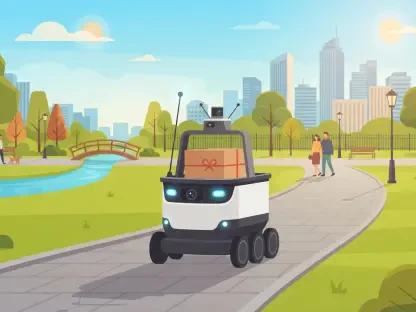
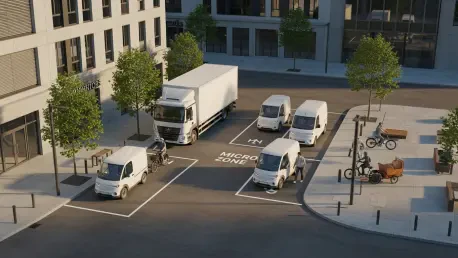
Microhubs act as critical relief valves for our overburdened city arteries by providing dedicated curbside spaces for the heavy hitters of logistics to offload their cargo. Instead of a massive 18-wheeler idling in a double-lane and blocking traffic, these hubs allow for a seamless handoff to nimble e-cargo bikes, handcarts, or electric vans for the final leg of the journey. You can almost feel the tension leave the street when a single truck offloads its burden to several smaller, quieter vehicles that don’t choke the air with exhaust. This transition isn’t just about moving boxes; it’s about reclaiming the rhythm of the city from the roar of heavy engines and the constant frustration of gridlock.
When we examine the data from the current pilot program, how significant is the reduction in truck traffic and what does this mean for the city’s daily logistics?
The results are quite transformative, with the pilot program successfully removing more than 3,000 truck trips from city streets since its launch last year. Every single day, these microhubs manage to funnel roughly 860 packages through handcarts and another 110 packages via cargo bikes, proving that small-scale solutions can handle the heavy lifting of urban commerce. By shifting these deliveries away from full-size trucks, the city is seeing a measurable decrease in vehicle miles traveled and a noticeable easing of congestion on local streets. This efficiency is why we are seeing the program expand beyond the initial Upper West Side launch into high-traffic areas like the Financial District and the Upper East Side.
With freight volumes expected to climb significantly in the coming decades, how vital is the collaboration between public agencies and private giants like Amazon?
We are facing a future where freight volumes moving through the city are projected to grow by a staggering 46% through 2055, a reality that would break our current infrastructure without radical change. Currently, more than 44,000 trucks already cross major city chokepoints every day, contributing to delays that drive up transportation costs and hinder safety. Partnerships with the private sector allow us to test innovations at scale, turning competitive logistics into a public benefit by utilizing safer and more sustainable delivery models. It is a necessary evolution where the city provides the strategic space and companies like Amazon provide the technological drive to ensure urban living remains viable as demand accelerates.
What is your forecast for urban delivery?
I see a future where the traditional delivery truck becomes the exception rather than the rule within dense city limits, eventually replaced by a sophisticated network of localized microhubs. These hubs will likely become permanent fixtures in every neighborhood, serving as the heartbeat of a greener supply chain that prioritizes human-scale movement over massive fossil-fuel engines. As we continue to scale these efforts, the noise and pollution of the last mile will fade, replaced by the quiet, efficient hum of electric fleets and e-cargo bikes. Ultimately, the cities that embrace this decentralized model will be the ones that thrive and remain accessible as global commerce continues to reach deeper into our daily lives.