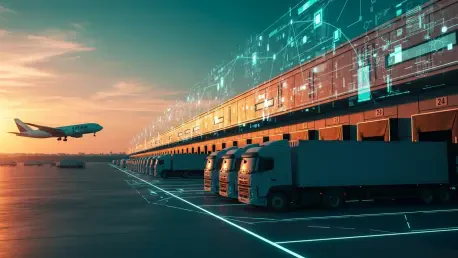

Amazon’s recent decision to invite external commercial shippers into its proprietary logistics network marks a pivotal turning point in the evolution of North American industrial supply chains. For a decade, the company’s focus remained on the high-frequency, small-parcel delivery model that defined the e-commerce era, yet the maturation of that market has necessitated a shift toward heavier, more complex freight categories. By moving aggressively into the Less-Than-Truckload (LTL) market, Amazon is attempting to leverage its massive, automated infrastructure to handle shipments that are too large for a standard doorstep delivery but do not require the dedicated space of a full trailer. This “economy” LTL offering is currently designed for price-sensitive businesses, utilizing roughly 30 specialized terminals that are largely concentrated in the Eastern United States. While this allows for a controlled entry into the freight sector, it lacks the national density and high-speed transit times required to compete with the industry’s elite carriers. The current model serves as a proof of concept, demonstrating that Amazon can handle palletized freight, but it remains a niche service that cannot yet support the high-margin, time-definite requirements of major industrial manufacturers and retailers.
Structural Limitations: The Gap Between Parcel and Freight
The existing limitations of Amazon’s freight network are primarily rooted in a fundamental mismatch between parcel-sorting infrastructure and heavy freight requirements. Standard Amazon fulfillment centers are masterpieces of automation for individual items, yet they are not naturally optimized for the cross-docking operations essential to a high-performance LTL network. In a traditional hub-and-spoke system, freight is constantly consolidated and deconsolidated at strategically placed terminals to maximize trailer density and minimize empty miles. Amazon’s current terminal footprint is far too sparse to achieve the level of network density seen in established players like Old Dominion or FedEx Freight. Without a massive increase in physical cross-dock facilities, Amazon’s freight service is relegated to longer transit times and a reliance on point-to-point movements that are difficult to scale efficiently. Shippers who require predictable, day-definite deliveries are currently forced to look elsewhere, as Amazon’s “economy” tier often sacrifices speed for cost-effectiveness, making it a secondary option rather than a primary logistics partner.
Furthermore, the operational nuances of the LTL market involve a level of driver expertise and specialized equipment that differs significantly from the last-mile parcel environment. Amazon’s historical success has been built on an asset-light framework that utilizes independent contractors and delivery service partners to handle the final leg of a journey. While this works remarkably well for lightweight packages, moving six-pallet loads of industrial equipment or sensitive electronics requires heavy-duty liftgates, specialized handling procedures, and a workforce trained in freight securement. The reliance on an “economy” sub-segment suggests that Amazon is currently testing the waters rather than diving headfirst into the deep end of the freight pool. For the company to bridge the gap between being a low-cost carrier and a premium service provider, it must develop or acquire a sophisticated linehaul operation that can synchronize thousands of movements simultaneously across a national grid. The complexity of this task cannot be overstated, as the logistics of freight scheduling involve variables that are far more volatile than the predictable routes of residential package delivery vans.
Forward Air: The Expedited Ground Powerhouse
Forward Air represents the most compelling strategic acquisition target for any entity seeking to bypass the multi-decade building process of a national freight network. As the industry’s most prominent provider of expedited ground transportation, Forward Air has spent decades refining a “road feeder” model that mimics the precision and reliability of an airline’s flight schedule. Unlike standard LTL carriers that may hold a trailer until it reaches a specific weight or volume threshold, Forward Air operates on fixed “cut times,” ensuring that freight moves on a predictable schedule regardless of load density. This discipline allows them to offer time-definite services that are highly sought after by shippers of high-value electronics, pharmaceuticals, and automotive components. By acquiring this specific capability, Amazon would immediately gain access to a premium customer base that is willing to pay a significant markup for speed and reliability. This would allow Amazon to offer a multi-tiered logistics menu, ranging from its existing slow-speed economy service to a top-tier expedited offering that could rival any air freight alternative.
The geographic architecture of Forward Air’s network is equally valuable, as it is anchored by more than 80 service centers located in close proximity to major U.S. airports. This airport-centric layout was originally designed to support the air cargo industry, but it has evolved into a versatile ground network that provides unparalleled coverage of the nation’s primary economic hubs. For Amazon, which already operates one of the world’s largest private air cargo fleets, the integration of these airport-adjacent terminals would create a seamless intermodal system. Imagine a scenario where high-priority freight is moved across the country via Amazon Air and then immediately transferred to a Forward Air ground unit for expedited delivery to a regional hub. This synergy would eliminate the “black holes” that often occur in supply chains when cargo is handed off between different carriers. Forward Air’s specialized focus on high-service-level freight would provide the operational muscle that Amazon’s current network lacks, transforming it into a high-velocity powerhouse capable of dominating the premium segment of the North American logistics market.
Integrating the Last Mile: The DSP Network Advantage
One of the most persistent operational hurdles for Forward Air has been its traditional reliance on third-party drayage and local cartage agents to complete the “first and last mile” of a shipment. Because Forward Air focuses on the high-speed linehaul between major hubs, it often loses control over the final customer interaction, leading to fragmented pricing and inconsistent service quality at the local level. Amazon possesses the perfect antidote to this problem in the form of its massive Delivery Service Partner (DSP) ecosystem and its growing fleet of heavy-duty trucks. By integrating Forward Air’s long-haul expertise with Amazon’s local delivery density, the combined entity could offer a truly integrated, door-to-door freight solution. This would allow Amazon to internalize the margins that were previously paid out to third-party agents, significantly improving the profitability of the freight business. The ability to track a pallet from the moment it leaves a manufacturer’s dock until it arrives at a retail warehouse—using only internal assets and software—would provide a level of visibility that is currently unavailable to most shippers.
The physical alignment of the two companies’ primary infrastructure further solidifies the logic of a merger, particularly within the critical Midwestern logistics corridor. Forward Air’s national hub is located in Columbus, Ohio, which serves as the central nervous system for its expedited ground operations across the United States. This facility is situated roughly 100 miles away from Amazon’s primary air cargo hub at the Cincinnati/Northern Kentucky International Airport (CVG), a multi-billion-dollar facility that serves as the heart of Amazon’s global logistics operation. The proximity of these two massive hubs creates an opportunity for a high-speed “conveyor belt” of goods moving between the ground-based LTL network and the aerial delivery network. By stitching these facilities together with a dedicated fleet of autonomous or highly efficient shuttle trucks, Amazon could create a logistics “super-hub” in the Ohio Valley. This geographic concentration would allow for unprecedented flexibility in routing freight based on real-time demand, weather conditions, or capacity constraints, giving Amazon a competitive advantage that would be virtually impossible for legacy carriers to replicate.
Market Entry: Capitalizing on Distressed Valuations
The timing for such an acquisition is remarkably favorable due to the financial and organizational turbulence Forward Air has experienced following its controversial merger with Omni Logistics. That deal, which was initially met with significant investor pushback and a subsequent drop in stock price, has left the company in a vulnerable position despite the underlying strength of its LTL assets. While the merger with Omni was intended to create a more diversified logistics provider, the integration process has been fraught with challenges, leading to a depressed enterprise value that does not fully reflect the replacement cost of its specialized national network. For a company with Amazon’s staggering cash reserves and access to capital, this represents a rare “buy low” opportunity to acquire a critical piece of national infrastructure at a significant discount. Amazon has the financial fortitude to weather the short-term debt obligations that have weighed down Forward Air, allowing it to strip away the distractions of the Omni merger and focus on the core expedited LTL business that fits its strategic goals.
Beyond the simple valuation of assets, Amazon is the most logical “strategic” buyer capable of extracting the maximum value from Forward Air’s existing operations. While private equity firms might look at the company as a candidate for a debt-heavy leveraged buyout and subsequent cost-cutting measures, Amazon views logistics as a long-term utility rather than a short-term financial play. By acquiring the entire enterprise, Amazon could retain the valuable freight terminals and linehaul expertise while divesting any non-core assets or logistics brokerage units that do not align with its automated, data-driven model. This approach would stabilize Forward Air’s workforce and provide the capital necessary to upgrade its facilities with the latest sorting technology and electric vehicle infrastructure. In the current market, where specialized freight capacity is becoming increasingly scarce, the cost of building a comparable network from scratch would far exceed the price of acquiring Forward Air, even with a significant premium over its current market valuation. Amazon’s ability to refinance debt and provide a stable operational home would turn a struggling industry veteran into the engine of a new freight empire.
Competitive Consolidation: Navigating the Industry Shift
The North American freight market is currently undergoing a period of intense consolidation and capacity realignment following the dramatic collapse of Yellow Corp, which was once a cornerstone of the national LTL system. The departure of such a massive player has left a significant void in the market, sparking an aggressive scramble among survivors like Knight-Swift and FedEx Freight to secure terminal real estate and driver talent. For Amazon to remain relevant in this rapidly shifting landscape, it cannot rely on the slow, organic growth of its “economy” service, which would likely take a decade or more to reach the scale of its competitors. The LTL sector is notorious for its high barriers to entry, particularly concerning the scarcity of zoned industrial real estate near major urban centers. By acquiring an established player like Forward Air, Amazon would leapfrog several tiers of competition and instantly become a top-tier player with a national footprint. This move would prevent Amazon from being outmaneuvered by legacy carriers who are currently using their profits to buy up defunct terminals and expand their own dominance.
Critics of the acquisition model often point out that Amazon typically prefers to build its own technology and systems from the ground up to ensure they are perfectly tailored to its unique operational requirements. However, the physical reality of the freight business—the thousands of miles of road, the specialized dock doors, and the complex relay systems—is not something that can be easily replicated through software alone. The recent declines in tonnage reported by Forward Air are not necessarily indicative of a failing business model, but rather a reflection of broader macroeconomic headwinds and the internal friction caused by recent mergers. The underlying “airline-style” posture of the company remains a unique and highly defensible asset that would be nearly impossible for Amazon to build without years of trial and error. In an industry where “density” is the ultimate competitive advantage, acquiring a pre-built, high-velocity network is the only logical path for a company that values speed of market entry above all else. Amazon’s expertise in data analytics could then be layered over this physical network to optimize routes and pricing in ways that Forward Air could never achieve on its own.
Strategic Integration: A New Standard for Logistics
The integration of Forward Air’s premium expedited services into Amazon’s burgeoning logistics ecosystem effectively closed the gap between a retail shipping operation and a comprehensive industrial freight powerhouse. By securing a national network of airport-adjacent terminals and a disciplined road-feeder system, the organization successfully transitioned away from a limited “economy” model toward a multi-tiered service offering that catered to the most demanding commercial shippers. The operational synergies realized through the combination of Amazon’s Cincinnati hub and Forward Air’s Columbus facility created a logistical corridor that streamlined transit times across the entire Eastern seaboard. This strategic move allowed the company to bypass the lengthy process of acquiring individual real estate parcels and building a specialized workforce from scratch, essentially purchasing a decade’s worth of market experience and infrastructure development in a single transaction. The acquisition resolved the historical weaknesses of both companies, providing Amazon with immediate freight density and offering Forward Air the technological and capital support required to modernize its legacy systems.
Moving forward, the focus shifted toward the full digitization of the acquired freight assets to ensure they were seamlessly integrated into the broader automated delivery grid. Leadership prioritized the implementation of real-time pallet tracking and automated dock scheduling across all eighty-plus service centers to maximize the throughput of high-value cargo. Additionally, the company explored the potential for converting the expedited ground network into a testing bed for autonomous long-haul trucking, leveraging the fixed-route nature of the “road feeder” model to accelerate the adoption of self-driving technology. By maintaining the premium branding of the expedited service while utilizing Amazon’s DSP network for local pickup and delivery, the combined entity offered a level of service consistency that redefined industry expectations. This bold consolidation not only secured a dominant position in the North American LTL market but also provided a scalable blueprint for future expansions into international freight and specialized logistics sectors, ensuring long-term resilience in a volatile global economy.