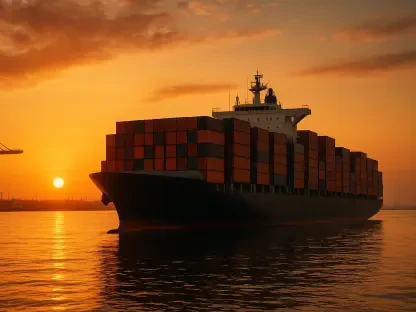

The volatility currently shaking global shipping routes has traditionally signaled financial distress, but the most recent performance data from AD Ports Group suggests that strategic adaptability can turn even the most severe maritime crises into a catalyst for unprecedented profit. As maritime hubs transition toward integrated logistics, the traditional role of a port operator has evolved into a sophisticated management of sea, air, road, and rail networks. This shift reflects a broader global movement where the Middle East serves as a critical transit nexus, balancing trade flows against regional geopolitical shifts.
Modern logistics providers no longer rely solely on deep-water access; instead, success is defined by the ability to maintain continuity during regional disruptions. Digital transformation and advanced warehousing solutions have become the backbone of this resilience, allowing for real-time adjustments when primary corridors face blockages. By integrating diverse transport modes, operators ensure that the global supply chain remains functional despite external pressures.
The Evolving Landscape of Global Trade and Maritime Logistics
The integration of logistics services has fundamentally altered how goods move across continents, moving away from fragmented shipping models toward seamless, end-to-end solutions. This transition is particularly evident in the Middle East, where geopolitical stability or the lack thereof dictates the velocity of trade. Port operators that have embraced a holistic approach, encompassing air, road, and rail, have found themselves better equipped to handle the sudden closure of traditional maritime routes.
Moreover, the role of digital infrastructure cannot be overstated in this new era of trade. Advanced tracking and warehousing technologies allow for the rapid deployment of resources where they are most needed, ensuring that essential goods like food and medicine are prioritized. This technological layer provides a buffer against regional crises, allowing trade to flow through secondary nodes when primary gates are obstructed.
Analyzing the Dynamics of Regional Shipping and Economic Performance
Emerging Trends in Multi-Modal Adaptation and Cargo Rerouting
A strategic shift is underway as logistics firms increasingly bypass maritime chokepoints through inland bonded customs transit. By utilizing extensive national rail networks and expanded trucking fleets, companies are successfully moving cargo from coastal terminals to inland hubs without the delays associated with congested sea lanes. This adaptation ensures that the flow of commerce remains steady, even when traditional shipping lanes are under threat.
Furthermore, the rise of emergency air cargo solutions has provided a necessary safety valve for high-priority commodities. When maritime delays become untenable for time-sensitive goods like pharmaceuticals, the ability to pivot to air transport becomes a competitive advantage. This multi-modal approach effectively mitigates the risks of cargo stagnation at primary terminals.
Assessing Market DatThe Resilience of Maritime Financial Indicators
Financial indicators for the second quarter reveal a remarkable 47% year-on-year increase in total revenue, illustrating the effectiveness of this diversified strategy. The Maritime and Shipping cluster, in particular, thrived in an elevated rate environment caused by global disruptions. This performance demonstrates that even as operational complexity increases, the financial returns on specialized shipping services can reach record highs.
In contrast, the Logistics cluster saw a profitability spike that defied the challenges of the current regional environment. Forecasts suggest that this revenue growth is sustainable through 2026 to 2028, supported by international acquisitions and the optimization of existing assets. Strategic investments in feeder shipping and global terminals have created a robust financial foundation that is less susceptible to localized market shocks.
Navigating Geopolitical Obstacles and Operational Bottlenecks
Regional maritime disruptions have led to a sharp decline in traditional container throughput and bulk volumes at several major terminals. The volatility within critical waterways like the Strait of Hormuz has forced a recalculation of route efficiency and safety. To counter these declines, operators have turned to rapid infrastructure expansion, particularly in the realm of refrigerated and dry storage, to accommodate rerouted cargo.
Overcoming these bottlenecks requires balancing the increased costs of complex logistics chains with the high-value returns of guaranteed delivery. Solutions have included the utilization of secondary coastal terminals to maintain volume flow when primary routes are compromised. This flexibility allows the industry to absorb the impact of traffic volatility without a total cessation of operations.
Strengthening Supply Chains: Regulatory Frameworks and National Security
The UAE’s National Programme to Strengthen Supply Chain Resilience has provided a clear roadmap for corporate strategy in this uncertain climate. By aligning with state-mandated protocols for food and medicine security, logistics providers ensure that essential goods reach their destinations regardless of maritime conditions. This regulatory alignment facilitates smoother cross-border transport and bolsters national security.
Compliance with international maritime safety standards and bonded transit regulations remains a priority during any rerouting process. Regional regulatory shifts have also aimed at easing the movement of overland transport, reducing the friction typically associated with multi-jurisdictional trade. These frameworks provide the legal and operational certainty required for large-scale logistics operations.
Future Projections: Global Port Infrastructure and Integrated Logistics
The strategy for long-term growth is increasingly centered on global diversification through large-scale acquisitions in South America and Europe. By expanding into agri-bulk terminal operations and feeder shipping, companies are positioning themselves to capture a larger share of the global trade market. These international moves act as a hedge against regional instability and provide new avenues for revenue generation.
Future growth areas also include the expansion of feeder shipping fleets and the recycling of capital from mature assets into high-growth international projects. While potential market disruptors such as shifting shipping rates remain a concern, the move toward strategic asset management offers a path to stability. Diversifying the geographic footprint of operations ensures that the organization is not overly dependent on any single trade corridor.
Strategic Imperatives: Growth in an Unpredictable Global Economy
The transformation of AD Ports Group from a regional port operator into a global logistics powerhouse provided a definitive case study in decoupling profit from volume risks. Operational flexibility and multi-modal integration served as the primary drivers of this resilience, allowing the organization to thrive despite a significant reduction in domestic container throughput. This model demonstrated that a diversified business structure was capable of absorbing regional shocks while maintaining a trajectory of financial expansion.
Investment in resilient infrastructure acted as a vital buffer against maritime volatility, ensuring that cargo could be rerouted without catastrophic delays. Actionable next steps for the industry included the continued prioritization of secondary coastal hubs and the expansion of bonded transit corridors. The long-term viability of the integrated logistics model was confirmed by the record-breaking financial results achieved during one of the most turbulent periods in recent trade history. Ultimately, the ability to manage complex, high-value supply chains proved to be the most significant competitive advantage in the modern era of global commerce.