
The days of logistics managers purchasing robotic systems simply to demonstrate innovation are officially over as the industry’s pivot towards measurable return on investment becomes the primary driver for technological adoption. Currently, distribution centers are moving beyond the experimental phase of small-scale pilots to deploy massive, interconnected fleets that handle everything from inbound receiving to final sorting. The shift characterizes a maturation in the market where hardware reliability and software sophistication have finally aligned with the economic pressures of high labor costs and consumer expectations for near-instant delivery. Most organizations now demand that any new automation project demonstrates a clear path to profitability within twenty-four months, a stark contrast to the speculative spending seen earlier this decade. As these systems become more modular, companies find it easier to integrate specific solutions like automated storage and retrieval systems without overhauling their entire existing infrastructure.
Concrete Implementation of Modern Material Handling
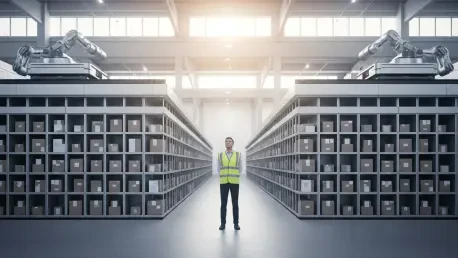
High-density storage solutions such as cubic automated storage and retrieval systems have redefined how facility managers utilize vertical space in urban distribution centers. These systems utilize a grid-based architecture where robots travel across the top of stacked bins to retrieve items, significantly reducing the footprint required for high-volume inventory. By 2026, the adoption of these cubic systems has accelerated because they allow businesses to keep products closer to end consumers in expensive city-center real estate. Furthermore, the integration of autonomous mobile robots has moved from simple point-to-point transport to complex picking assistance. These robots now work in tandem with human pickers by traveling to the correct aisle and guiding the worker through the selection process using visual cues. This collaborative approach has boosted picking rates by nearly three hundred percent in some facilities while simultaneously reducing the physical strain on the human workforce during peak shifts.
The scalability of hardware components represents a major turning point for mid-sized enterprises that previously found automation costs prohibitive. Modern robotic fleets are now available through robotics-as-a-service models, allowing companies to scale their automation capacity up or down based on seasonal demand cycles from 2026 to 2028. This flexibility ensures that capital is not tied up in idle machinery during slower months, making the technology accessible to a wider range of businesses. Manufacturers have also focused on ruggedizing these units to handle varied environments, including cold storage and hazardous material zones, where human labor is particularly difficult to source. The physical durability of these machines, combined with simplified maintenance protocols, ensures that downtime is kept to an absolute minimum. As a result, the reliability of the physical layer has reached a level where it is no longer the bottleneck in the supply chain, shifting the focus toward the digital control layer.
Strategic Pathways for Future-Proofing Supply Chains
Warehouse Execution Systems have evolved from simple traffic controllers into sophisticated hubs that predict order surges before they actually happen. These platforms ingest data from multiple sources, including weather patterns and historical sales data, to position inventory optimally within the warehouse grid. By anticipating demand, the system can move high-priority items to accessible fast-pick zones during off-peak hours, ensuring that the robots are not scrambling when the actual orders start flowing in. The software also manages the energy consumption of the entire robotic fleet, scheduling charging cycles during periods of low activity or when renewable energy generation is at its peak. This level of orchestration ensures that the facility operates at maximum efficiency without manual intervention. The transition to these autonomous management layers has reduced the need for large managerial teams, as the software provides real-time visibility and self-correcting logic for most common operational disruptions.
The transition toward practical automation demonstrated that the most successful implementations were those built on a foundation of data readiness and organizational agility. Many organizations realized that simply buying hardware without a robust digital strategy led to suboptimal performance, which prompted a move toward comprehensive digital twins. These virtual models allowed managers to simulate various automation scenarios before a single robot was deployed on the floor, effectively de-risking the entire investment process. For companies looking to maintain a competitive edge, the focus must now remain on continuous iterative improvement and the integration of emerging sensor technologies. It was observed that businesses which treated automation as a journey rather than a one-time purchase achieved the highest levels of throughput. Moving forward, the emphasis should be on creating flexible infrastructure that can adapt to rapid market shifts. Investing in modular software and fostering technical literacy will ensure that the warehouse remains an asset.