
The skyline of Seoul increasingly glimmers with the motion of autonomous delivery vehicles and massive automated fulfillment centers as South Korea’s leading technology conglomerates engage in an unprecedented arms race to redefine the very essence of modern logistics. This high-stakes competition is no longer merely about who can ship a package the fastest; it has evolved into a comprehensive digital transformation that integrates artificial intelligence, massive robotics investments, and complex data ecosystems. As market leaders strive to secure dominance, the traditional boundaries between e-commerce and logistics have blurred, creating a singular, hyper-efficient machine that powers the nation’s consumption.
The urgency of this evolution is driven by a consumer base that now views next-day delivery not as a luxury, but as a baseline requirement for any digital transaction. Consequently, firms are pouring billions into proprietary networks and strategic alliances to ensure they do not lose relevance in an environment where even a minor delay can result in a significant loss of market share. This landscape has forced a pivot from simple transportation toward a sophisticated technological infrastructure that anticipates needs before they are explicitly stated. Building on this foundation, the industry has witnessed a radical shift in how physical goods are processed and distributed across the peninsula.
Infrastructure Expansion: The Physical Foundation of Speed
Robotic Integration: Scaling Fulfillment Through Automation
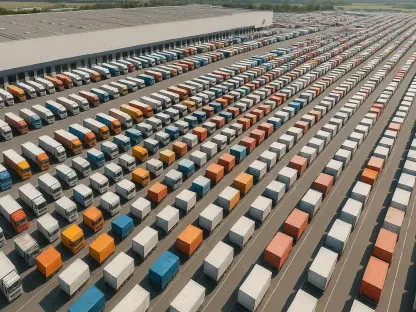
Massive distribution hubs have become the primary theaters of innovation where companies deploy thousands of automated guided vehicles to navigate labyrinthine warehouse floors. These robots operate with surgical precision, utilizing sophisticated path-finding algorithms to minimize the time between a customer’s click and the package reaching the loading dock. The implementation of goods-to-person systems has effectively eliminated the need for human workers to walk miles every day, drastically increasing the throughput of each facility. By centralizing these operations and removing human error from the sorting process, tech giants have managed to compress delivery windows that were previously thought impossible.
Beyond physical robotics, the use of digital twin technology has allowed logistics operators to simulate entire warehouse workflows in a virtual environment before a single pallet is moved. This predictive modeling identifies potential bottlenecks in the supply chain, such as equipment failure or localized congestion, allowing for preemptive adjustments that maintain a steady flow of goods. These virtual replicas are synchronized with real-time sensor data from the physical floor, ensuring the digital model remains an accurate representation of the actual operation. This level of granular control enables managers to optimize energy consumption and labor allocation with unprecedented accuracy.
Urban Logistics: Optimizing the Final Stretch
The challenge of the last mile remains the most expensive and complex segment of the delivery journey, particularly in the densely populated high-rise districts of metropolitan Korea. To combat this, major players have shifted their strategy toward micro-fulfillment centers located in the hearts of residential neighborhoods. These smaller, highly automated sites serve as localized jumping-off points that allow for ultra-fast delivery cycles, sometimes as short as thirty minutes. By positioning inventory closer to the end-user, companies reduce the fuel costs and carbon emissions associated with long-haul trucking. This hyper-local approach requires a system that predicts the specific buying habits of a neighborhood.
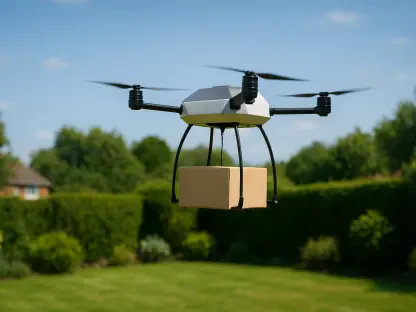
Innovation in the last mile is also manifesting in the deployment of autonomous delivery robots and trial runs for heavy-lift drones in more remote or specialized areas. These technologies aim to solve the labor shortage and rising wage costs that have traditionally squeezed the margins of logistics providers. Ground-based bots are becoming a common sight on college campuses and within large apartment complexes, navigating sidewalks to bring orders directly to a customer’s door. While regulatory hurdles still exist, the technological foundation is firmly in place for a future where human interaction in the delivery process is the exception. These advancements are about creating a resilient network that operates continuously.
Technological Strategy: Leveraging Big Data and Alliances
Predictive Analytics: Managing Demand in Real Time
At the heart of the logistics rivalry lies the mastery of big data, where companies leverage years of consumer behavior insights to predict demand before it even occurs. Some use an asset-light model that focuses on data integration across a network of diverse partners, creating a cohesive ecosystem without the overhead of direct ownership. In contrast, closed-loop systems capture every data point from the moment an item is manufactured to the second it is delivered. Both approaches rely on machine learning models that analyze seasonal trends and social media sentiment to optimize stock levels. This prevents both overstocking and the loss of revenue due to stockouts of popular products.
Beyond predicting behavior, advanced analytics are now being used to mitigate the impacts of unpredictable events like extreme weather or global supply chain shocks. Logistics platforms integrate real-time meteorological data and international shipping updates to reroute shipments and adjust delivery promises dynamically. If a port delay is detected, these systems automatically search for alternative transportation routes to maintain the integrity of the domestic schedule. This proactive stance on risk management has become a critical differentiator in a market where reliability is just as important as speed. The systems also provide customers with hyper-accurate tracking, increasing transparency and trust in the brand.
Future Pathways: Sustainable and Global Integration
The intense competition within the South Korean logistics sector demonstrated that technological superiority was no longer optional for survival in the digital age. Organizations that prioritized heavy investment in autonomous systems and predictive modeling successfully insulated themselves from the rising costs of traditional labor and fuel. It became clear that the most effective leaders were those who viewed logistics as a data-driven service rather than a physical burden. To maintain this momentum, stakeholders should have focused on the ethical integration of artificial intelligence and the long-term sustainability of their delivery networks. These actions were essential for maintaining public trust and operational viability.
Future success required a shift toward green logistics, where hydrogen-powered fleets and zero-waste packaging became the new industry standards. Furthermore, the ability to integrate cross-border capabilities into domestic networks proved to be a vital factor for sustained growth in a saturated market. Companies had to remain agile, constantly refining their algorithms to adapt to shifting global economic conditions while ensuring efficiency. The integration of environmental, social, and governance goals into the core logistics strategy ensured that growth did not come at the expense of the environment. Ultimately, the winners were those who anticipated the convergence of global trade and localized automation.