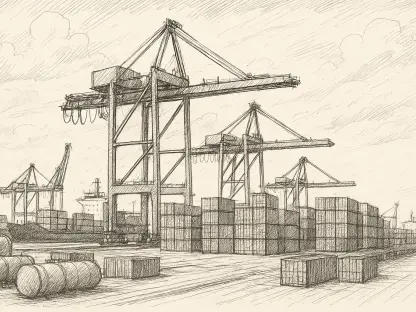

Enterprise Security Risk Management redefines the role of security professionals by turning them into strategic advisors who collaborate across departments. This fundamental shift marks a departure from the days when security was viewed as a siloed, tactical function centered on physical barriers and gate guards. In the current global logistics landscape, characterized by high-velocity trade and intricate multi-modal networks, security has become a core business enabler that directly influences financial stability and brand integrity. The modernization of this discipline is not merely a response to rising crime rates but a proactive move toward operational resilience. Companies now recognize that a single disruption in a far-flung node of the supply chain can have cascading effects on global operations, leading to significant inventory losses and damaged reputations. Consequently, the focus has expanded from simple asset protection to a comprehensive strategy that integrates personnel, technology, and standardized processes into a unified defensive posture capable of navigating the complexities of 2026 and beyond.
Implementing Standardized Management Frameworks
The structural foundation of a modern security program is built upon international standards such as ISO 31000 and ISO 28000, which provide a common language for risk across global borders. ISO 31000 serves as the high-level logic for risk management, embedding security considerations into the governance and decision-making fabric of an organization. However, it is ISO 28000 that specifically addresses the nuances of the supply chain, mandating a formalized management system that includes documented policies, internal audits, and frequent executive reviews. By adopting these frameworks, organizations transform security from a series of reactive measures into a repeatable, auditable process. This standardization is particularly vital for companies operating in multiple jurisdictions, as it ensures that security expectations remain consistent whether cargo is moving through a high-tech port in Singapore or a developing terminal in South America. The result is a transparent system where risks are not just identified but are managed through a cycle of continuous improvement and strategic oversight.
Building upon these international standards, the philosophy of Enterprise Security Risk Management (ESRM) aligns protective measures with the overarching goals of the business. Under the ESRM model, security professionals no longer operate in isolation; instead, they serve as strategic partners to procurement, operations, and transportation teams. This collaborative approach ensures that security protocols are designed to facilitate rather than hinder the flow of goods. For instance, instead of imposing rigid constraints that slow down warehouse throughput, an ESRM-led strategy might implement advanced screening technologies that maintain high speed while improving detection rates. By treating security as a quality-driven management discipline, companies can quantify the value of their investments in terms of risk reduction and operational uptime. This alignment turns security into a competitive advantage, as resilient supply chains are more attractive to partners and customers who demand reliability in an increasingly volatile global market.
Analyzing Threats and Vulnerabilities
Modern risk assessment requires a structured methodology that evaluates the dynamic interplay between threats, vulnerabilities, and potential consequences. Current threats are no longer limited to simple opportunistic theft; they include highly organized criminal syndicates that employ sophisticated tactics to infiltrate supply chains. Product tampering and the introduction of illicit goods into legitimate shipments represent significant risks that can lead to catastrophic legal and reputational damage. Furthermore, the role of the insider threat has gained increased attention, as individuals with legitimate access can bypass traditional security controls with ease. To address these challenges, security leads must utilize standardized risk assessment models that move away from subjective “gut feelings” toward data-driven insights. By quantifying the likelihood and impact of various threat scenarios, organizations can prioritize their capital expenditures on the areas where they face the most significant exposure.
Vulnerabilities are most prevalent at transition points, which are the critical handoffs between different entities in the supply chain, such as moving cargo from a manufacturer to a third-party logistics provider. These “seams” in the network often suffer from fragmented communication and inconsistent security protocols, making them prime targets for interference. When evaluating these gaps, organizations must consider the full spectrum of consequences, which extends far beyond the immediate financial value of the lost or damaged inventory. A security breach can trigger severe regulatory fines, lead to long-term operational downtime, and cause an irreversible erosion of customer trust that impacts the bottom line for years. By adopting a comprehensive view of risk, companies can implement targeted interventions at the most vulnerable nodes, ensuring that every link in the chain is fortified against both external attacks and internal compromises.
The Strategy of Layered Defense
A robust physical security strategy is predicated on the concept of defense in depth, which utilizes the four pillars of Deterrence, Detection, Delay, and Response. Deterrence is the first line of defense, employing visible markers such as high-security fencing, clear signage, and bright illumination to discourage potential adversaries from attempting an intrusion. If deterrence fails, the focus shifts to detection, where high-definition surveillance systems and intelligent sensors identify unauthorized activities the moment they occur. The goal is to maximize the time between the detection of a threat and the moment the adversary reaches the target. This is achieved through delay mechanisms, such as reinforced doors, physical barriers, and complex access control systems, which slow down the progress of an intruder. The final pillar, response, involves the coordinated action of security forces or law enforcement to neutralize the threat before damage is done.
In the context of 2026 logistics, this layered approach must be adaptable to both stationary facilities and assets in transit. While a warehouse might rely on a traditional perimeter-based defense, goods moving through the supply chain require digital and mobile layers of protection. This is where advanced technologies such as Global Positioning Systems (GPS) and AI-driven analytics become indispensable. These tools allow security centers to monitor shipments in real time, looking for deviations from pre-approved routes or unusual “dwell times” in high-risk geographic areas. If a vehicle stops unexpectedly or deviates from its planned path, the system triggers an immediate alert, allowing for a rapid response regardless of where the cargo is located. By integrating these physical and digital layers, organizations create a seamless protective envelope that follows the cargo from the point of origin to the final destination, significantly reducing the window of opportunity for criminal interference.
Smart Containers and the Internet of Things
The evolution of the shipping container from a passive steel box into an active node in the Internet of Things (IoT) has revolutionized global supply chain visibility. Historically, security relied on mechanical bolt seals that only provided evidence of tampering after the container had been opened. Today, the industry standard has shifted toward the use of ISO 17712-compliant electronic seals and embedded IoT sensors that offer a constant stream of telemetry. These “smart containers” provide real-time data on their precise location and environmental conditions, such as temperature, humidity, and light exposure. If a container door is forced open or if the seal is cut, the device transmits an immediate tamper alert via satellite or cellular networks. This allows security teams to move from a “post-mortem” discovery process to a real-time intervention strategy, protecting high-value and sensitive cargo such as pharmaceuticals and high-end electronics with unprecedented precision.
Furthermore, the integration of these smart technologies enables the use of geofencing, a digital boundary that triggers automated alerts whenever a shipment enters or exits a specific area. This capability is particularly useful for ensuring that cargo does not enter high-risk zones known for hijacking or geopolitical instability. As these containers become increasingly digitized, the convergence of physical security and cybersecurity has become a critical priority. The data transmitted by IoT devices must be protected from interception and manipulation, leading many organizations to adopt ISO 27001 standards alongside their physical security protocols. Some leading logistics providers have also begun implementing blockchain technology to create immutable, tamper-proof records of custody. This ensures that every handoff between carriers and terminals is verified and recorded in a decentralized ledger, providing a transparent and secure audit trail that virtually eliminates the possibility of fraudulent activity.
Environmental Design and Crime Prevention
Security is not just a matter of technology and personnel but is deeply influenced by the physical design of the environment through the principles of Crime Prevention Through Environmental Design (CPTED). By strategically managing the layout of a logistics facility, organizations can naturally reduce the opportunity for criminal activity while enhancing the efficiency of their operations. A primary element of this approach is natural surveillance, which involves designing sites so that all areas are easily observable by employees during their routine tasks. This includes maintaining clear sightlines, eliminating blind spots created by excessive vegetation, and installing high-quality lighting that renders nocturnal activity clearly visible. When staff can easily see what is happening around them, potential offenders feel a psychological pressure that discourages illicit behavior, creating an atmosphere of constant vigilance without the need for an overwhelming security presence.
Territorial reinforcement and access control are equally important in the CPTED framework, as they help distinguish between public spaces and secure private zones. Effective site design uses physical markers like specialized pavement, distinct fencing, and clear signage to signal to outsiders that they are entering a restricted area. This makes any unauthorized movement much more conspicuous and easier to challenge. Access control then guides the flow of vehicles and personnel through specific, monitored entry and exit points, ensuring that every individual on the site has a legitimate reason to be there. By integrating these environmental design principles into the architecture of warehouses and intermodal terminals, companies create a defensive landscape that works in harmony with electronic surveillance. This holistic approach ensures that the physical environment itself serves as a deterrent, reducing the reliance on reactive measures and fostering a safer, more controlled operational setting.
Achieving Maturity Through Continuous Improvement
The transition to a modernized security posture is a journey that organizations navigate through a defined maturity model. At the initial stages, security is often reactive, characterized by ad hoc responses to incidents after they have already resulted in losses. As a company matures, it typically moves toward a compliance-based model where procedures are documented and international standards are followed primarily to satisfy audits. However, the true goal for global leaders in 2026 is to reach the optimized or strategic level of maturity. At this stage, security is fully integrated into the corporate DNA, and risk management is a proactive, data-driven discipline. Predictive analytics are used to anticipate threats before they manifest, and the security function is viewed not as a cost center but as a strategic asset that builds customer trust and enhances the long-term resilience of the entire global organization.
The successful implementation of this strategic vision required a fundamental shift in how leadership perceived the relationship between risk and reward. Organizations that successfully reached the optimized stage realized that security investments were inextricably linked to overall operational efficiency. They utilized the Plan-Do-Check-Act cycle to constantly refine their protocols based on real-world data and emerging technological trends. These companies moved beyond simple compliance, fostering a culture of safety where every employee played a role in identifying and mitigating vulnerabilities. By the time they reached this high level of maturity, security had become a seamless part of the logistics workflow, providing the necessary stability for the business to thrive in an unpredictable global market. The commitment to continuous improvement proved to be the most effective way to safeguard assets, protect personnel, and ensure the uninterrupted flow of commerce across the world.