
The global retail industry is currently experiencing a seismic shift as major corporations transition from basic automation to advanced artificial intelligence systems designed to orchestrate every aspect of the consumer experience. No longer confined to experimental pilot programs, AI is becoming the bedrock of modern commerce, with industry giants such as Gap, Ulta Beauty, and Kohl’s signaling a massive, coordinated shift toward full-scale integration by late 2026. This transformation represents a move beyond the initial hype of generative models to build sophisticated, data-driven ecosystems that function with unprecedented autonomy.
Retailers are navigating a volatile economic environment where consumer selectivity is at an all-time high due to rising costs in essential categories. In this landscape, executives view AI not merely as a novelty but as a critical tool for long-term strategic growth and operational resilience. By examining the roadmaps of market leaders, it becomes clear how these investments aim to redefine supply chains, personalize customer journeys, and satisfy the rigorous demands of boards and investors for a robust technological future.
From Legacy Systems to Intelligent Ecosystems
To understand the urgency of the current integration timeline, one must look at the historical friction within retail operations. For decades, the sector struggled with siloed data, unpredictable inventory cycles, and a “one-size-fits-all” approach to marketing that often failed to capture individual preferences. The move toward digital transformation began during the e-commerce boom, but the recent maturation of machine learning provided the missing link needed to unify fragmented processes into a cohesive whole.
Past developments focused on simple automation and reactive analytics, whereas the current movement emphasizes agentic systems capable of reasoning and executing complex workflows. These background shifts are critical because they represent a transition from reactive business models to predictive ones, allowing retailers to stay ahead of consumer demands rather than merely responding to them. This evolution has turned once-clunky legacy systems into intelligent frameworks that can learn and adapt to market fluctuations in real time.
The Triad of AI Transformation
Optimizing the Backbone: Supply Chain and Operational Efficiency
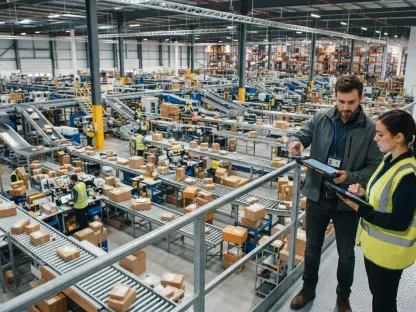
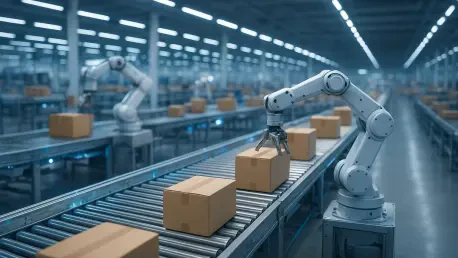
The most immediate and impactful application of AI is occurring behind the scenes in the management of complex logistical networks. Major players are directing hundreds of millions of dollars into supply chain agentic operating systems that manage enterprise-wide workflows with minimal human intervention. For instance, massive investments in technology and supply chain upgrades highlight a broader trend: using AI to solve the perennial problem of inventory distortion. By leveraging network optimization tools, retailers ensure that omnichannel inventory accurately meets fluctuating demand, reducing waste and ensuring the right product is in the right place.
Enhancing Discovery: The Evolution of Customer Experience
On the front end, AI is being deployed to bridge the gap between consumer intent and product discovery. Traditional search functions are being replaced by intuitive shopping agents that use generative intelligence to assist in gifting and product selection. These tools are designed to increase purchase confidence by providing personalized recommendations that feel like a conversation rather than a database query. Data indicates that these AI-assisted interactions lead to significantly higher conversion rates and revenue per visit, effectively turning vast digital catalogs into curated, accessible boutiques.
Scaling Smart Personalization through Foundational Data
Beyond the flashy interfaces, the success of current integration plans hinges on the modernization of core technology systems. Expert analysis suggests that the most effective AI is invisible, working in the background to tailor marketing emails, optimize in-store interactions, and refine pricing strategies. Retailers are currently in a period of early-stage application, focusing on cleaning foundational data to ensure that when AI is scaled, it produces accurate insights. This pragmatic approach favors solving specific pain points over making risky pivots, ensuring technology enhances the existing brand relationship.
The 2026 Horizon: Trends and Market Pressures
As we reach the midpoint of the year, the retail industry faces a non-negotiable pressure to evolve or risk obsolescence. Emerging trends indicate a significant shift toward autonomous store management and hyper-localized inventory assortments driven by predictive analytics. We see a surge in smart environments where computer vision and AI agents manage everything from shelf stocking to real-time promotional pricing. These advancements are no longer optional but are required to maintain competitive margins in an era of thin profitability.
Moreover, regulatory changes and consumer privacy concerns are shaping how data is collected, forcing retailers to innovate in privacy-first personalization. Organizations are developing new methodologies to provide high-value service without compromising individual data security. Experts predict that by the end of this decade, the retailers who have successfully integrated these technologies will possess a significant competitive advantage, characterized by leaner operations and a deeper, more predictive understanding of consumer behavior that traditional methods cannot replicate.
Strategic Frameworks for an AI-Ready Business
For businesses and professionals looking to navigate this transition, several best practices emerge from the strategies of market leaders. First, prioritizing foundational data integrity is essential, as any algorithm is only as effective as the information it processes. Second, adopting a problem-first mentality ensures that technology is used to resolve specific operational bottlenecks rather than chasing trends. This focus prevents the waste of capital on tools that do not contribute to the bottom line or improve the shopper experience.
Third, investing in tech-driven leadership has proven vital, as evidenced by recent high-profile C-suite appointments across the retail sector. Consumers should prepare for a more responsive shopping experience that rewards brand loyalty with higher levels of service and personalization. Implementing these strategies requires a long-term perspective, viewing AI as a continuous journey toward operational maturity. Successful brands are those that treat technology as a partner in human-centric service rather than a total replacement for it.
Concluding the Digital Transformation
The transition toward AI-centricity was not merely a matter of technological adoption but a fundamental reorganization of the retail value chain. Retailers successfully navigated the initial complexities of data silos by adopting unified cloud architectures, which allowed for the seamless deployment of predictive modeling. These steps enhanced inventory management and solidified shopper loyalty by removing the friction points that previously hindered the shopping journey. This era proved that strategic foresight was the primary differentiator between market leaders and those who fell behind.
Looking ahead, the focus shifted toward the implementation of privacy-first data protocols to secure long-term consumer trust. Leaders prioritized workforce retraining to ensure that store associates could effectively manage new autonomous systems, creating a hybrid environment where technology and human insight coexisted. The move toward intelligent ecosystems established a new standard for global commerce, where efficiency and personalization became the expected norm rather than a premium service. Consequently, the industry emerged stronger and more resilient against future economic shifts.