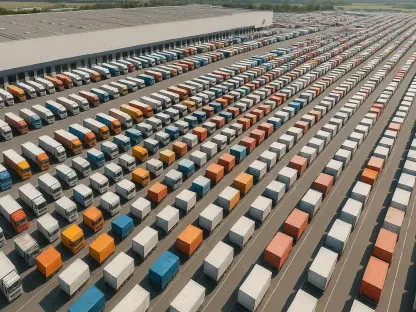

The frantic pace of modern style cycles has fundamentally rewritten the rules of retail success, transforming the humble distribution center into the command center of the global fashion industry. Historically, major apparel brands focused almost exclusively on the creative aspects of design and the psychological reach of marketing, often relegating fulfillment to a back-office necessity that functioned out of sight and out of mind. However, the current landscape of hyper-accelerated consumer trends and the dominance of e-commerce has forced a radical repositioning of the warehouse as a primary strategic driver rather than a secondary support function. Today, a sophisticated Warehouse Management System (WMS) serves as the indispensable platform that provides the requisite agility and resilience to navigate a saturated, multi-channel marketplace. This evolution marks a shift from reactive logistics to proactive distribution strategies, where the ability to move products with precision and speed determines a brand’s ultimate viability. As companies move through the mid-2020s, the realization that logistical excellence is as critical as aesthetic appeal has become the new industry standard, reshaping how executive leadership views investments in supply chain infrastructure.
Navigating the Complexity: Contemporary Apparel Logistics
Managing the intricate logistics of a modern fashion brand involves navigating a landscape of unique pressures, characterized by extremely short product lifecycles and an overwhelming variety of stock-keeping units. Each garment typically exists within an expansive matrix of sizes, colors, and fits, creating a level of complexity that traditional manual tracking methods simply cannot sustain without catastrophic failure. In many legacy environments, this complexity frequently leads to the creation of “inventory black holes,” where items are physically located within the building but remain effectively invisible to the digital sales system. This lack of transparency results in missed sales opportunities and bloated overhead costs as companies struggle to reconcile physical stock with digital records. To counter this, modern logistics solutions utilize intelligent product grouping and advanced categorization techniques to ensure that every individual item remains trackable from the moment it enters the facility until it reaches the final customer. By organizing products into logical families based on demand patterns and physical characteristics, warehouses can maintain a state of constant readiness, enabling brands to react instantaneously to sudden shifts in viral consumer trends or seasonal volatility.
The pursuit of absolute inventory accuracy has become the cornerstone of modern brand reputation, as contemporary customers expect nothing less than instant availability and flawless fulfillment across every touchpoint. In an environment where a single stock-out or shipping error can lead to a public loss of consumer trust, the integration of Radio Frequency Identification (RFID) technology has emerged as a transformative necessity. Unlike traditional barcoding, which requires labor-intensive manual scanning of each individual piece, RFID allows a warehouse to track thousands of items simultaneously and automatically. This technological leap drastically reduces human error, accelerates the speed of cycle counts, and provides a level of real-time visibility that was previously unattainable for high-volume apparel retailers. When stock levels are recorded with near-perfect precision, the benefits ripple outward to the storefront and the online interface, empowering store associates with the confidence to promise immediate availability. This reliability is the foundation for successful modern retail strategies like click-and-collect, which depend entirely on the warehouse’s ability to verify that a specific item in a specific size is ready for pickup the moment the order is placed.
Unified Inventory: The Core of Omni-channel Success
The modern consumer moves with total fluidity between scrolling through social media feeds, visiting flagship physical stores, and browsing third-party online marketplaces, necessitating a unified approach to inventory management. In the past, brands often suffered from fragmented logistics where stock was siloed into separate pools for different sales channels, a practice that frequently led to missed sales in one channel while stock sat idle in another. Transitioning to a unified inventory model allows a brand to treat its entire stock as a single, flexible resource that can fulfill any order regardless of its origin point or destination. This strategic shift prevents capital from being unnecessarily tied up in redundant safety stock across multiple locations and ensures that high-priority orders are always fulfilled from the most efficient location. By breaking down these traditional walls, fashion companies can optimize their fulfillment workflows to maximize turnover rates and reduce the overall cost of carry. This level of synchronization is no longer an optional luxury but a baseline requirement for any brand hoping to remain competitive in a landscape where consumer loyalty is increasingly tied to the convenience and speed of the purchasing experience.
While the adoption of robotics and automated storage systems has become increasingly common as a response to persistent global labor shortages, these physical machines require a sophisticated digital brain to function at their peak potential. A smart Warehouse Management System acts as the conductor for this technological orchestra, sequencing tasks with extreme precision and balancing the workload between human operators and automated units. During high-intensity periods such as holiday sales or major product launches, this digital orchestration prevents the formation of bottlenecks that could otherwise paralyze a less sophisticated operation. By intelligently routing tasks based on real-time demand and machine availability, the system ensures that every movement within the warehouse is optimized for maximum throughput. This seamless integration of technology and human labor allows fashion brands to scale their operations rapidly, meeting massive surges in order volume without the need for a corresponding increase in manual labor costs or a sacrifice in shipping accuracy. The resulting operational efficiency provides a significant competitive advantage, allowing the brand to maintain high service levels even under the most demanding market conditions.
Strategic Agility: Profits and Returns Management
The reality of the modern fashion industry includes exceptionally high return rates, but a strategically managed warehouse views these instances as opportunities for profit recovery rather than mere operational burdens. When a returned item is handled through a streamlined inspection and re-stocking process, it can often be made available for resale within hours of arriving back at the distribution center. This speed is absolutely vital for maintaining profit margins, particularly for seasonal fashion items that have a very narrow window of time before they must be discounted or moved to outlet channels. Efficient reverse logistics systems utilize automated quality control checkpoints and rapid sorting technologies to ensure that garments are quickly assessed for damage, refurbished if necessary, and returned to the active inventory pool. By minimizing the time a product spends in the “returns limbo,” brands can capture the full retail value of an item multiple times, effectively turning a potential loss into a source of renewed revenue. This proactive approach to returns management transforms a traditionally negative aspect of the apparel business into a powerful lever for protecting the bottom line and improving overall stock health.
In a fashion landscape that evolves with dizzying speed, the presence of rigid or outdated warehouse software has become a significant strategic liability for growing brands. Success now depends on the use of highly configurable systems that allow operational leaders to adjust picking methods, change quality inspection rules, or reconfigure storage layouts on the fly without requiring months of technical development. This inherent adaptability allows a warehouse to pivot smoothly between the standard, steady-state replenishment of retail stores and the high-speed, chaotic environment of flash sale events or viral drops. When a system is designed for flexibility, it can be tailored to meet the immediate strategic goals of the brand, whether that involves prioritizing the fastest possible shipping for premium customers or optimizing for the lowest cost on bulk orders. This level of operational control ensures that the supply chain is never the bottleneck for business growth, providing the freedom to experiment with new sales models or expansion strategies with full confidence in the backend infrastructure. Configurable logistics tools empower managers to refine their workflows continuously, ensuring that the warehouse remains a source of innovation rather than a static cost center.
Sustainable Operations: Efficiency and Environmental Impact
The focus on sustainability within the fashion sector has expanded far beyond the initial procurement of raw materials to encompass the entire logistical lifecycle, with the warehouse now playing a central role in environmental stewardship. Intelligent management systems contribute significantly to waste reduction by preventing the chronic overproduction that often stems from poor inventory visibility and inaccurate demand forecasting. By utilizing granular data to align production more closely with actual consumer behavior, brands can drastically reduce the volume of unsold goods that eventually end up in landfills. Furthermore, advanced warehouse algorithms can optimize packaging sizes for every individual shipment, ensuring that garments are not shipped in oversized boxes filled with unnecessary plastic padding. This precision in packaging not only reduces material waste but also maximizes the density of shipping containers and delivery vehicles, directly lowering the carbon footprint associated with global and local transport. These operational refinements demonstrate that high-level efficiency and environmental responsibility are not mutually exclusive but are instead two sides of the same strategic coin in the modern era.
The accumulation of granular operational data provided by sophisticated logistics systems has also become a critical asset for meeting increasingly strict global environmental regulations and reporting requirements. Modern warehouses now function as data hubs, capturing every detail of energy consumption, material usage, and transport efficiency within the distribution network. This data allows fashion brands to provide transparent reports to stakeholders and regulatory bodies, proving their commitment to ethical and sustainable business practices with hard evidence rather than vague marketing claims. As governments worldwide continue to implement more rigorous standards for supply chain transparency, the ability to pull real-time environmental metrics from the warehouse provides a significant layer of legal and reputational protection. Beyond mere compliance, this data-driven approach allows companies to identify specific areas where they can further reduce their environmental impact while simultaneously cutting operational costs. By leveraging the analytical power of their distribution systems, fashion leaders have been able to turn the logistics department into a primary vehicle for achieving long-term corporate sustainability goals, ensuring the brand remains relevant to an increasingly eco-conscious consumer base.
The evolution of the fashion warehouse into a strategic asset was finalized by the integration of data-centric workflows and high-speed automation that redefined brand agility. Organizations that prioritized the modernization of their distribution centers successfully mitigated the risks of stock fragmentation and minimized the financial impact of high return volumes through rapid restocking protocols. Leadership teams moved away from viewing logistics as a isolated operational silo and instead treated the warehouse as a critical component of the customer experience, directly linking fulfillment speed to consumer loyalty. By investing in configurable management systems, these companies gained the ability to pivot their strategies in response to real-time market shifts without facing the typical delays associated with legacy infrastructure. These advancements allowed for a more sustainable approach to retail, where precision and efficiency replaced the wastefulness of traditional overproduction cycles. Moving forward, the focus should shift toward the continuous refinement of these automated processes and the deeper integration of predictive analytics to anticipate demand before it even manifests. Practical next steps involve auditing existing inventory visibility to identify potential “black holes” and evaluating the scalability of current software to ensure it can handle the next generation of omni-channel growth. Ensuring that the logistics department remains a core part of strategic planning will be essential for any brand aiming to maintain a competitive edge in an increasingly volatile and transparent global marketplace.