
The landscape of industrial logistics has shifted fundamentally as warehouse robotics transitions from a specialized luxury for elite corporations into a standard operational requirement for mid-sized enterprises. This evolution marks the end of a period where only global giants could afford the high capital expenditure and lengthy implementation timelines associated with automation. In the current market, technology has matured sufficiently to offer a broad range of cost-effective solutions that are both modular and scalable. Businesses that previously relied entirely on manual labor are now finding that robotic systems are no longer futuristic concepts but essential tools for maintaining competitiveness. This democratization of technology is largely driven by a significant reduction in entry costs and the emergence of deployment models that allow for gradual integration. Rather than requiring a complete facility overhaul, these new systems work alongside existing infrastructure, providing a practical path forward for operations of all sizes to modernize.
Strategic Transition: Modular Hardware and Functional Diversity
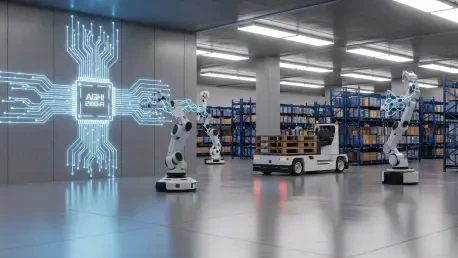
Modern warehouse environments are increasingly moving away from the rigid, one-size-fits-all automation models of the past in favor of a diverse array of specialized robotic forms. While humanoid robots frequently capture the imagination of the general public and dominate headlines, the practical heavy lifting in most logistics centers is performed by more focused machines. Mobile platforms, autonomous tuggers, and even quadrupedal units are being deployed to handle specific, repetitive tasks such as bulk transport or inventory scanning. These machines are engineered to navigate complex, high-traffic areas without the need for fixed tracks or heavy safety caging, which was a major barrier to adoption in previous years. By selecting hardware that matches the physical requirements of their specific facility, managers can address unique bottlenecks more effectively. This targeted approach ensures that the physical form of the robot serves the function of the workflow rather than forcing the workflow to change.
The true value of modern hardware lies in its ability to integrate directly into established operational flows without causing massive disruptions to daily productivity. Current robotic units are designed with a plug-and-play philosophy that allows them to be unboxed and operational within a matter of days or weeks, rather than the months or years required by traditional conveyor systems. This modularity enables warehouse managers to solve granular problems, such as high-volume e-commerce picking or sorting for specific regional carriers, with surgical precision. By focusing on these specific pain points, companies can achieve a faster return on investment while maintaining the flexibility to expand their robotic fleet as demand fluctuates. This transition toward modularity has empowered smaller distribution centers to adopt advanced technology at their own pace. It represents a significant departure from the all-or-nothing automation projects that once characterized the industry, offering a more sustainable and less risky path toward total digital transformation.
Economic Realities: Labor Pressures and Targeted Automation
Persistent labor shortages and the rising cost of manual operations have accelerated the adoption of robotic systems across the global supply chain landscape. Recent industry data indicates that more than half of all logistics operations now utilize some form of autonomous technology to supplement their workforce. This is a dramatic increase from just a few years ago, signaling a point of no return for manual-only processing. The scarcity of reliable labor for physically demanding roles has shifted the perception of robotics from a cost-saving measure to a fundamental necessity for business continuity. Companies are no longer asking if they should automate, but rather how quickly they can deploy these systems to mitigate the risks associated with human turnover and wage inflation. As a result, the market is seeing a surge in demand for robotic-as-a-service models, which allow organizations to bypass heavy upfront costs and treat automation as a predictable monthly operational expense.
The strategic pivot toward robotics is centered on automating tasks that are traditionally categorized as dull, dirty, or dangerous, which often suffer from the highest turnover rates. By delegating these repetitive and physically taxing roles to machines, warehouse operators can redirect their existing human talent toward more complex and value-added activities. This shift does not necessarily mean the elimination of human workers; instead, it creates a hybrid environment where humans and robots collaborate to achieve higher throughput levels. For example, robots can handle the long-distance transport of goods within a large facility, while humans focus on the intricate tasks of quality control or specialized packing. This synergy improves overall employee satisfaction by removing the most grueling aspects of the job while simultaneously boosting the efficiency of the entire operation. This practical application of technology has proven to be the most effective way to manage the ongoing labor crisis while ensuring that throughput remains consistent.
Digital Integration: Software Orchestration and Future Resilience
As robotic hardware becomes increasingly standardized, the primary differentiator for success in modern logistics has shifted toward the underlying software and orchestration layers. A robot operating in isolation offers limited utility; however, when integrated into a connected ecosystem, it becomes a powerful asset for data-driven decision-making. High-performing warehouses are now prioritizing systems that communicate seamlessly with existing Warehouse Management Systems to ensure real-time visibility into inventory and movement. This orchestration allows different types of robots from various manufacturers to work together in a synchronized manner, preventing the creation of disconnected islands of automation that can actually hinder productivity. Advanced software platforms can now optimize travel paths, manage charging schedules, and reallocate robotic resources on the fly based on changing order priorities. This level of intelligence is essential for managing the complexity of modern e-commerce, where SKU counts are high and shipping windows are narrow.
The industry recognized that the journey toward an automated future required a pragmatic and phased approach rather than an immediate pursuit of fully autonomous facilities. Decision-makers shifted their focus toward sustainable scaling, ensuring that every technological investment provided a clear and measurable return before expanding further. It became evident that the most successful organizations were those that treated robotics as a scalable utility that grew alongside business needs. To stay ahead, companies prioritized interoperability and data transparency, selecting vendors that offered open APIs and flexible architectures. This strategic shift effectively future-proofed distribution centers against the rapid pace of change and fluctuating market demands. Moving forward, the emphasis remained on building hybrid environments where modular automation augmented human skill sets. These steps ensured that logistics operations remained resilient, efficient, and capable of handling complexity.