
The global manufacturing landscape is currently navigating a period where traditional logistical methods are being replaced by high-velocity profit centers powered by data-driven back-end infrastructure. This fundamental shift is not merely an upgrade in machinery but a comprehensive reimagining of how consumer goods move through a volatile global market. Companies like Kimberly-Clark have pioneered this transition by committing billions toward a productivity strategy that places supply chain modernization at the very core of corporate growth. By integrating robotics and artificial intelligence, the industry is moving away from reactive logistics and toward a predictive, self-optimizing ecosystem that seeks to redefine margin improvement.
Evolution and Fundamentals of Automated Supply Chain Infrastructure
The technology under review represents the culmination of decades of incremental improvements in material handling, now coalescing into a unified digital architecture. At its core, automated supply chain infrastructure relies on the principle of the “integrated value stream,” where every movement of a product is tracked, analyzed, and optimized by a centralized digital nervous system. This evolution was born from the necessity to overcome the limitations of manual labor, such as human error and physical throughput bottlenecks, which previously capped the growth potential of large-scale manufacturing.
In the current technological landscape, this shift is characterized by the replacement of siloed operations with interconnected, data-driven systems. Unlike earlier iterations of automation that functioned as isolated “islands” within a factory, modern systems are inherently collaborative. They utilize real-time telemetry to synchronize manufacturing outputs with global demand signals, ensuring that the supply chain is no longer a passive support function but an active driver of operational resilience.
Essential Components of High-Scale Automation Systems
Robotics and Intelligent Manufacturing Centers
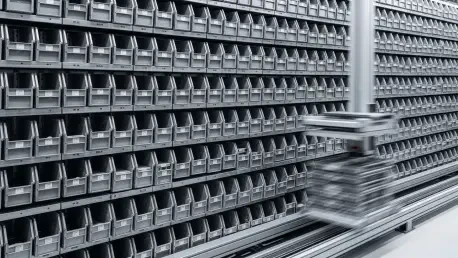
Advanced robotics within flagship facilities, such as the major operations in Beech Island and Warren, have revolutionized the concept of volumetric efficiency. These robots are not merely faster than human operators; they are designed to maximize every cubic inch of storage space through high-density racking and autonomous retrieval systems. This capability allows facilities to handle significantly higher throughput without expanding their physical footprint, which is a critical advantage in regions where industrial real estate costs are climbing.
These intelligent centers function as the physical manifestation of the automation strategy, where high-speed sorting and packing units streamline the distribution process. By reducing the time between product completion and dispatch, these robotic systems mitigate the friction points that traditionally slowed down the value stream. The result is an operational model where the facility operates as a continuous loop, minimizing idle time and maximizing the return on capital-intensive machinery.
AI-Driven Logistics and Predictive Management
Artificial intelligence serves as the intellectual layer of the supply chain, transforming raw data into actionable logistics intelligence. High-scale AI models now manage global networks by predicting potential disruptions and autonomously rerouting freight to maintain schedule integrity. This predictive management is what distinguishes modern automation from its predecessors, as it allows for a proactive approach to inventory management that prevents both overstocking and costly stockouts.
Technical performance in this area is measured by the system’s ability to optimize freight movements across thousands of retail drop-off points. AI algorithms analyze historical shipment data alongside real-time variables like weather and port congestion to determine the most cost-effective routes. This level of technical sophistication ensures that every truck and shipping container is utilized to its maximum potential, reflecting a shift from simple movement to intelligent orchestration.
Strategic Developments and Integrated Productivity Models
Recent developments in the sector highlight a massive capital reallocation, with programs like the $3 billion initiative by Kimberly-Clark signaling a new standard for corporate investment. A significant $2 billion portion of this is focused on domestic infrastructure, specifically targeting the modernization of legacy sites into advanced manufacturing hubs. This strategic shift prioritizes back-end modernization over front-end marketing, suggesting that the industry now views the supply chain as the primary lever for long-term financial health.
Value stream simplification has emerged as a key innovation in this field, focusing on removing unnecessary steps between raw material procurement and final delivery. By stripping away redundant processes, companies can achieve a “leaner” operational profile that is more responsive to market changes. This strategic trajectory suggests that the future of the global market will be dominated by firms that can most effectively collapse the distance between production and consumption through technological integration.
Real-World Applications and Industrial Synergies
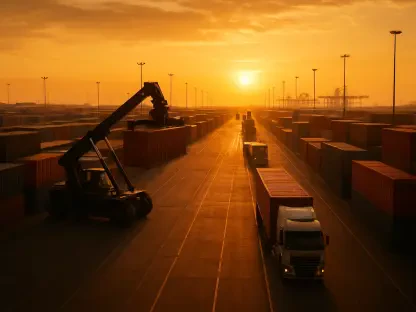
The deployment of automation at flagship facilities provides clear evidence of the technology’s real-world impact. A compelling example of this is the logistical synergy created during large-scale mergers, such as the partnership between paper product manufacturers and personal care brands. This synergy addresses the fundamental physical challenge of shipping: “cubing out” versus “weighing out.” Light products like tissues fill the volume of a truck before hitting weight limits, while heavy personal care items hit the weight limit while leaving empty space.
By using automated systems to combine these disparate product types into single shipments, companies can achieve a “perfect load” that maximizes both weight and volume. This optimization significantly reduces transportation costs and carbon footprints, providing a unique competitive edge that manual coordination could never achieve with the same level of precision. Such synergies demonstrate how automation enables a level of cross-brand cooperation that simplifies retail delivery and enhances procurement scale.
Technical Obstacles and Operational Risk Factors
Despite the clear advantages, the complexity of automated networks introduces unique vulnerabilities. The reliance on centralized, high-tech distribution centers means that a single external disaster, such as the major fire at the third-party facility in Los Angeles, can have outsized consequences. Such events create significant shipment headwinds, illustrating that as supply chains become more integrated, they also become more susceptible to systemic shocks that can impact margins by dozens of basis points.
Ongoing development efforts are currently focused on building more resilient, decentralized networks to mitigate these operational risks. The challenge lies in balancing the efficiency of a centralized automated hub with the need for redundancy. Engineers are exploring modular automation designs that can be quickly redeployed or bypassed in the event of a localized failure. Ensuring resiliency in the face of infrastructure disasters remains the primary hurdle for the next generation of distribution technology.
Future Projections for Industrial Automation
Looking toward the late 2020s, the realization of long-term financial returns will likely validate the current capital-intensive investment cycles. Executives expect the substantial operational improvements realized in 2026 and 2027 to become the new baseline for global manufacturing. The ultimate goal is the achievement of a unified supply chain process where the distinction between manufacturing, warehousing, and logistics completely disappears into a single, automated flow.
Future breakthroughs are expected in the realm of “autonomous procurement,” where AI systems manage the entire upstream supply chain without human intervention. This would lead to a significant improvement in global margins as the overhead associated with manual planning is eliminated. As these technologies mature, the long-term impact will be a sector characterized by extreme efficiency and an unprecedented ability to absorb market volatility through sheer technological scale.
Final Review Assessment and Key Takeaways
The transition of the industrial supply chain from a back-office support role to a primary productivity engine was the most significant development observed in this review. The evidence gathered from large-scale investments and real-world synergies indicated that automation was no longer an optional upgrade but a survival requirement in the global market. While technical vulnerabilities and external risks remained, the strategic benefits of integrating robotics and AI far outweighed the potential for disruption.
The review identified that the most successful implementations were those that leveraged unique logistical synergies, such as the optimization of freight density between light and heavy goods. Ultimately, the industry moved toward a model where data-driven infrastructure provided the foundation for sustained growth. The technology proved its potential to redefine competitive landscapes, establishing a clear path for future advancements that prioritized operational resilience and long-term margin improvement.