
Introduction
The relentless pressure of global logistics demands a departure from the rigid, reactive legacy systems that have historically left supply chain managers scrambling whenever a single shipment is delayed. Modern supply chain execution is no longer just about moving goods from point A to point B; it is about managing a constant stream of volatile data and unpredictable disruptions. Traditional systems often act as digital filing cabinets, storing information that requires human intervention to interpret and act upon. In contrast, the current shift toward agentic AI represents a fundamental change in how businesses approach logistics, moving away from fragmented software toward integrated, intelligent ecosystems.
The objective here is to explore how specialized AI agents bridge the gap between data visibility and operational action. Readers can expect to learn about the mechanisms of the sense–decide–act–learn loop and how graduated autonomy allows companies to scale automation without losing control over their operations. By focusing on practical applications across warehousing, transportation, and document management, this analysis provides a roadmap for achieving continuous execution in a landscape where speed and precision are paramount.
Key Questions Regarding AI Orchestration
How Do AI Agents Differ From Traditional Automation?
Traditional automation typically follows rigid logic, which works well in controlled environments but fails when faced with the chaos of real-world logistics. When a carrier misses a pickup or a warehouse experiences a sudden labor shortage, legacy systems simply flag the error for a person to fix. This creates a bottleneck where decision-making speed is limited by human bandwidth, often leading to missed deadlines and increased costs.
AI agents operate differently by utilizing a continuous feedback loop that allows them to perceive changes, evaluate options, and execute tasks independently. Instead of waiting for a manual prompt, these agents use predictive and generative intelligence to anticipate problems before they escalate. Moreover, they are designed to communicate with one another, ensuring that a delay in one department triggers an immediate, synchronized response in another, thereby maintaining the flow of goods without constant oversight.
What Roles Do Specific AI Agents Play in Daily Operations?
The deployment of specialized agents allows organizations to target specific inefficiencies within the broader supply chain network. For instance, Order and Document Agents tackle the heavy burden of manual data entry by digitizing unstructured information from bills of lading and invoices with high accuracy. Meanwhile, Transportation Agents use voice AI to maintain constant contact with drivers, providing real-time updates that were previously lost in translation or stuck in ignored emails.
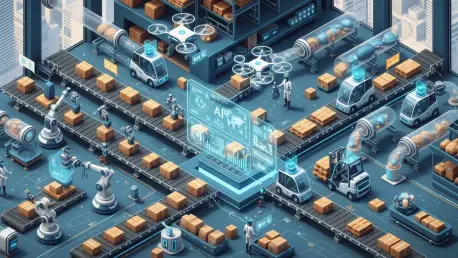
Within the four walls of the facility, Warehouse Agents offer real-time labor coaching and resolve inventory discrepancies on the fly, while Optimization Agents dynamically reroute shipments when traffic or weather creates obstacles. This interconnected approach ensures that every operational layer is supported by a dedicated intelligence layer. Consequently, the labor-intensive tasks that once slowed down fulfillment are now handled by autonomous entities that work around the clock to optimize every move.
How Can Organizations Build Trust in Autonomous Systems?
Moving directly to full autonomy is often too risky for large-scale operations, which is why a framework of graduated autonomy is essential. This strategy begins with assisted intelligence, where agents provide recommendations backed by clear rationales, allowing human operators to understand the reasoning behind a suggested action. As the system proves its reliability, it moves into automated execution, operating within strictly defined guardrails and policies set by management.
The final stage is true autonomous decision-making, where the AI handles complex, end-to-end workflows independently. This transition is not about replacing human expertise but rather elevating it to a more strategic level. By allowing trust to be earned through consistent performance and measurable data, companies can safely scale their automation efforts. This methodical progression ensures that the supply chain remains resilient even as the level of machine-driven intervention increases.
Summary of Strategic Outcomes
The integration of these advanced capabilities leads to measurable improvements in both speed and accuracy across the organization. Businesses are seeing order release times drop from several hours to just a few minutes, while backorders for major retail players have been slashed by significant margins. Achieving high rates of autonomy in order entry and shipment routing demonstrates that the transition from reactive to proactive management is already yielding a competitive edge for early adopters.
The sense–decide–act–learn loop creates a self-improving system that becomes more efficient with every transaction it processes. By embedding AI directly into the workflows where decisions occur, organizations eliminate the silos that traditionally hinder communication. This cohesive narrative of intelligent execution ensures that every part of the supply chain is synchronized and optimized for maximum performance.
Final Thoughts on Future Execution
Adopting agentic AI required a shift in perspective from viewing technology as a tool to seeing it as an active operational partner. Leaders had to move beyond experimental pilots and focus on embedding these systems into the core of their logistics infrastructure. The success of these initiatives was largely determined by the ability to maintain clear guardrails while allowing the AI to navigate the complexities of modern commerce.
Future efforts should focus on refining the interoperability between different agent types to create an even more seamless flow of information. Organizations that prioritize this modular, proactive approach will be better positioned to handle the inevitable disruptions of the global market. Investing in a resilient, AI-driven foundation is no longer a luxury but a fundamental necessity for maintaining operational excellence in a rapidly changing world.