
With decades of experience navigating the complexities of supply chain management and delivery, Rohit Laila has become a leading voice in the evolution of modern logistics. His career has been defined by a deep-seated passion for technological innovation, particularly in how software can harmonize with physical hardware to solve the industry’s most pressing labor and efficiency challenges. Today, we sit down with him to discuss the strategic partnership between EPG and Locus Robotics and how their integrated Warehouse Management System is setting a new standard for flexible, scalable automation in distribution centers around the world.
The LFS Warehouse Management System now coordinates order backlogs directly with autonomous robots to handle transport-heavy routes. How does this synchronization specifically minimize employee walking distances, and what operational steps are necessary to scale the robot fleet during periods of high order volume?
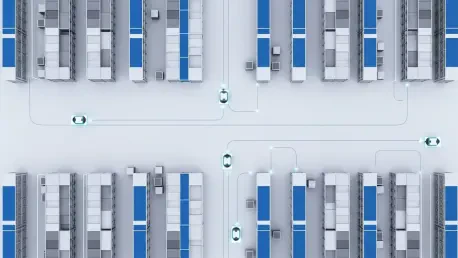
The beauty of this synchronization lies in the way the EPG ONE LFS acts as a central brain, constantly evaluating the order backlog to identify the most travel-intensive routes. Instead of a human worker walking miles across a vast concrete floor, the WMS orchestrates autonomous robots via the Locus software to meet the worker at specific picking stations. This process effectively decouples the “travel” from the “pick,” allowing the human to remain in a smaller, more productive zone while the robots handle the heavy lifting of moving goods between locations. When it comes to scaling, the operational steps are remarkably streamlined because the solution is designed to be “ready-to-use” from day one. To handle a spike in volume, a warehouse can introduce additional mobile units into the existing fleet, and the LFS logic immediately incorporates them into the workflow without requiring a complete overhaul of the IT landscape. This flexibility ensures that the picking performance remains stable, even when the warehouse faces dynamic market requirements or seasonal surges.
Facilities like the Logistics Solution Center show Locus Robotics operating alongside cube storage and lift systems. When comparing these different technologies, what performance indicators should a manager prioritize, and how do handovers between manual and robotic steps affect the overall rhythm of the warehouse?
When a manager visits a facility like the Logistics Solution Center in Boppard, they should prioritize indicators such as pick-time reduction, system throughput, and the seamlessness of system handovers. It is not just about how fast a single robot moves, but how well the Locus fulfillment solution interacts with other technologies like AutoStore or Kardex lift systems. The rhythm of the warehouse is maintained by the LFS control logic, which ensures that manual intervention is minimized and that handovers are executed with precision. You can actually feel the difference in the warehouse atmosphere when these systems are in sync; the frantic energy of manual picking is replaced by a structured, calm process control. Seeing these systems work together in real-time provides a transparent look at how different levels of automation can be scaled to fit specific warehouse profiles, whether they are small-scale entries or massive initiatives.
Many warehouses aim to stabilize picking performance while simultaneously reducing the physical workload for their staff. How do mobile units strategically position themselves at picking stations to optimize speed, and what specific training helps employees transition to a workflow orchestrated by both software and robots?
The mobile units are programmed to navigate safely and intelligently through the warehouse aisles, positioning themselves at designated stations just as the picker is ready for the next task. This strategic positioning eliminates the dead time usually spent searching for items or waiting for transport equipment, which directly translates to a significant increase in picking performance. For the employees, the transition is more about a shift in mindset than a complex technical hurdle, as the software-supported process is designed to be intuitive and user-friendly. Training focuses on the “human-technology process,” where staff learn to interact with the robots as assistants that take over the most physically demanding parts of their jobs. The emotional relief for the staff is often immediate; they no longer feel the exhaustion of walking ten miles a day, which allows them to focus on accuracy and quality within their designated zones.
Integrating new robotics into an established IT landscape is often viewed as a significant technical hurdle. What features make an automation solution truly “ready-to-use” for immediate deployment, and how can a single technological foundation support both small-scale entry projects and massive automation initiatives?
A truly “ready-to-use” solution is characterized by its deep integration capabilities, much like how the Locus Robotics system is fully embedded into the LFS Warehouse Management System. This means that companies do not have to build custom interfaces from scratch, which is typically the most time-consuming part of any automation project. By utilizing a single technological foundation, a company can start with a modest demonstrator or a small fleet of robots at a site like the Boppard-Buchholz facility and then scale up globally as their needs grow. This shared architecture ensures that the data flow and operational logic remain consistent, whether you are managing a handful of units or a massive, multi-site automation initiative. It removes the risk of “technology silos” and allows for a technology-open approach where new robotics solutions can be added to the portfolio as they become available.
What is your forecast for warehouse automation?
I believe we are moving toward a future where “technology-open” ecosystems will be the industry standard, allowing different types of robots and software to communicate flawlessly under a single command structure. We will see a shift away from rigid, fixed automation toward flexible, mobile solutions that can be redeployed or scaled within days rather than months. My forecast is that the “human-in-the-loop” model will evolve, where technology doesn’t replace the worker but instead creates a safer, more ergonomic environment where robots handle 100% of the travel and heavy lifting. As platforms like EPG continue to expand their automation portfolios, even small-to-medium enterprises will be able to access sophisticated robotics, making high-efficiency logistics accessible to every level of the market. Ultimately, the successful warehouses of tomorrow will be the ones that can adapt their automation footprint in real-time to meet the ever-changing demands of global commerce.