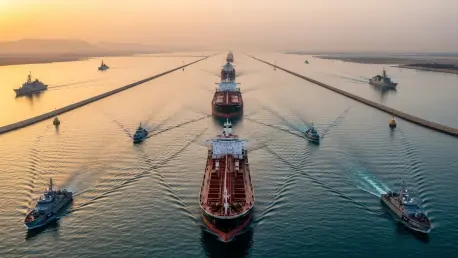

Ships will not surge back into the Strait of Hormuz in a single triumphant wave; they will tiptoe through a narrow, priced, and policed corridor where politics, insurance, and preparation decide who moves first. That is the essential tension facing energy markets, governments, and supply chain leaders after an eight-week wartime closure hardened into a test of risk appetite and operational discipline. The chokepoint’s reopening is less a switch than a staged performance, and the cast list matters as much as the script.
This FAQ sets out to answer the most pressing questions: who sails first, on what terms, and at what price. It draws on the geopolitical backdrop, insurer constraints, and early signals from commodity and logistics experts to offer a grounded view of sequencing, pricing, and access. Readers can expect clear explanations of likely gatekeepers, practical steps to gain priority, and the trade-offs that will shape the first convoys.
Key Questions
Why Does the Hormuz Reopening Matter So Much?
Closure of the world’s most sensitive energy corridor has no historical analogue. As Jason Miller of Michigan State University notes, model-based forecasts struggle when a system enters uncharted territory, and the longer a shutdown lasts, the more nonlinear the damage across interdependent supply chains. Energy, food, and even air travel costs pass through the strait’s constraints like current through a wire.
For policymakers, the stakes are already visible. In the UK, Darren Jones flagged persistent price pressure for energy, food, and aviation, warning that aftershocks could extend many months beyond any ceasefire. In practical terms, the reopening will determine how fast shortages unwind, how quickly prices cool, and which regions regain momentum first.
When Do Experts Expect Traffic To Normalize?
Forecasts diverge widely because there is no precedent and the security picture is fluid. A supplemental survey by the Federal Reserve Bank of Dallas found expectations scattered across the calendar: some respondents anticipated normalization by May, others leaned toward August or November, and a minority looked beyond that. The dispersion captures unresolved questions over who will police, insure, and pay for the passage.
Logistics leaders echo that uncertainty. Stefan Paul of Kuehne+Nagel underscored that alternate routings, modal shifts, and capacity recovery cannot be forecast with confidence until political terms are set. In the interim, planners should model staggered scenarios rather than a single restart date, aligning tonnage and contracts with multiple, branching timelines.
Who Will Control Access on Day One?
International law protects transit passage, but practical control rests with Iran at the chokepoint. Expect a managed ranking system rather than open access, likely built around quotas or time-bound slots and shaped by security guarantees, political alignment, and demonstrated readiness to comply with new protocols. In effect, the strait will operate more like a premium corridor than a neutral lane.
A fee-and-approval regime is therefore probable. Operators that pre-clear documentation, accept tolls and elevated war-risk premiums, and adhere to prescriptive security processes will move first. Those who arrive with incomplete disclosures, complex ownership, or ambiguous routing histories will find their place in line drifting backward.
How Will Insurance Shape Who Can Sail?
Insurance is the de facto gatekeeper. War-risk underwriters, P&I clubs, and reinsurers will decide which voyages they will cover, at what price, and under which conditions—escorts, routing, blackout windows, or verified adherence to AIS and comms protocols. Even with political approval, ships without binding cover are unlikely to sail, and banks will not finance uninsured passages.
Premiums will not be static. They will flex with perceived threat levels, convoy availability, and incident frequency, translating risk assessments into daily rates. Companies with strong balance sheets and established relationships with underwriters will pre-negotiate terms, lock in conditional cover, and secure earlier sailings, while more cautious boards wait for documentary clarity and lower volatility.
Which Cargoes Will Likely Move First?
Essential bulk commodities are poised to lead under humanitarian carve-outs. Daejin Lee of FertiStream reported that grain, fertilizer, and sulfur were among the earliest movers under a UN–Iran framework agreed in late March, aligning with the political imperative to prevent food insecurity and stabilize agricultural inputs. These flows also face fewer sanction complexities than some energy trades.
Energy cargoes will follow closely, but sequencing will be uneven. Crude and LNG/LPG carry macroeconomic weight, attracting state pressure for priority. Yet the true order will hinge on who can assemble the full triad—political access, insurance, and security assurances—fastest. Buyers and producers with pre-cleared fleets and tested protocols will capture the first meaningful lifts.
Which Countries and Flags Hold an Advantage?
Bilateral relationships are pivotal. China, India, Russia, Pakistan, Oman, and Iraq have maintained more regularized transits since mid-March, reflecting working channels with Iranian authorities. Their vessels, registries, and counterparties have rehearsed the choreography of document checks, escort procedures, and real-time communications, positioning them to scale early during any ceasefire window.
Corporate exposure also matters. Operators linked to U.S. or Israeli corporate structures—or even vessels with recent port calls in those jurisdictions or close allies—may face extra scrutiny or delay. Chartering choices, routing histories, and beneficial ownership arrangements will be evaluated line by line, and prudent shippers are already restructuring fixtures and disclosures to fit anticipated approval norms.
What Will Early Transits Cost?
The corridor will command a premium. Expect dynamic tolls, elevated war-risk premiums, and potential convoy or escort fees that rise and fall with threat assessments. Pricing will ration scarce capacity as much as politics does, rewarding shippers who can both pay and prove compliance at short notice. Early voyages will look more like bespoke projects than routine sailings.
Cost, however, buys only probability, not certainty. War-risk riders may stipulate contingency routing, blackout periods, or standby windows, and operators will carry the expense of trained crews, secure comms, and diversion plans. Those costs will be passed along in freight rates and commodity prices, with the steepest surcharges concentrated in the first waves.
How Should Operators Prepare To Secure Priority?
Preparation begins with alignment. Flags, ownership, and counterparties should be mapped to acceptable jurisdictions, with beneficial ownership transparent and charter chains simplified. Firms that present clean, verifiable structures will compress approval cycles and clear documentary checks faster at both insurer desks and coastal authorities.
Next, lock in war-risk cover and compliance playbooks. Underwriter pre-approvals, vetted ship security plans, crew drills, and tested communications with Iranian and regional authorities will move a company from “interested” to “ready.” Finally, plan for a phased ramp-up: stage tonnage, pre-position crews, and sequence cargoes to match likely slot allocations and convoy schedules, accepting that not every ship will move at once.
What Risks Differentiate First Movers From Laggards?
Risk appetite will sort the queue. Boards with higher tolerance for uncertainty, stronger cash cushions, and seasoned crisis teams will greenlight early voyages under conditional cover. Others will wait until premiums ease and protocols settle into predictable routines, trading early access for lower volatility and fewer boardroom surprises.
Reliability will be the quiet advantage. Operators able to prove robust internal security, disciplined bridge practices, and resilient contingency planning will win trust from both insurers and gatekeepers. Those traits will not guarantee an on-time passage, but they improve odds materially—and in the first weeks, odds are a currency.
Summary
Reopening of the Strait of Hormuz unfolds as managed access, not open passage. Iran’s practical control meets insurer discipline to create a toll-based, security-intensive regime where approvals, escorts, and documented compliance decide sequence and price. Humanitarian bulks such as grain and fertilizer lead, with energy close behind as political and insurance constraints loosen.
Countries with established channels to Tehran and operators with transparent ownership, pre-cleared cover, and trained crews move earliest. Costs remain elevated and variable, reflecting live threat assessments and convoy limits. Given wide dispersion in normalization timelines, resilient plans favor modular deployment, layered approvals, and flexible chartering that can adapt to shifting windows.
For deeper background, consult statements from major P&I clubs on war-risk underwriting, the Federal Reserve Bank of Dallas energy survey archives, and UN facilitation notes on humanitarian maritime corridors. These sources complement company-level drills and bilateral engagement strategies.
Conclusion
This FAQ ended with concrete steps that would have placed operators ahead of the curve: simplify ownership and flag structures, pre-negotiate war-risk cover, institutionalize bridge and security routines, and keep bilateral comms warm with approval authorities. The winners were the ones who treated reopening as a managed program rather than a date on a calendar.
As the corridor’s rules evolved, disciplined firms broadened supplier and buyer options, priced contingencies into contracts, and reserved liquidity for premium slots and escorts. By investing early in compliance architecture and scenario rehearsal, they converted uncertainty into navigable risk and captured scarce capacity when it mattered most.