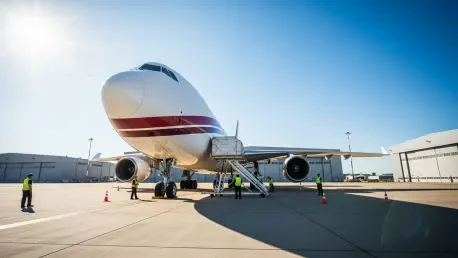

With decades of experience navigating the complexities of the logistics and supply chain sectors, Rohit Laila brings a seasoned perspective to the high-stakes world of aviation innovation. His deep understanding of how technology and safety intersect makes him a vital voice in analyzing the recent controversies surrounding aircraft testing and delivery protocols. In this discussion, we explore the intricate web of ownership in aircraft leasing, the rigorous standards required for converted freighters, and the fallout from a high-profile flight incident in Texas that has caught the attention of federal investigators.
When a converted Boeing 777-200LR freighter undergoes final pre-delivery testing, what are the standard expectations, and how does the recent maneuver at Horseshoe Bay deviate from those norms?
The flight on June 24 was supposed to be a routine final pre-delivery test for the converted Boeing 777-200LR freighter, registered as N705DN. As the aircraft traveled from Grissom Joint Reserve air base toward Fort Worth Alliance airport, it performed a maneuver that was anything but standard. Video footage shows the massive twinjet flying just a few meters above the ground at Horseshoe Bay Resort airport, parallel to runway 17/35. The most chilling moment occurs when the aircraft banks sharply to the right, bringing the wing-tip dangerously close to the runway surface before the pilot pulls up and climbs away. This kind of display is extremely rare for a cargo conversion project in its final stages, as the industry typically prioritizes absolute stability and safety over such aggressive low-altitude flying.
There seems to be a significant amount of confusion regarding who was responsible for the aircraft during this flight; how do these complex ownership and operational layers work during the testing phase?
The ownership structure during these transitions is often complex, involving the manufacturer, the conversion specialist, and the leasing firm. In this case, the aircraft is an ex-Delta Air Lines airframe that underwent the Mammoth Freighters conversion program, with Jetran listed as the current owner. While the plane was painted in the distinctive colors of Qatar Airways’ cargo division, the airline was not actually operating the flight and had no crew on board. It is important to note that the jet did not even have a Qatari registration yet, as it was still undergoing these final evaluations before being officially handed over to the Doha-based launch customer. Both Jetran and Mammoth have been quick to distance themselves from the incident, emphasizing that the pilots on board were not affiliated with the airline and that the maneuvers did not reflect the professional standards expected in the cargo industry.
What are the potential consequences when an aircraft deviates so sharply from standard procedures, and how is the regulatory investigation likely to unfold?
The FAA has confirmed they are investigating the event, which is a serious step when an aircraft deviates from its flight plan for such a risky display. Radio communications from LiveATC reveal that the crew did use the common traffic advisory frequency for the Horseshoe Bay and Burnet Municipal airports, which are uncontrolled fields. They identified the jet and stated they were “turning finals runway 17 for a low approach,” but the execution seen on video goes far beyond a standard low-pass. The fact that the National Transportation Safety Board is not currently investigating suggests there was no mechanical failure, but the FAA’s focus will likely be on the crew’s decision-making and adherence to safety regulations. Such a public lapse in operational discipline can lead to significant repercussions for the pilots and the organizations managing the delivery process.
For an industry that prides itself on precision, how does an event like this impact the reputation of major conversion programs like the Mammoth 777-200LRMF?
This incident puts a spotlight on the Mammoth 777-200LRMF program at a very sensitive time, just as it prepares to deliver its first units to a major global carrier. The industry relies heavily on trust, and seeing a wing-tip nearly scrape the asphalt during a pre-delivery test is enough to make any logistics executive feel uneasy. Qatar Airways has deferred all comments to Jetran, signaling a desire to remain insulated from the controversy until the investigation concludes. Every component of a freighter conversion, from the structural integrity to the flight dynamics, is scrutinized, so having a human-error incident like this during the final stages creates unnecessary noise around a high-tech engineering achievement. We must remember that these aircraft are designed to move massive amounts of global trade safely, and anything that suggests a lack of professional rigor is taken very seriously by all stakeholders involved.
What is your forecast for the future of oversight in pre-delivery flight testing?
I expect to see a significant tightening of the leash regarding how these test flights are conducted, specifically with stricter flight plan enforcement and perhaps more onboard monitoring technology. We will likely see manufacturers and leasing firms like Jetran implementing more rigid protocols to ensure that no “freestyle” maneuvers are performed while an aircraft is still in the transition phase. As the demand for converted freighters grows, the margin for error shrinks, and the industry will double down on a culture where safety is never sacrificed for a visual display. This event will serve as a stark reminder that even in an era of advanced innovation, the human element remains the most critical factor in maintaining aviation safety.