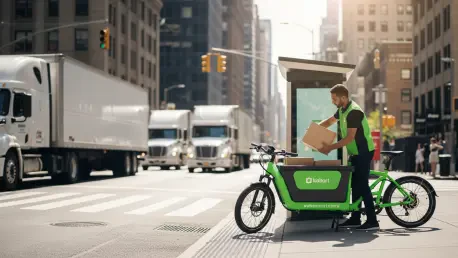

The relentless hum of idling engines and the symphony of honking horns have long defined the sensory experience of New York City’s streets, yet a fundamental shift in how the city breathes is currently unfolding through an innovative logistical experiment. For decades, the traditional method of bringing goods into the nation’s most densely populated urban center has relied on massive, heavy-duty trucks that clog narrow residential avenues and contribute significantly to environmental degradation. In response to this mounting crisis, the New York City Department of Transportation has launched its Microhubs Pilot program, a strategic initiative designed to rethink the “last mile” of the delivery process. These microhubs act as critical distribution points where freight is transferred from large semi-trucks into smaller, more agile electric cargo bikes and handcarts. By shifting the bulk of delivery activity to designated curbside or off-street spaces, the city is actively working to dismantle the logistical bottlenecks that have historically plagued its five boroughs. This transition represents a significant departure from the status quo, promising a more efficient, quieter, and cleaner alternative for managing the staggering volume of packages that arrive at the city’s doorsteps every single day.
Quantifying Local Impact on Neighborhood Infrastructure
Initial data gathered during the first year of the microhubs initiative reveals a measurable and positive impact on the structural health of the city’s roads and the overall flow of traffic. Official reports indicate that the pilot program has already succeeded in removing more than 3,000 truck trips from local streets, a figure that highlights the program’s potential to reduce the immense physical pressure placed on aging urban infrastructure. Heavy vehicles are the primary cause of road wear, and by diverting thousands of these trips, the city is not only improving traffic conditions but also potentially extending the lifespan of its pavement and underground utility networks. Beyond the physical benefits to the asphalt, the reduction in total miles traveled by large fossil-fuel-burning vehicles provides an immediate relief to neighborhoods that have long been inundated with delivery vans. This shift allows for a more fluid movement of public transit and emergency vehicles, which are frequently delayed by the double-parking habits of traditional delivery drivers who find themselves with few legal options for unloading goods in congested zones.
Evidence from specific neighborhoods, such as Manhattan’s Upper West Side, further demonstrates the incredible efficiency of transitioning to smaller delivery modes within a dense urban grid. In this high-demand residential corridor, handcarts operating out of localized hubs are currently processing approximately 860 packages every day, which effectively eliminates over a mile of heavy truck travel during each shift. Complementing this effort, electric cargo bikes have taken over the transport of an additional 110 packages daily, proving that small-scale vehicles can handle significant payloads without the logistical footprint of a standard delivery van. This targeted approach to distribution allows couriers to navigate narrow streets and crowded sidewalks with far greater ease than their motorized counterparts. Furthermore, the localized nature of these hubs means that the final delivery leg is shorter, more predictable, and less prone to the delays caused by city-wide traffic incidents. The success seen on the Upper West Side serves as a compelling proof of concept, showing that even the most complex residential environments can benefit from a decentralized logistics strategy.
Scaling Operations Across Diverse Commercial Districts
Based on the favorable results from early testing sites, the city is aggressively expanding the microhub model into new and diverse geographical areas to test its versatility. New hubs are currently being activated in the Financial District and on the Upper East Side, two locations characterized by high delivery volumes but very different architectural and social layouts. The Financial District, with its narrow, winding colonial-era streets, presents a unique challenge for traditional trucking that microhubs are perfectly suited to address. Conversely, the Upper East Side provides a massive testing ground for high-density residential deliveries where the volume of e-commerce packages often overwhelms local building staff and curbside capacity. These new sites have been strategically selected for their proximity to existing bike lanes and public transit corridors, ensuring that the electric cargo bikes and walking couriers have the necessary infrastructure to operate safely and effectively. This expansion is a vital step in determining how the microhub model can be adapted to serve various neighborhood archetypes across the entire city.
As the program moves into its second phase, the Department of Transportation is actively soliciting deeper involvement from the private sector to broaden the reach of these sustainable logistics solutions. Major logistics companies and local startups that utilize green delivery methods or are prepared to transition toward walking courier models are being incentivized to participate in the growing network. By fostering these public-private partnerships, the city aims to create a competitive marketplace for green delivery services, encouraging innovation in vehicle design and route optimization software. This phase of the initiative is focused on refining the regulatory framework to ensure that businesses have clear guidelines for using public space while maintaining high standards for safety and efficiency. The goal is to move beyond a simple pilot project and toward a standardized system where sustainable delivery is the default option for businesses operating within the city limits. This collaborative effort ensures that the logistical revolution is supported by the companies that drive the local economy, making the transition both practical and profitable.
Mitigation of the Economic Burden of Traffic Congestion
The financial implications of New York’s delivery gridlock are staggering, making the search for more efficient logistics a matter of economic necessity. Current projections suggest that freight volumes in the city will increase by nearly 50 percent over the coming decades, a growth rate that the existing infrastructure is ill-equipped to handle without a total overhaul of distribution methods. At present, more than 44,000 trucks cross the city’s major bridges every day, contributing to a state of perpetual congestion that costs the local economy approximately $20 billion annually. This massive figure represents lost productivity, the rising costs of fuel consumed by idling engines, and the increased maintenance required for delivery fleets that are constantly stuck in stop-and-go traffic. Microhubs offer a direct intervention by streamlining the final stage of the supply chain, allowing for faster delivery times and reducing the time vehicles spend idling on city streets. By reclaiming the curbside from oversized vehicles, the city can redirect resources toward more productive uses, fostering a more vibrant and less frustrated business environment.
Beyond the direct costs of fuel and labor, the economic drain of congestion also manifests in the rising prices of goods and services for New York residents. When delivery companies struggle to find parking or face constant traffic delays, those costs are inevitably passed down to the consumer in the form of higher shipping fees or increased retail prices. The microhub system helps stabilize these costs by providing a more predictable and less expensive way to move goods through the city’s core. Furthermore, the reduction in heavy truck traffic leads to lower public expenditures on road repairs and infrastructure maintenance, which are largely funded by taxpayer dollars. By addressing the root causes of delivery inefficiency, the city is taking a proactive stance against the hidden taxes of urban gridlock. This economic strategy prioritizes long-term sustainability over short-term convenience, recognizing that a city that cannot move its goods efficiently is a city that will struggle to remain globally competitive. The transition to microhubs is therefore as much a financial strategy as it is an environmental or logistical one.
Integrating Intermodal Transportation and Community Safety
Improving public safety remains a cornerstone of the shift toward smaller, human-scale delivery vehicles in the metropolitan area. Large commercial trucks are disproportionately involved in serious traffic accidents and fatalities, often due to significant blind spots and the difficulty of maneuvering such large machines in crowded urban environments. When delivery drivers are forced to park illegally or block pedestrian crosswalks because of a lack of designated space, they create hazardous conditions for everyone sharing the road. Microhubs mitigate these risks by shifting the majority of delivery activity to electric cargo bikes and handcarts, which have a much smaller physical profile and offer operators a clearer view of their surroundings. This change significantly reduces the likelihood of collisions with pedestrians and cyclists, who are the most vulnerable users of the city’s streets. By removing the “wall of trucks” that often lines residential blocks, the city is effectively returning public space to the people, making neighborhoods feel safer and more navigable for residents of all ages.
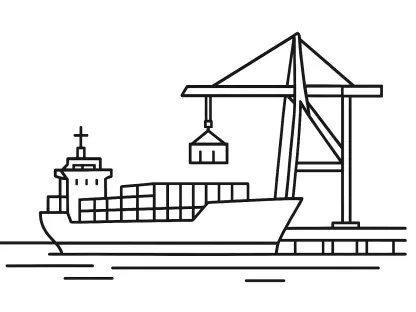
The microhub initiative does not exist in a vacuum; it is a vital component of a much larger, multi-modal strategy to modernize New York’s entire freight and curb management system. This holistic approach includes programs such as “Blue Highways,” which seeks to move more freight via the city’s extensive waterways to reduce bridge and tunnel crossings, and “LockerNYC,” which provides secure locations for package pickup to minimize failed delivery attempts. Together, these programs form a unified ecosystem aimed at creating a zero-emission delivery network that can withstand the demands of a modern economy. Large-scale retailers and delivery giants have expressed support for this integrated model, noting that it allows them to meet sustainability goals while improving the reliability of their service. By combining waterway transport, localized hubs, and smart locker systems, the city is building a resilient logistics framework that reduces the carbon footprint of every package delivered. This comprehensive strategy ensures that the city’s transportation network is prepared for future growth without sacrificing the quality of life for its inhabitants.
Evolution Toward a Unified Zero-Emission Delivery Network
The successful implementation of the initial microhub sites provided the city with a clear roadmap for the complete transformation of urban logistics. Throughout the early phases of the pilot, planners monitored the interactions between couriers and residents, finding that the transition to quieter, smaller vehicles was met with widespread community approval. The reduction in noise pollution alone significantly improved the livability of residential blocks where truck idling was once a constant nuisance. Furthermore, the city documented a noticeable decrease in localized air pollutants, supporting the broader goal of achieving a carbon-neutral transportation sector. As the data flowed in, it became clear that the decentralized hub model was not just a temporary fix but a necessary evolution of the city’s infrastructure. Policy makers used these findings to refine zoning laws and parking regulations, ensuring that the microhub network could be permanently integrated into the city’s fabric without disrupting the essential functions of a thriving metropolis.
Moving forward, the city finalized the integration of microhubs into the permanent citywide freight plan, marking a significant victory for sustainable urban planning. The lesson learned from this initiative was that solving gridlock required a move away from the traditional, centralized distribution model toward a more flexible and human-centric approach. Future considerations for the program include the development of automated sorting technologies within the hubs and the expansion of the electric charging infrastructure to support a 100 percent green delivery fleet. By prioritizing the movement of goods in a way that respects the constraints of a dense urban environment, New York City established a blueprint for other global cities facing similar challenges. The transition demonstrated that through cooperation between government agencies and private industry, it was possible to maintain a robust economy while significantly reducing the negative impacts of urban freight. The journey toward a zero-emission delivery ecosystem proved that the future of city logistics lay in being smaller, smarter, and more integrated into the community.