
A package that takes three weeks to move from a manufacturer to a distribution center can arrive at a customer’s door within 24 hours of leaving the warehouse. That final leg of the journey, from the fulfillment center to the end destination, is where logistics complexity concentrates and where customer expectations are most visible.
For logistics and distribution leaders, last-mile delivery and warehouse operations are the two pressure points that determine whether fulfillment is a competitive advantage or a recurring cost problem.
This article explores the challenges that make last-mile delivery expensive and difficult to scale, how warehouse automation supports better fulfillment outcomes, and what logistics leaders should prioritize as they modernize operations.
Last-Mile Delivery: Why the Final Leg Carries the Most Cost and Complexity
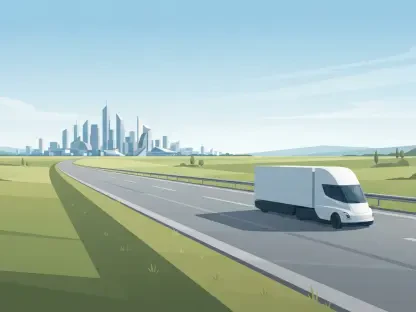
Last-mile delivery is the final stage of the supply chain. It involves moving goods from a distribution center or fulfillment hub to the end destination, whether a residential address, retail location, or business facility. Despite being the shortest leg of the journey, it consistently represents the highest cost per unit of distance traveled.
According to the World Economic Forum, last-mile delivery accounts for up to 53% of total shipping costs. For logistics leaders, that single figure captures why last-mile operations consistently draw the most scrutiny in fulfillment cost reviews. That disproportionate cost reflects the operational reality of the final leg, where low delivery density, unpredictable traffic, failed delivery attempts, and the growing expectation of narrow delivery windows all drive cost upward.
Why Last-Mile Costs Keep Rising
Last-mile delivery does not become more expensive because logistics operations become less efficient. It becomes more expensive because the conditions that define the final leg work against cost control by design. For example:
Delivery density declines at the residential level. A truck delivering to a distribution center drops a large volume at a single stop. The same truck delivering to residential addresses may make dozens of stops with one or two parcels each. Fuel, driver time, and vehicle wear spread across fewer units per stop, which increases the cost per delivery.
Failed deliveries create repeat attempts and reverse logistics. When a recipient is unavailable, the delivery fails, and the item must be returned to a hub, rescheduled, and redelivered. Each failed attempt adds cost and reduces the route’s efficiency. For high-volume operations, failed delivery rates can have a measurable impact on total fulfillment cost.
Customer expectations compress delivery windows. Same-day and next-day delivery have moved from premium options to baseline expectations in many markets. Meeting those windows requires more distributed fulfillment infrastructure and tighter route optimization, both of which add complexity and cost.
Returns create reverse logistics pressure. E-commerce return rates are significantly higher than in-store return rates. Managing the reverse flow of goods, from the customer back through the fulfillment network, adds operational demand that many last-mile systems were not originally designed to handle efficiently.
Together, these factors create a cost structure that is difficult to improve through incremental operational adjustments alone. Addressing this requires deliberate investment in the technology and infrastructure that changes the economics of the final leg. That is where modern last-mile technology is making the most measurable difference for logistics leaders.
How Technology Is Changing Last-Mile Operations
While technology does not eliminate the structural challenges of last-mile delivery, it is giving logistics leaders more precise tools to manage them. The following capabilities are producing measurable improvements in cost, delivery performance, and customer experience.
Route optimization reduces fuel and driver time. AI-powered route planning tools analyze traffic patterns, delivery density, time windows, and vehicle capacity to generate more efficient routes. Continuous optimization as conditions change during the day reduces wasted mileage and improves on-time performance.
Delivery density improves through micro-fulfillment and locker networks. Placing smaller fulfillment hubs closer to end destinations, or enabling parcel collection through locker networks and retail pickup points, reduces the distance and stops required for last-mile delivery. This improves density and gives customers more flexible collection options.
Real-time tracking improves first-attempt success rates. Giving customers accurate delivery windows and real-time tracking visibility reduces failed attempts by allowing recipients to plan around delivery. For logistics operations, higher first-attempt success rates directly reduce the cost of redelivery and reverse logistics handling.
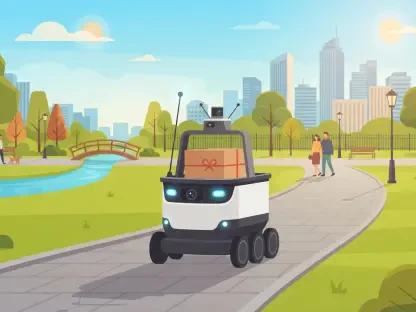
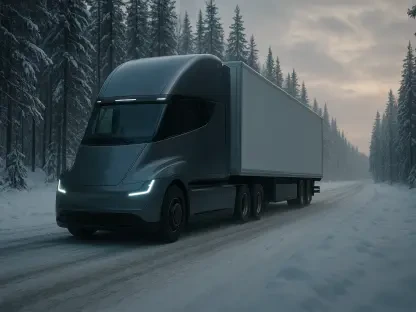
Autonomous and electric delivery vehicles are entering operational use. While still scaling, autonomous delivery vehicles and electric fleets are reducing per-delivery cost in specific corridors. Logistics leaders should monitor adoption curves and evaluate pilot programs in high-density markets where the operational case is strongest.
Last-mile efficiency depends on what happens before the delivery vehicle leaves the facility. Warehouse operations determine whether orders are picked, packed, and dispatched accurately and at the speed that last-mile timelines require.
Warehouse Automation: Building the Fulfillment Foundation That Supports Last-Mile Performance
Warehouse automation refers to the use of technology to perform or support tasks within a distribution or fulfillment center that were previously completed manually. According to Cyngn, automation in warehouse environments ranges from simple conveyor systems to fully autonomous mobile robots and AI-driven inventory management. The business case for warehouse automation is grounded in three operational outcomes: faster order processing, lower labor cost per unit, and fewer errors that create downstream fulfillment problems.
The Operational Pressure Driving Automation Investment
Logistics and distribution leaders face a consistent set of pressures that manual warehouse operations struggle to absorb. Three stand out as the most common drivers of automation investment.
Labor availability and cost. Warehouse labor markets are tight in many regions, and wages have risen significantly. Manual operations that depend on high headcounts become increasingly expensive and operationally fragile when labor markets tighten.
Order volume variability. E-commerce and omnichannel fulfillment create significant peaks in order volume, particularly around promotional periods and seasonal demand. Manual operations scale poorly against that variability without significant temporary headcount, which creates quality and consistency challenges.
Accuracy requirements. As customers expect faster delivery and more reliable order accuracy, the cost of picking errors increases. Manual picking operations carry inherent error rates that automated systems can reduce significantly.
These pressures do not ease as volume grows. Instead, they compound, which is why logistics leaders are treating warehouse automation as an operational priority rather than a long-term consideration.
Types of Warehouse Automation and Their Operational Value
Warehouse automation operates across several layers, and logistics leaders typically deploy a combination based on their facility type, volume, and product mix. Each layer addresses a specific operational constraint, and together they form a system that improves throughput, accuracy, and cost consistency. The layers include:
Automated storage and retrieval systems manage the movement of inventory within a warehouse using mechanized equipment. They improve storage density and retrieval speed, particularly for facilities handling large SKU counts in limited space.
Autonomous mobile robots move through warehouse environments to transport goods between picking stations and dispatch areas. They reduce the time pickers spend walking between locations, which is one of the largest time costs in manual operations.
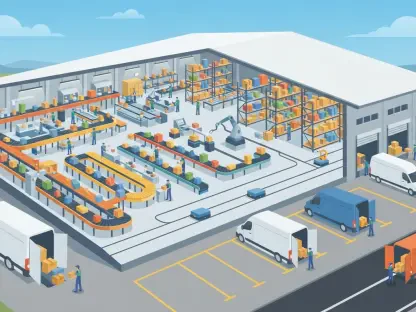
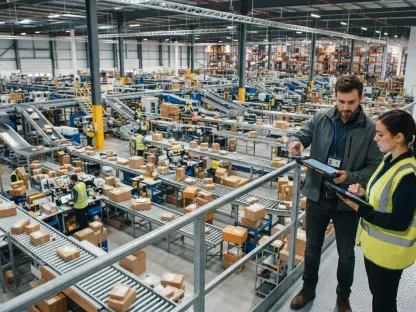
Conveyor and sortation systems automate the movement and sorting of parcels and packages through processing stages, from receiving through packing and dispatch. These systems improve throughput consistency and reduce the manual handling that creates damage and errors.
Goods-to-person picking systems bring inventory to a stationary picker rather than requiring the picker to travel through the warehouse. This reduces pick time, improves ergonomics, and supports higher picking accuracy.
AI-driven inventory management uses demand forecasting and slotting optimization to position inventory within the warehouse based on predicted pick frequency, reducing travel time and improving throughput during high-demand periods.
No single automation layer solves every warehouse challenge. The leaders who see the strongest returns are those who assess their specific bottlenecks first and deploy automation in the stages that address those constraints directly. That targeted approach also makes it easier to prove operational improvement at each stage before committing to broader investment.
What Automation Delivers for Logistics Operations
The operational outcomes of warehouse automation are measurable across throughput, accuracy, and cost. Fulfillment speed improves because automated systems process orders faster and with less variability than manual workflows, extending the dispatch window for same-day or next-day delivery and directly supporting last-mile promise performance.
At the same time, error rates decline as automated picking and verification systems reduce the mispicks, wrong quantities, and incorrect labeling that manual processes introduce. Fewer errors translate into fewer returns, lower reverse logistics costs, and less demand on customer service teams.
Labor cost per unit decreases as automation absorbs volume that would otherwise require additional headcount. For operations managing significant seasonal or promotional peaks, automation provides a more cost-stable way to scale without the quality risks that come with large temporary workforces.
Last-mile technology and warehouse automation address different parts of the fulfillment system, but their value compounds when logistics leaders treat them as connected capabilities rather than separate investments.
What Logistics Leaders Should Prioritize When Modernizing Fulfillment Operations
Modernizing last-mile delivery and warehouse operations is not a single technology decision. It requires sequencing, integration, and governance across operations, technology, and finance teams.
Start with the Highest-Cost Failure Points
Before investing in automation or last-mile technology, logistics leaders should identify where cost and failure rates are highest. Common starting points include failed delivery rates, pick error rates, order processing cycle time, and labor cost per unit shipped. This baseline makes it easier to evaluate which investments reduce cost and risk most directly and to build a business case that finance leadership can evaluate with confidence.
Integrate Warehouse and Last-Mile Systems for End-to-End Visibility
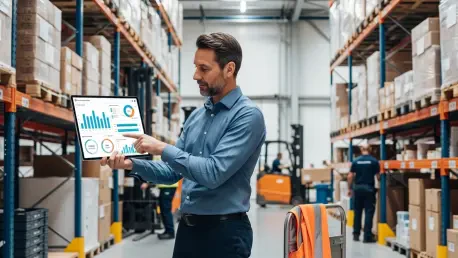
The value of warehouse automation and last-mile technology increases when they share data. When the warehouse management system connects to route optimization and last-mile tracking platforms, operations leaders gain end-to-end visibility into order status, dispatch timing, and delivery performance. That visibility supports faster decision-making when delays or exceptions occur and reduces the manual coordination that slows response in disconnected systems.
Scale in Phases to Manage Risk and Prove Returns
At the same time, large automation deployments carry implementation risk. A phased approach, starting with one facility, one product category, or one fulfillment workflow, allows logistics leaders to prove operational improvement before committing to broader rollout. Each phase should define measurable targets: throughput improvement, error rate reduction, and cost-per-unit change. Proving results at each stage reduces risk and builds the internal confidence needed to scale effectively.
Build Workforce Transition Into the Plan
Additionally, automation changes the skills and roles required in warehouse operations. Logistics leaders should plan for workforce transition alongside technology deployment, including retraining programs, role redesign, and clear communication about how automation affects existing teams. Organizations that manage workforce transition well maintain operational continuity during deployment and reduce the morale and retention risks that can slow implementation.
Conclusion: Last-Mile and Warehouse Operations Act as One Fulfillment System
Last-mile delivery and warehouse automation are not separate problems with separate solutions. They are connected parts of the same fulfillment system, and the leaders who treat them that way build operations that are more efficient, more resilient, and better equipped to meet the delivery expectations that customers and business partners now consider standard.
The pressure on fulfillment operations is not easing. Delivery windows are compressing, return volumes are rising, and labor markets remain challenging. Logistics leaders who invest in last-mile technology and warehouse automation as a connected system, governed carefully and scaled with measurable targets, will reduce cost, improve performance, and build a fulfillment capability that supports growth.
However, those who delay should expect the same operational pressures to compound. Failed deliveries, picking errors, and labor cost volatility do not resolve themselves. The gap between operations that have modernized and those that have not will continue to widen until the cost of inaction outweighs the investment required to close it.
The good news is that the path forward is clear. Logistics leaders who start with their highest-cost failure points, connect warehouse and last-mile systems, and scale in measurable phases will build a fulfillment operation that delivers on customer expectations today and has the operational foundation to adapt as those expectations continue to rise.