
The recent departure of the first full outbound freight rake from Mendipathar station signals a fundamental shift for Meghalaya, moving the state from a logistical endpoint to an active participant in India’s vast supply chain network. For a state historically defined by its challenging terrain and reliance on road transport, the activation of this rail corridor marks the beginning of a profound economic recalibration. This development is not merely about a single shipment of coal but about unlocking decades of untapped potential and charting a new course toward industrial growth and market integration.
Meghalaya on the Move The Dawn of a New Logistical Era
Meghalaya’s economic landscape has long been shaped by its geography. The hilly, rugged terrain made extensive road networks the only viable means of transport, leading to high logistics costs, long transit times, and a degree of commercial isolation. This dependency on surface transport created significant hurdles for local industries seeking to move bulk goods efficiently, effectively limiting their reach and competitiveness on a national scale.
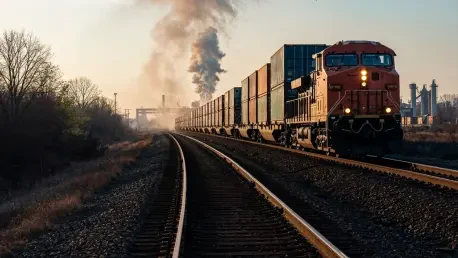
The establishment of Mendipathar as the state’s sole railway station began to change this dynamic by facilitating inbound freight, but its true potential was realized with the inauguration of outbound services. The dispatch of a full 42-wagon rake of coal to Bihar was a landmark event. This successful operation, completed swiftly in under nine hours, officially integrated Meghalaya into India’s national freight map and demonstrated the operational readiness of the Northeast Frontier Railway (NFR) to handle significant commercial volumes.
Unlocking Economic Potential Catalysts for Growth and Market Integration
From Local Mines to National Markets The Immediate Impact
The introduction of full-rake loading capabilities has created a new commercial artery for Meghalaya’s industries. This direct, cost-effective channel allows bulk commodities, starting with coal, to access broader domestic markets without the prohibitive costs and logistical complexities of road transport. The seamless execution of the first consignment served as a powerful proof of concept, showcasing the NFR’s capacity to manage end-to-end freight operations efficiently.
Charting the Course for Prosperity Projections and Forecasts
This newfound connectivity is projected to create significant economic ripple effects. A sharp reduction in logistics costs is anticipated to boost trade volumes, directly contributing to the state’s Gross State Domestic Product (GSDP). More importantly, the reliability and efficiency of rail transport make Meghalaya a far more attractive destination for industrial investment. Businesses that were once deterred by connectivity challenges may now see the state as a viable hub for manufacturing and resource processing.
Hurdles on the Horizon Addressing Implementation Challenges
Despite the promise, significant challenges remain. The most pressing is the last-mile conundrum—the need to develop robust road networks connecting production centers like mines and farms to the Mendipathar railhead. Without effective feeder routes, the railway’s utility will be severely constrained, creating bottlenecks that undermine its efficiency.
Furthermore, realizing the full potential of rail freight requires investment beyond the tracks themselves. To support a diverse range of goods, Meghalaya needs modern warehousing, cold storage facilities for agricultural produce, and advanced handling equipment. As freight traffic increases, it will also be crucial to address the potential environmental impact through sustainable practices and stringent regulatory oversight to ensure that economic growth does not come at an ecological cost.
The Policy Framework Government’s Role in Steering Progress
This development is a key component of the Northeast Frontier Railway’s broader strategic vision to enhance connectivity across the region. By establishing reliable freight corridors, the NFR aims to stimulate economic activity and integrate the Northeast more deeply into the national economy. This initiative aligns perfectly with national policies such as the PM Gati Shakti National Master Plan and the Act East Policy, which prioritize infrastructure development and regional economic integration.
For this momentum to be sustained, a supportive policy environment is essential. Streamlined regulations and effective inter-state cooperation are needed to facilitate the seamless movement of goods across borders. A coordinated effort between central and state governments will be vital to remove administrative hurdles and ensure that the new rail infrastructure operates at its full potential, transforming logistical efficiency into tangible economic benefits.
The Future of Freight Envisioning an Integrated Transport Network
While coal has headlined the inaugural operations, the long-term vision is to diversify Meghalaya’s freight portfolio significantly. The rail network holds immense potential for transporting the state’s rich agricultural and horticultural produce, including spices, fruits, and other high-value goods, to markets across India. This will provide a major boost to the agrarian sector and create new livelihood opportunities.
The ultimate goal is the creation of a multi-modal logistics ecosystem. This includes expanding the rail network with new lines reaching other parts of the state and integrating it with road and potentially other transport modes. The adoption of digital technologies for freight management, real-time tracking, and logistics planning will be critical in modernizing the supply chain, enhancing transparency, and maximizing the efficiency of this transformative new corridor.
A Transformative Junction The Final Verdict on Meghalaya’s Rail Future
The establishment of outbound rail freight capability marked a pivotal turning point in Meghalaya’s economic narrative. It signaled a transition from logistical dependency to greater self-reliance and opened a direct conduit to national markets, which had long been a strategic objective for the state’s industrial sector.
To fully capitalize on this opportunity, a strategic focus on supporting infrastructure was deemed essential. The analysis recommended that policymakers prioritize the development of last-mile connectivity and invest in diversified warehousing to accommodate a broader range of commodities. The journey ahead for Meghalaya was thus set on a new track, one that promised a more connected, competitive, and economically vibrant future within the Indian union.