
The global supply chain no longer relies on a single dominant maritime entry point but rather on a sophisticated tug-of-war between inland-focused gateways and agile transshipment relay stations. As the maritime sector maneuvers through the complexities of the current year, the infrastructure and trade route shifts have created a bifurcated landscape where efficiency is measured not just by the speed of a vessel, but by the fluidity of the transition from sea to land. The European maritime sector has matured into a system where the traditional North Sea dominance faces increasing competition from Mediterranean and Baltic challengers, forcing a total reconsideration of how logistics entities define success.
Understanding the Framework of European Port Logistics
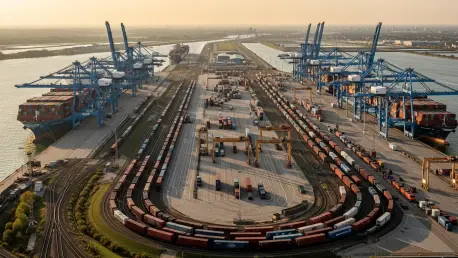
The transition through the current period has seen a stabilization of the massive infrastructure investments initiated over the last several years. The primary actors in this region represent a diverse mix of historical powerhouses and aggressive newcomers. In the Northern range, the “Big Four” of Rotterdam in the Netherlands, Antwerp-Bruges in Belgium, and the German giants of Hamburg and Bremerhaven continue to anchor the European economy. However, the geographic focus has broadened significantly. Emerging sites like the Baltic Hub in Gdansk have fundamentally altered the flow of goods into Eastern Europe, while Mediterranean hubs such as Valencia, Algeciras, Piraeus, and Gioia Tauro serve as the critical gatekeepers for cargo moving through the Suez Canal or around the Cape of Good Hope.
Defining the functional roles of these maritime hubs is essential for any strategic logistics planning. We must distinguish between deep-sea gateways and transshipment relay points. A gateway serves as the primary entry point for the European hinterland, where goods are unloaded to be moved inland via a dense network of rail, barge, and road. In contrast, a transshipment hub functions as a maritime intersection where containers are transferred from massive mother vessels to smaller feeder ships. This vessel-to-vessel transfer means the cargo often never enters the domestic economy of the port’s host nation, creating a different set of economic priorities and operational requirements for the terminal operators.
Core Operational and Strategic Comparisons
Throughput Metrics: TEU Volume vs. Actual Cargo Tonnage
When analyzing the performance data, the distinction between Twenty-foot Equivalent Units and actual tonnage reveals a surprising narrative about port efficiency. Rotterdam maintains its status as the largest port by handling 14.245 million TEU, yet the gap with Antwerp-Bruges, which recorded 13.63 million TEU, is narrower than raw box counts suggest. Statistical nuances show that Rotterdam’s growth was bolstered by the movement of empty containers, which inflate the TEU count without contributing to the actual economic value or weight of the cargo. In several quarters, Antwerp-Bruges has actually surpassed its Dutch rival in container tonnage, particularly due to its dominance in the chemical and breakbulk segments.
Performance data suggests that a port’s ranking is often a matter of perspective rather than a definitive statement of superiority. While a high TEU count indicates a busy terminal, it does not always equate to high-value throughput. Shippers are increasingly looking at the weight-to-volume ratio to determine which ports are handling actual goods versus those merely serving as repositioning centers for empty equipment. This shift in focus toward tonnage over box counts provides a more accurate reflection of a port’s role in the real economy, especially in industrial sectors where the weight of raw materials and finished heavy machinery is the primary concern.
Economic Impact: Hinterland Integration vs. Sea-to-Sea Relay
The distribution models of “Gateway” ports like Hamburg and Rotterdam provide a massive domestic economic footprint because they are the start of a deep value chain. When a container lands in Hamburg, which processed 8.3 million TEU, it is likely destined for a factory in Germany, a warehouse in Austria, or a retail center in Poland. This necessitates local customs clearance, warehousing, and extensive inland transportation services. This model contrasts sharply with the “Transshipment Hub” model seen in Algeciras or Gioia Tauro. In Algeciras, despite a high throughput of 4.74 million TEU, the local economic impact is significantly lower because most of those boxes are simply being moved from one ship to another for delivery to other Mediterranean or African destinations.
Value chain contribution is therefore a much more vital metric for national governments than throughput alone. A gateway port supports thousands of jobs in the logistics, rail, and trucking sectors, creating a multiplier effect that a transshipment relay point cannot match. The sea-to-sea relay model is highly mobile; a carrier can move its transshipment business to a different port with relatively little friction if costs rise or efficiency drops. Gateway ports, however, are anchored by the physical infrastructure of the hinterland. Shippers who prioritize stability and deep market access tend to favor the gateway model, even if it comes with higher port fees and more complex customs requirements.
Market Shifts: Direct Deep-Sea Access vs. Feeder Dependencies
The most dramatic regional transition has occurred in the Baltic, where Gdansk has seen a 23% volume surge, reaching nearly 2.8 million TEU at its Baltic Hub. This growth represents a fundamental move away from the traditional feeder market model. Previously, goods for Poland and the surrounding regions were offloaded in North Sea ports and moved via small feeder vessels to the Baltic. Now, Gdansk acts as a direct destination for deep-sea vessels, allowing cargo owners to bypass the congestion and extra handling costs of transshipment. This shift has shortened transit times and made the Eastern European market much more competitive on the global stage.
Geopolitical influence and shipping alliance reshuffling have also played a major role in these market shifts. The launch of the Gemini Cooperation, involving Maersk and Hapag-Lloyd, significantly altered which ports receive priority calls. This alliance, combined with the continued disruptions in the Red Sea, has favored dual-role ports like Valencia, which saw a 14.2% growth due to its ability to act as both a gateway and a relay point for rerouted vessels. Meanwhile, Piraeus suffered a 7.8% decline, as carriers looked for more stable or direct routes into Northern Europe. These shifts illustrate that port dominance is not permanent and is highly sensitive to the shifting strategies of global shipping alliances.
Critical Challenges and Regulatory Considerations
The regulatory landscape has become a primary driver of freight pricing and operational delays. The full implementation of the EU Emissions Trading System (ETS) has turned carbon costs into a fixed overhead for maritime transport. Carriers now optimize their routes not just for speed, but for carbon efficiency, which often penalizes ports that require long deviations from the main shipping lanes. Furthermore, the labor market has been hit hard by the Entry/Exit System (EES). This system has caused significant shortages of non-EU truck drivers, particularly those from the Western Balkans, who are now limited by the strict “90 days in 180” rule, leading to border bottlenecks and increased inland transport costs.
Infrastructure and congestion remain persistent thorns in the side of efficient logistics. High berth utilization in Northern Europe has frequently led to quay-side delays, forcing shippers to evaluate terminal-specific productivity rather than general port reputation. When a terminal operates at near-total capacity, even a small disruption—such as a minor labor strike or a software glitch—can cause a backlog that takes weeks to clear. Shippers are increasingly diversifying their port choices to avoid being trapped in these “utilization traps,” looking toward secondary ports like Bremerhaven, which has seen 10% growth as a result of its reliability and specialized automotive handling capabilities.
Supply chain resilience is also challenged by the scarcity of empty equipment. Ports with high import volumes and low exports often find themselves with mountains of empty containers that are expensive to reposition, while export-heavy ports struggle to find enough boxes for their outgoing goods. This imbalance is particularly visible in ports with specific industrial focuses. Shippers must now consider the technical requirements of specialized customs procedures and the availability of specific container types when choosing a port. Navigating these complexities requires a sophisticated understanding of both the regulatory environment and the physical reality of the terminal gate.
Strategic Synthesis and Logistics Recommendations
The evaluation of the “Shanghai of Europe”—represented by the massive hubs of Rotterdam and Antwerp-Bruges—compared to the rising “middle class” of ports like Bremerhaven and Gdansk reveals a maturing market. The North Sea range still provides the most comprehensive access to the European core, but the sheer size of these ports can sometimes be a hindrance during times of peak congestion. In contrast, the rapid ascent of Gdansk has provided a blueprint for how infrastructure investment can successfully redirect trade flows. Shippers found that the best results came from matching the specific needs of their cargo to the unique strengths of the terminal, rather than relying on historical volume rankings.
Practical guidance for selecting a port now hinges on inland frequency and geopolitical stability. For high-volume consumer goods destined for the heart of the continent, the integrated rail and barge networks of the Northern gateways remain the standard. However, for regional efficiency in the Baltic or as a strategic relay in the Mediterranean, ports like Gdansk and Valencia offered superior agility. The decision-making process shifted toward looking at the frequency of rail departures and the availability of bonded warehouse space rather than just the number of cranes on a dock. Stability became a premium commodity in a world of shifting alliances and carbon-related cost fluctuations.
Ultimately, the choice between a gateway and a transshipment hub depended on the finality of the cargo’s journey. Organizations that successfully navigated this year did so by recognizing that a port is not just a destination, but a vital link in a complex chain. Shippers who utilized Gdansk for its proximity to Eastern European manufacturing hubs or prioritized Valencia for its dual-role flexibility achieved better lead times than those who defaulted to the largest available ports. By balancing the rising costs of labor and carbon against the need for inland connectivity, logistics planners created more resilient supply chains that were better equipped to handle the unexpected shifts in global trade.