The vast, intricate network of trucks, ships, and containers that delivers goods to doorsteps and store shelves worldwide is now being systematically exploited by sophisticated criminal enterprises to move their illicit cargo across continents with alarming efficiency. This subversion of global commerce transforms the arteries of the economy into clandestine highways for contraband.
The Hidden Network How Global Commerce Became a Conduit for Crime
The modern supply chain presents a profound paradox. It is simultaneously the engine of unprecedented economic growth and prosperity, connecting producers and consumers across vast distances, yet it also functions as a shadow network for transnational crime. The same logistical innovations that enable just-in-time delivery and global sourcing provide cover for those who seek to profit from illicit trade. This duality creates a complex and dangerous environment where legitimate business and organized crime can operate side-by-side, often invisibly.
When criminal organizations successfully infiltrate these systems, they pose an urgent and direct threat to national and international security. The very infrastructure designed to foster global connection becomes a vulnerability, weaponized to transport narcotics, stolen goods, weapons, and other dangerous materials. The corruption of these channels erodes public trust, fuels violence, and undermines the stability of legal markets, turning a symbol of global cooperation into a conduit for systemic risk.
Understanding this threat requires a deep dive into the methods employed by these modern traffickers. They are not opportunistic amateurs but strategic players who study and exploit the intricacies of commercial freight. From the back of a tractor-trailer on a lonely highway to the anonymous confines of a steel shipping container on the high seas, criminal networks have developed a sophisticated playbook to move their products through legitimate channels, often right under the noses of authorities.
The Corrupted Cargo Tactics Targets and High-Stakes Interdictions
From Highway to Hideout The Infiltration of Commercial Trucking
Commercial trucking, the backbone of domestic logistics, has been co-opted by traffickers who turn ordinary tractor-trailers into covert delivery vehicles. Their tactics are varied and cunning, ranging from recruiting complicit drivers to pioneering “blind mule” schemes where unsuspecting truckers are used to transport drugs hidden in their cargo without their knowledge. In these scenarios, contraband is often attached to or loaded into a trailer while the driver is away, only to be retrieved by criminal associates at a later stop.
A series of high-profile seizures at North American border crossings and truck stops illuminates the scale of this problem. In Indiana, a trucker at a travel center discovered that his trailer had been secretly loaded with 350 pounds of cocaine, valued at an astonishing $16 million. Elsewhere, a joint U.S.-Canadian operation at the Blue Water Bridge intercepted nearly 400 pounds of cocaine after observing two suspicious tractor-trailers. These incidents are not isolated; they represent a persistent pattern of exploitation targeting key logistical chokepoints.
This infiltration presents an immense operational challenge for law enforcement. Agencies are tasked with screening millions of legitimate truckloads that cross borders and traverse highways every day. Isolating the handful of vehicles carrying multimillion-dollar illicit shipments requires a heavy reliance on intelligence, canine units, and advanced scanning technology, as comprehensive physical inspections of every truck are logistically impossible.
The Ghost in the Container Exploiting the Anonymity of Maritime Freight
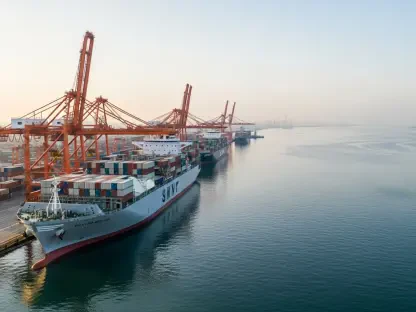
In the maritime domain, criminal networks leverage the staggering scale of global shipping to their advantage. With millions of containers moving between ports annually, the sheer volume provides a cloak of anonymity that is difficult to penetrate. Smugglers turn these standardized steel boxes into modern-day Trojan horses, concealing contraband within legitimate shipments and betting that their container will be one of the vast majority that is not physically inspected.
Recent cases demonstrate the ingenuity of these concealment methods. Near Vancouver, authorities discovered nearly 58 pounds of cocaine meticulously hidden within the ceiling of a shipping container arriving from Colombia, which was officially declared as carrying frozen fruit. In a separate series of interceptions in Philadelphia, U.S. Customs and Border Protection officers found approximately 160 pounds of ketamine hidden within a variety of goods, including the bases of punching bags and inside solvent bottles shipped from Europe.
The inherent risk is magnified by the structure of global trade. Customs agencies worldwide are forced to adopt a risk-management approach, using intelligence and data analytics to flag suspicious shipments. However, the system is predicated on the fact that only a small fraction of the world’s containerized cargo can ever be physically examined, creating a permanent vulnerability that criminals are all too willing to exploit.
A Diversified Portfolio of Crime When Stolen Vehicles Travel First-Class
The exploitation of the supply chain is not limited to the narcotics trade. Organized crime syndicates apply the same logistical principles to other lucrative black markets, most notably the trafficking of stolen high-value vehicles. These groups have mastered the art of manipulating export channels to move stolen assets overseas, where they can be sold for enormous profits.
The takedown of a vehicle theft ring in Ontario, dubbed “Project CHICKADEE,” serves as a stark example. The investigation revealed a sophisticated network that had successfully exported 306 stolen luxury vehicles, valued at over $25 million. The criminals used fraudulent documentation and complicit freight forwarding companies to ship the cars in containers through major Canadian ports to markets abroad.
This case effectively challenges the perception that supply chain security is primarily a counter-narcotics issue. It reveals a systemic vulnerability that can be exploited for a wide array of high-value contraband. The same methods used to hide cocaine in a fruit container can be used to ship a stolen SUV in a container declared as used auto parts, demonstrating the versatility of these criminal logistics operations.
The Masterminds of Logistics A Strategic Integration into Global Trade
The accumulated evidence makes it clear that these incidents are not isolated acts of smuggling but components of a deliberate and overarching strategy. Modern criminal organizations are no longer just hiding from the system; they are actively integrating their operations into the framework of legitimate global commerce. They function like shadow corporations, complete with their own logistics experts, who understand how to exploit the speed, scale, and complexity of international trade.
While the tactical details differ between land and sea-based smuggling, the strategic objective remains the same: to leverage legitimate infrastructure for illicit gain. On highways, the focus may be on speed and the exploitation of individual drivers, while in maritime freight, the strategy relies on anonymity within massive volumes. This adaptability highlights the sophisticated, business-like approach of modern criminal enterprises.
This escalating conflict pits criminal innovation against security technology in a perpetual race for supremacy. As logistics companies adopt more advanced tracking and monitoring systems, criminal networks devise new ways to circumvent them. The future of supply chain security will be defined by this ongoing battle, where the arteries of global trade are the contested territory.
Fortifying the Front Lines Countermeasures for a Compromised System
The vulnerabilities identified across commercial trucking and maritime shipping underscore the multifaceted nature of the threat. Criminals exploit everything from the anonymity of a sealed container to the operational pressures on a long-haul trucker. No single solution can secure a system this vast and complex; instead, a multi-layered defense is required to protect these critical logistical networks from further corruption.
An effective strategy must begin with intensified international intelligence sharing between law enforcement agencies and customs authorities to identify and target high-risk shipments before they reach their destinations. This must be complemented by robust public-private partnerships, where logistics companies and port operators collaborate with government agencies to harden security protocols. The deployment of advanced non-intrusive inspection technology and highly trained K-9 units at key chokepoints remains a critical component of interdiction efforts.
Logistics professionals are on the front lines of this fight and can take concrete steps to mitigate risk. Enhancing driver training programs to recognize the signs of tampering or recruitment attempts is essential. Furthermore, implementing rigorous vetting protocols for all business partners and utilizing technology to secure cargo integrity with digital seals and real-time tracking can create significant barriers for criminal enterprises seeking to exploit the system.
Securing the Arteries of Commerce A Call for Perpetual Vigilance
The central conclusion is undeniable: the global supply chain has become a contested domain, equally critical to the health of the global economy and the operations of transnational criminal organizations. It is the battlefield where the push for commercial efficiency collides with the pull of illicit profit, and its security can no longer be taken for granted.
As global trade continues to expand, so too will the attack surface for criminal exploitation. Every new shipping route, every increase in cargo volume, and every advancement in logistical speed presents a new opportunity for criminals to probe for weaknesses. This reality demands that defensive strategies evolve continuously, moving beyond static checkpoints and toward a dynamic, intelligence-driven model of security.
Protecting the world’s commercial lifelines from those who seek to corrupt them is a strategic imperative. This requires an unwavering commitment to collaboration between governments, international bodies, and the private sector. Only through perpetual vigilance and a united front can the integrity of the global supply chain be preserved, ensuring it remains an engine for prosperity rather than a highway for crime.