
Rohit Laila brings decades of frontline experience in global supply chain management, offering a seasoned perspective on the pulse of international trade. This conversation dives into the strategic significance of the $204 million upgrade in Shenzhen, exploring how increased capacity and new aerial routes are reshaping high-value cargo movement. We discuss the tripling of daily processing volumes, the addition of major intercontinental flight paths, and the specialized needs of sectors like healthcare and semiconductors that rely on time-definite deliveries.
With the Shenzhen gateway now processing 900 tons per day, how do you see this massive capacity increase impacting the agility of regional manufacturers?
This tripling of capacity is a total game-changer for a region that sits at the very heart of global manufacturing. By investing $204 million—the largest commitment to mainland China yet—the infrastructure is finally catching up to the breakneck speed of modern e-commerce and industrial trade. It effectively alleviates the bottlenecks that often frustrate fast-moving shipments during peak demand cycles. This expansion also creates a vital hub for over 1,000 new workers who will orchestrate the movement of these time-sensitive orders with precision. It ensures that even as global conditions shift, this manufacturing region remains a primary and reliable engine for the world’s supply chains.
The introduction of a daily Boeing 767 freighter connecting Shanghai, Bangkok, Bahrain, and Brussels is a significant move. What specific advantages does this route provide for businesses looking to expand their global footprint?
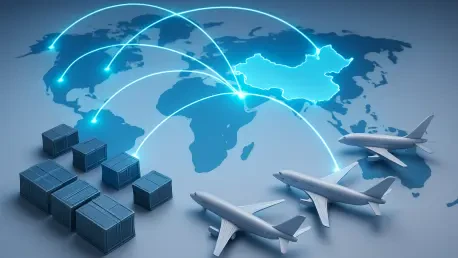
Adding 50 tons of daily shipping space creates a reliable high-speed corridor that bridges the gap between China, Southeast Asia, the Middle East, and Europe. This daily flight path is a lifeline for businesses that need to avoid lengthy warehouse delays and move goods immediately. The physical presence of a Boeing 767 on this route provides the necessary lift for high-value shipments that require door-to-door tracking and rigorous customs support. It gives companies a sense of security, knowing their cargo will move through a time-definite network without the friction of multi-carrier transfers. Ultimately, it simplifies the complex task of moving goods across three continents in a single, streamlined journey.
We are seeing a growing demand for specialized express services among technology and healthcare sectors. How do these solutions cater to the unique pressures of those industries?
Industries like semiconductors and healthcare deal with fragile, high-value components that require a white-glove approach even when the shipments are physically heavy. This expansion targets those needs by integrating bulkier items into a network that usually prioritizes speed through the Heavyweight Express service. It is a sophisticated operation where you are managing the weight of industrial parts while maintaining the urgency of a next-day delivery mindset. Providing these businesses with scheduled delivery times and specialized customs help removes the guesswork from their daily operations. These firms rely on these gateways to ensure their most critical infrastructure arrives on time and in perfect condition.
What is your forecast for the future of cross-border trade hubs in Asia?
I believe we are entering an era where regional hubs will become even more specialized, acting as sophisticated nerve centers rather than just transit points. Even as companies diversify their sourcing across multiple countries, the sheer density of infrastructure in places like Shenzhen will keep them anchored to these primary gateways. We will likely see a deeper integration of automation, making the movement of 900 tons of cargo feel as seamless as sending a single envelope. The focus will shift toward “resilient speed,” where the goal is to be the most reliable link in a volatile global economy.