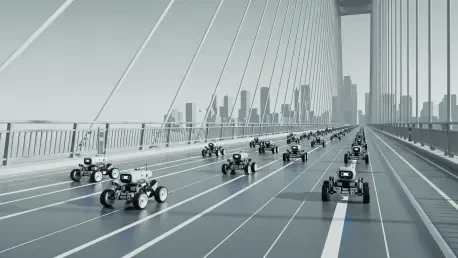

The rhythmic hum of small, six-wheeled rovers navigating cracked pavement has transformed from a quirky Silicon Valley experiment into the pulse of modern urban logistics. As e-commerce demand continues to shatter previous records, the global logistics landscape is undergoing a massive transformation where autonomous technology has finally reached a state of commercial maturity. At the center of this seismic shift is the sidewalk and last-mile delivery robot market, a sector that is specifically designed to solve the most expensive and complex segment of the entire shipping process. No longer confined to university campuses or cordoned-off testing zones, these machines are evolving into a core component of urban infrastructure as companies desperately seek scalable solutions to handle the rising density of digital orders. This transition marks the end of the pilot phase and the beginning of a decade where autonomous rovers will be as common as traditional post office trucks, fundamentally altering how city dwellers interact with the retail ecosystem on a daily basis.
Market valuations suggest that we are entering an era of explosive growth, with the industry expected to jump from approximately $1 billion in 2026 to over $20 billion by 2036. This significant growth rate reflects a worldwide push to address the inherent inefficiencies of the last-mile problem, where traditional delivery vans struggle with the high costs associated with short-distance, high-frequency trips. Low-speed autonomous robots offer a scalable and cost-effective alternative that fits perfectly within the existing urban fabric, navigating pedestrian pathways without adding to the vehicular congestion that plagues modern metropolises. As cities become more crowded and consumers demand nearly instant gratification for their online purchases, the urgency for these robotic solutions has intensified. Traditional couriers face diminishing returns in heavily congested areas due to parking difficulties and traffic delays, whereas compact robots can navigate sidewalks and residential zones with an ease that human-driven vehicles simply cannot replicate.
The Economic Engine of Autonomous Logistics
The financial foundation driving this market is the massive and unrelenting volume of retail e-commerce, which continues to hit new peaks annually. High order density is a fundamental requirement for robot delivery to be commercially viable, as it provides the necessary workload for autonomous fleets to operate at peak efficiency throughout the day. These robots thrive in environments where dozens or even hundreds of small orders are concentrated within a narrow geographic area, such as high-rise residential districts or sprawling suburban office parks. By focusing on these hyper-localized delivery loops, operators can minimize the idle time of their assets and maximize the number of successful deliveries per hour. This shift represents a fundamental change in how goods move through the final stage of the delivery chain, moving away from the large-hub-and-spoke model toward a more decentralized, granular approach that prioritizes speed and local availability over long-haul consolidation.
Success in this sector depends heavily on the mastery of fleet economics, which involves the complex management of charging cycles, remote oversight, and sophisticated dispatching algorithms. Because these robots represent significant capital-intensive assets, they must remain in near-constant motion with paid payloads to generate a sufficient return on investment for their operators. Efficient logistics platforms can now assign suitable trips to robots based on their current battery levels and physical proximity to a merchant without disrupting the overall user experience. The market is rapidly moving toward a frictionless model where the consumer may not even realize a robot is handling their order until it arrives at their doorstep. By integrating directly into existing delivery applications used by millions, these machines provide a reliable and consistent service that feels like a natural extension of the digital shopping experience. This deep integration ensures that the transition to autonomous delivery is driven by actual consumer convenience rather than just the novelty of seeing a machine on the sidewalk.
Hardware Evolution and the Rise of Intelligent Software
Sidewalk rovers are expected to maintain the largest share of the last-mile market because they are designed specifically for neighborhood-level transit and pedestrian-speed interactions. Unlike larger autonomous vehicles that must navigate complex traffic laws and high-speed multi-lane roads, these units operate within a much safer and more predictable environment. Their small size and low mass allow them to navigate curbs, avoid unexpected obstacles, and traverse crowded sidewalks without creating significant safety hazards for the general public. While the hardware itself currently makes up a large portion of the initial market cost, the long-term value is increasingly shifting toward the software stacks and fleet management operations that allow these machines to function as a cohesive unit. Sophisticated sensors such as solid-state LiDAR and high-resolution stereoscopic cameras are necessary for precise navigation, but the true intelligence lies in the neural networks that allow for rapid scaling across different urban topographies.
Software that enables a single human operator to supervise multiple robots simultaneously is the primary key to bringing the cost of delivery down to levels that human-based gig work can no longer compete with. Hardware must also be exceptionally rugged to survive diverse weather conditions, ranging from the intense, direct heat of desert climates to the freezing snow and salt-covered sidewalks of northern cities. As manufacturing processes stabilize and the costs for high-end sensors continue to drop due to economies of scale, these rovers will become a ubiquitous sight in both suburban neighborhoods and dense urban residential areas. The focus in the industry has shifted from simply proving that a robot can move from point A to point B without crashing toward perfecting the underlying software that keeps a massive fleet running smoothly with minimal human intervention. This software-first approach allows for rapid over-the-air updates that improve the fleet’s collective intelligence every time a single robot encounters a new type of obstacle or environmental challenge.
Specialized Use Cases in the Modern Retail Market
Food delivery stands out as the lead application for autonomous robots, accounting for a significant portion of the current market activity and venture capital investment. This sector is particularly well-suited for robots because it features highly predictable peak times, such as the lunch and dinner rushes, and requires very short delivery windows to maintain food quality. Fleet managers can easily schedule robot availability and charging cycles around these high-demand periods to ensure that they have the maximum number of units available when order volume spikes. Furthermore, the specialized nature of food delivery allows for the development of purpose-built robot interiors that feature active heating or cooling elements. These compartments ensure that a pizza remains at the ideal temperature or that a pint of ice cream does not melt during the transit process, providing a level of quality control that is often difficult to guarantee with traditional bicycle or scooter couriers.
Grocery delivery represents another major use case that benefits immensely from the unique capabilities of autonomous rovers, especially as more consumers move toward small-batch, frequent shopping habits. These machines often feature secure, temperature-controlled compartments that protect perishables and fragile items like eggs or glass bottles better than a traditional delivery bag. In markets with high population density, these robots can handle a constant stream of short-distance grocery orders, acting as a bridge between local dark stores and residential buildings. The ability to carry sensitive or heavy items securely makes robots a superior alternative for many retail tasks that were previously limited by the physical strength or vehicle capacity of a human courier. As mobile shopping for daily essentials becomes the standard behavior for the modern consumer, robots provide a reliable and cost-effective way to get those items to the doorstep within minutes of the order being placed, reinforcing the shift toward on-demand living.
Global Adoption and Regional Legislative Frameworks
The United States currently serves as one of the primary global laboratories for autonomous delivery, driven by high-profile partnerships between robot developers and major nationwide delivery platforms. Growth in this region is supported by a pragmatic city-by-city approval process and specific state-level legislation that sets clear rules for robot speed, weight limits, and insurance requirements. These frameworks provide a crucial legal blueprint that many other municipalities around the world are now studying and following to create their own local ordinances. By establishing clear boundaries for where and how these robots can operate, local governments are encouraging innovation while ensuring that pedestrian safety remains a top priority. This legislative clarity has allowed companies to move from small, controlled pilot programs to large-scale deployments that cover entire zip codes, proving that the technology can coexist with humans in a variety of social and physical environments.
South Korea represents another ideal environment for the proliferation of sidewalk robots due to its extreme population density and highly advanced mobile-first culture. The prevalence of massive apartment complexes and compact business districts allows robots to operate with almost no downtime, moving from one delivery to the next within a very small geographic footprint. Government data in the region shows a steady and significant rise in food-service transactions, ensuring a consistent and growing demand for autonomous solutions that can bypass the heavy road traffic found in cities like Seoul. In other regions, such as Northern Europe and certain parts of Russia, technical innovations are focused on allowing robots to operate reliably in harsh winter climates. Companies in these areas have developed rugged designs featuring specialized treads and heated sensor arrays that can navigate deep snow and slippery ice. This geographic diversity proves that the technology is highly adaptable and can be tailored to meet the specific environmental and social needs of different global markets.
Competitive Strategy and the Drive Toward Mass Production
Pioneering companies like Starship Technologies have already completed millions of successful commercial deliveries, proving beyond any doubt the scalability of the sidewalk rover format. Their strategy focuses on achieving high-volume, neighborhood-level service through deep integration with popular food delivery apps and university meal programs. This helps move the technology away from being perceived as a campus gimmick and firmly into the realm of mainstream urban utility that people depend on for their daily needs. By accumulating millions of miles of real-world operational data, these early leaders have a significant advantage in training their machine learning models to handle edge cases that newer entrants may not yet anticipate. This data-driven approach to safety and efficiency is what separates the established players from the newcomers in an increasingly crowded and competitive marketplace where reliability is the most important metric for success.
Other major players, such as Serve Robotics, have focused their efforts on mass production and rapid deployment in major metropolitan hubs where the demand for delivery is highest. By putting thousands of units into active service, they are demonstrating that the manufacturing supply chain for these complex machines is now mature and capable of supporting global expansion. This move toward mass production is essential for bringing down the cost per unit, which in turn allows for lower delivery fees for the end consumer and higher margins for the operators. Established delivery platforms are also getting involved by developing their own in-house hardware or forming exclusive partnerships with manufacturers to gain a competitive edge. By controlling the entire delivery stack, from the user-facing app to the physical robot itself, these companies can optimize every single step of the process for speed and cost. This competitive environment encourages rapid technological innovation and ensures that the hardware continues to improve in terms of battery life, navigation precision, and public safety features.
Critical Drivers and the Challenge of Sidewalk Friction
The primary driver for the widespread adoption of delivery robots is the potential for significant long-term cost savings over human couriers who are subject to variable wages and labor shortages. Robots offer a predictable, 24/7 labor source that is not subject to the same economic pressures or rising wages that currently affect the human gig economy. When a robot can complete a delivery for several dollars less than a person while maintaining a higher degree of consistency, the commercial incentive for businesses to switch becomes impossible to ignore. Additionally, environmental goals play a significant role in this transition, as cities look for ways to replace gas-powered delivery vans with small, electric alternatives that have a much smaller carbon footprint. These robots help municipalities meet their sustainability targets by reducing local tailpipe emissions and easing the traffic congestion caused by double-parked delivery trucks on busy city streets.
However, the industry must still successfully navigate the concept of sidewalk friction, where robots must share limited public space with pedestrians, pets, and children. Public acceptance is absolutely vital for the long-term viability of this technology, and a single high-profile accident or a series of sidewalk blockages can lead to restrictive local laws that could stifle growth. Companies must prove continuously that their machines can navigate complex social spaces safely and respectfully to maintain their social license to operate in public areas. This involves not only technical safety but also social etiquette, such as a robot yielding to a person with a stroller or moving out of the way for an elderly pedestrian. Maintaining this balance between operational efficiency and social harmony is perhaps the greatest non-technical challenge the industry faces as it attempts to move into more crowded and diverse urban environments across the globe.
Technical Milestones and Global Fleet Integration
Recent watershed moments have signaled that the market is finally ready to scale globally after years of research and localized testing. Major partnerships between international food delivery apps and robot manufacturers have brought autonomous delivery options to millions of new users who previously only had access to human couriers. These high-level collaborations prove that the technology is no longer in a testing phase but is ready for widespread, everyday commercial use in some of the busiest cities in the world. Reaching manufacturing milestones, such as the deployment of a thousand robots by a single firm within a single quarter, shows that the supply chain is finally catching up to the massive global demand. This marks the definitive transition from hand-built prototypes to mass-produced assets that can be managed as a fleet with the same level of professional oversight as an airline or a shipping company.
Advancements in full-stack autonomy now allow these robots to handle significantly more complex urban environments with far less human intervention than was possible even just a few years ago. By utilizing the same types of advanced perception and mapping technology found in autonomous cars, robots can now react more intelligently to dynamic obstacles and changing road conditions. This reduces the need for expensive remote assistance and further lowers the operational costs for fleet owners, making the business model even more attractive to investors and retail partners. The integration of 5G and early 6G connectivity has also played a crucial role, providing the low-latency communication needed for real-time monitoring and emergency overrides. As these technical barriers continue to fall, the focus of the industry is shifting toward optimizing the life cycle of the robots, including recycling programs for batteries and modular designs that allow for easy repairs and upgrades in the field.
Strategic Maturity and the Long-Term Urban Outlook
The market is currently moving past the initial pilot phase and into a period where long-term profitability and operational dependability are the top priorities for all major stakeholders. Industry experts emphasize that choosing the right delivery routes, specifically those with optimal sidewalk widths and high order density, is now more important than the specific nuances of the hardware itself. Success in this new phase of the industry will be defined by how well a company can manage the daily logistics and maintenance of a live fleet of thousands of robots operating in different time zones. A major future trend involves inter-peak utilization, where robots are programmed to handle different types of tasks throughout the day to ensure they stay busy and generate revenue during traditional downtime. A single robot might deliver morning coffee to commuters, move small parcels between office buildings in the afternoon, and bring hot dinners to suburban families in the evening.
By 2036, the presence of delivery rovers on suburban sidewalks and in urban centers will likely be as common and unremarkable as mailboxes or streetlamps. The companies that emerge as the winners in this space will be those that successfully bridge the gap between digital ordering systems and the messy, unpredictable physical world of the city. As costs continue to decline and the underlying technology improves, these robots will fundamentally redefine how goods are moved and consumed in the modern world. The integration of these machines into the urban fabric represents a significant step toward the creation of truly smart cities where logistics are silent, invisible, and highly efficient. Ultimately, the success of sidewalk robots will be measured by their ability to become an essential, background part of the local economy, providing a service so reliable that it becomes a standard expectation for consumers everywhere.
Actionable Insights for the Autonomous Transition
The transition to autonomous last-mile delivery required a multi-faceted approach that balanced technical innovation with rigorous community engagement. Stakeholders recognized that the most successful deployments occurred in cities where local governments and technology firms collaborated early to establish clear operating zones and safety protocols. Those organizations that prioritized the development of robust, fail-safe software systems found themselves better equipped to handle the unpredictable nature of pedestrian environments than those who focused solely on hardware aesthetics. The industry moved toward a model of transparency, where data sharing between robot operators and city planners helped to optimize traffic flow and identify infrastructure needs, such as the repair of broken sidewalks or the installation of more accessible ramps.
Investors and logistical planners learned that the long-term viability of these fleets depended on more than just the initial purchase price of the robots. They discovered that the true cost of operation was tied to the efficiency of the charging infrastructure and the longevity of the battery systems used in varied climates. To mitigate risks, many companies adopted modular maintenance programs that allowed for quick hardware swaps in the field, minimizing downtime during peak delivery hours. Moving forward, the focus shifted toward expanding these services into underserved areas, proving that autonomous delivery could be a tool for increasing accessibility rather than just a luxury for affluent neighborhoods. By focusing on these practical, operational realities, the industry secured its place as a permanent fixture in the global shipping landscape.