
Global supply chains are currently navigating an unprecedented metamorphosis as they move away from manual labor toward sophisticated, intelligent systems that define the modern logistics landscape. This evolution is driven by a market for automated material handling equipment that is projected to reach a staggering $86.1 billion by 2036, maintaining a robust annual growth rate of 7.6 percent. Such a massive financial trajectory suggests that the adoption of high-tech robotics and integrated automation is no longer a luxury reserved for industry giants but has become a baseline requirement for survival in a hyper-competitive global economy. The reliance on legacy processes is rapidly fading as organizations recognize the necessity of scalability and speed. This shift is not merely about replacing one tool with another; it represents a fundamental reimagining of how goods move from production lines to the hands of consumers. As the industry matures, the integration of these technologies creates a framework for a more resilient supply chain.
Consumer Demands: Driving the Warehouse Evolution
The exponential rise of digital commerce has fundamentally altered expectations regarding the speed and accuracy of order fulfillment in every corner of the globe. Consumers now anticipate a near-instantaneous transition from the online checkout screen to their front doorstep, placing immense pressure on distribution networks to perform without error. Traditional warehouse structures, designed for bulk shipments and predictable retail cycles, often struggle to manage the high volume of diverse individual orders that define the modern market. This mismatch has necessitated a transition toward automated systems that can handle the complexity of unit-level picking and packing at a scale previously thought impossible. To remain viable, logistics providers are compelled to overhaul their operational workflows, ensuring that every movement within the facility is tracked and optimized for maximum throughput. This demand for efficiency has turned the logistics sector into a laboratory for technological experimentation.
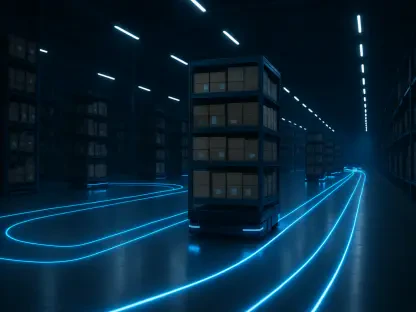
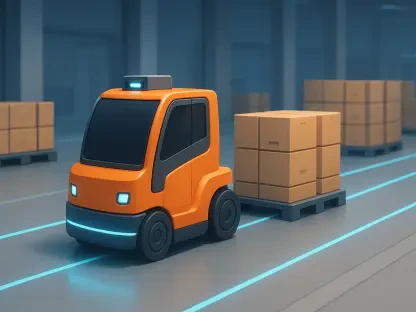
To address these intensifying requirements, modern facilities are increasingly deploying Automated Storage and Retrieval Systems that allow for significant density improvements. By utilizing vertical space that was once inaccessible to manual labor, warehouses can store vast quantities of inventory without expanding their physical footprint. This architectural shift is complemented by the widespread adoption of Autonomous Mobile Robots, which navigate dynamic floor environments using advanced sensor arrays and real-time mapping algorithms. Unlike fixed conveyor systems, these mobile units provide the flexibility needed to adjust to seasonal spikes or changes in product dimensions without requiring expensive infrastructure modifications. The synergy between high-density storage and agile robotic fleets enables a level of precision that eliminates the common bottlenecks found in manual sorting. Consequently, the warehouse of the present is characterized by a seamless flow of goods where technology handles the physical burden of movement.
Labor Realities: Bridging Gaps Through Collaborative Systems
Discussions surrounding the rise of automation have historically centered on the potential displacement of human workers, yet the current reality paints a different picture. The logistics industry is currently facing persistent labor shortages and high employee turnover rates that make it nearly impossible to sustain operations using manual methods alone. Warehouse environments are often physically demanding, requiring repetitive tasks that lead to fatigue and increased risk of injury over long shifts. By introducing robotic assistants to handle the most strenuous aspects of the job, companies are finding a way to stabilize their workforce rather than replace it entirely. Machines take over the heavy lifting and long-distance walking, which allows the existing staff to focus on tasks that require human judgment and dexterity. This collaborative approach helps to mitigate the impact of a shrinking labor pool while simultaneously improving the overall quality of life for those working on the warehouse floor.
As machines take over routine operations, the requirement for a new set of professional skills has become one of the most urgent priorities for logistics management. This transition is moving the workforce into roles focused on technical oversight, robotics maintenance, and data interpretation, which offers a path toward more sustainable career growth. Organizations are investing heavily in upskilling programs to ensure that their employees can manage the complex software systems that orchestrate robotic movements. The demand for data analysts who can decode the massive amounts of information generated by automated sensors has never been higher, as these insights are crucial for ongoing process improvement. Furthermore, the presence of robotics improves workplace safety by removing humans from hazardous environments, such as high-reach storage areas or cold-storage zones. This shift toward technical proficiency ensures that the human element remains central to the logistics chain, even as mechanical execution becomes autonomous.
Implementation Challenges: Navigating Costs and Legacy Infrastructure
Despite the undeniable advantages of modern technology, the significant capital expenditure required for full-scale automation remains a formidable barrier for many mid-sized enterprises. To circumvent these high initial costs, a new economic model known as Robotics-as-a-Service has gained substantial traction within the industry. This subscription-based approach allows businesses to lease the necessary hardware and software, effectively turning a major capital investment into a manageable operational expense. By lowering the financial entry point, smaller players can now access the same high-level efficiency tools that were previously reserved for multi-billion-dollar corporations. This democratization of technology ensures a more level playing field where innovation is driven by operational excellence rather than just the size of a company’s budget. As more providers enter the leasing market, the competitive pressure is likely to continue driving down costs and improving the accessibility of these advanced logistics solutions.
Beyond the financial hurdles, many organizations must contend with the physical and digital limitations of existing facilities that were built before the age of automation. Retrofitting an older warehouse involves more than just buying robots; it requires the complex integration of modern warehouse execution software with legacy inventory systems that may be decades old. This technical gap has fueled a surge in the demand for specialized system integrators who possess the expertise to bridge the divide between old-school hardware and new-school intelligence. These professionals focus on creating a unified digital environment where information flows seamlessly between the physical robots and the enterprise resource planning software. The challenge of physical space also persists, as older floor plans may need significant modifications to accommodate the charging stations and navigation paths required by autonomous fleets. Navigating these constraints requires a meticulous strategy that balances the need for modernization with practicalities.
Operational Intelligence: The Role of AI and Sustainability
The current phase of the logistics revolution is characterized by a shift in focus from the physical capabilities of hardware to the transformative power of data. Artificial intelligence and machine learning are being utilized to create predictive maintenance schedules that prevent equipment failure before it can disrupt the supply chain. One of the most significant advancements in this area is the use of digital twins, which are virtual replicas of physical warehouses that allow managers to simulate various operational scenarios. By testing new layouts or different robotic configurations in a risk-free digital environment, companies can optimize their processes without stopping actual production. This capability allows for rapid experimentation and provides a level of foresight that was previously impossible to achieve. As these AI systems become more sophisticated, they will increasingly take on the role of autonomous decision-makers, further reducing the need for constant human intervention.
The transformation of the logistics sector represented a definitive shift that reconciled human potential with mechanical precision to meet global demands. Stakeholders prioritized the adoption of open-source robotics standards and cross-platform software to ensure that disparate systems could communicate effectively across the entire supply chain. Decisions were made to invest in a diverse array of automated tools which stabilized supply chains during periods of extreme volatility. Organizations successfully navigated the transition by prioritizing upskilling initiatives that transformed the workforce into a body of specialists capable of managing AI-driven workflows. These strategic moves allowed for the implementation of predictive analytics as a standard tool for risk management rather than a reactive measure. By establishing these modular and scalable systems, businesses ensured they remained relevant in an increasingly digital marketplace. This foundational work successfully prepared the industry for even more complex, self-optimizing networks.