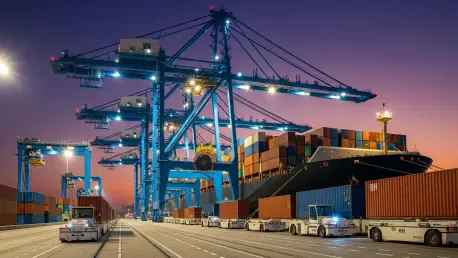

The global rhythm of commerce pulses through a silent network of massive ships and humming cargo jets that ensure a morning coffee or a new smartphone arrives exactly when promised. Modern life relies on this complex web of movement that most people only notice when a package is late or a retail shelf sits empty. Every item in a local grocery store or on a digital storefront represents a triumph of coordination, traveling across vast oceans and guarded borders through an increasingly sophisticated network. This sector no longer merely concerns moving crates; it has become the fundamental backbone of international commerce, currently undergoing a transformation that will redefine how the world handles physical goods for decades to come.
The sophistication of this network depends on a seamless integration of technology and physical labor. As global trade routes become more congested and consumer expectations for speed reach an all-time high, the industry is forced to innovate at a record pace. The transition from manual logs and simple shipping containers to data-driven hubs has turned logistics into a high-stakes arena where efficiency determines the survival of global brands. It is an industry that operates in the shadows, yet its health remains the most accurate barometer for the stability and growth of the global economy.
Moving Beyond the Delivery Box: The Invisible Force Powering Global Trade
Logistics has evolved from a back-office function into a strategic powerhouse that defines the competitive edge of modern corporations. In the past, shipping was viewed as a necessary cost of doing business, but it is now recognized as a critical component of customer experience and brand loyalty. The invisible force powering global trade is no longer just about the physical box but the data and intelligence that surround it. This shift requires a level of coordination that spans continents, involving thousands of stakeholders who must communicate in real time to prevent the smallest delay from cascading into a global supply chain crisis.
Furthermore, the complexity of moving goods across borders has increased as geopolitical factors and trade regulations become more intricate. Navigating this landscape requires more than just transport equipment; it demands a deep understanding of international law, customs brokerage, and risk management. As the backbone of commerce, the logistics sector must remain agile, adapting to fluctuating fuel prices and shifting trade alliances. This resilience ensures that even when the world faces uncertainty, the flow of essential goods, from pharmaceuticals to raw materials, remains uninterrupted and reliable.
Mapping the $24 Billion Growth: Why the Logistics Sector Is Surging
The freight and logistics market is currently on a path of robust expansion, moving from its valuation of $19.09 billion in 2026 toward a projected $24.46 billion by 2030. This steady 6.4% compound annual growth rate is fueled by a mix of historical trade activities and the high-speed demands of the modern era. As manufacturing output increases globally, the industry must scale its infrastructure to accommodate a massive influx of raw materials and finished products. This growth represents more than just higher volume; it reflects a fundamental shift in how value is created and captured within the global supply chain.
Several factors contribute to this financial surge, primarily the industrialization of emerging markets and the continued resilience of global manufacturing hubs. As production centers move and diversify, the routes required to move goods become more complex, necessitating larger investments in port facilities, rail networks, and specialized trucking fleets. This expansion is also a response to the increasing value of the goods being transported, which now requires higher levels of security, temperature control, and insurance. The market is not just growing larger; it is becoming more specialized and more indispensable to global prosperity.
The Evolution of Demand: E-commerce, 3PL Services, and Market Consolidation
The explosive growth of online shopping has forced a radical rethink of delivery networks, moving away from bulk shipments toward rapid, individual fulfillment. Consumers now expect near-instant gratification, which has shortened the acceptable delivery window from weeks to mere hours in some urban centers. To manage this complexity, many companies are turning to third-party logistics (3PL) providers to handle their supply chain needs, allowing them to focus on their core business while reducing overhead. These providers offer the scale and expertise necessary to navigate the “last mile,” which remains the most expensive part of the delivery process.
Simultaneously, industry giants like United Parcel Service (UPS), DHL International, and FedEx are engaging in strategic acquisitions to offer “one-stop-shop” solutions. By absorbing smaller, specialized firms, these behemoths ensure they can handle everything from standard parcels to specialized, oversized cargo that requires heavy-lift equipment. This consolidation trend is creating a landscape where a handful of global players manage the end-to-end movement of goods. This integration allows for a more cohesive response to global disruptions, providing a level of predictability and reliability that was previously impossible in a fragmented market.
A Digital Revolution: Modernizing the Supply Chain With Real-Time Data and AI
Technology is rapidly replacing manual processes, with digital freight booking platforms leading the charge toward total transparency. These innovations address long-standing inefficiencies by consolidating freight rates and tracking into a single interface, significantly reducing the time spent on paperwork and emails. Platforms like FreightJar have revolutionized how exporters interact with carriers, providing instant access to pricing and scheduling that once took days of negotiation. The future of the industry lies in autonomous logistics, where artificial intelligence and robotics optimize warehousing and transport to minimize human error.
The integration of artificial intelligence extends beyond simple automation; it involves predictive analytics that can anticipate demand surges or identify potential bottlenecks before they occur. By analyzing vast amounts of historical data, these systems allow logistics managers to reroute shipments in real time, ensuring that the supply chain remains fluid even under pressure. Additionally, “Cargo Value Financing” is emerging as a game-changer, merging logistics with financial support for exporters. This allows businesses to unlock capital tied up in transit, providing the liquidity necessary to fund further production and growth without waiting for a shipment to reach its destination.
Sustainability and Specialization: Examining Maersk’s Strategy and the Green Pivot
The industry is reaching a consensus that the future of logistics must be carbon-neutral to meet both regulatory requirements and consumer expectations. Companies are adopting “green logistics” by optimizing transport routes to improve load factors and utilizing electric vehicles for last-mile deliveries. The drive toward sustainability is no longer just a public relations exercise; it is a financial necessity as governments implement carbon taxes and shippers demand proof of environmental responsibility. Reducing the carbon footprint of a single container involves a myriad of small adjustments, from slower steaming for ocean vessels to the use of sustainable aviation fuel.
A prime example of this evolution is the A.P. Moller-Maersk Group, which recently expanded its capabilities through the acquisition of Martin Bencher Group. This move signaled a shift toward specialized project logistics that balances complex shipping needs with environmental responsibility. By handling non-containerized cargo—such as massive wind turbine blades or heavy industrial machinery—Maersk demonstrated how specialization and sustainability can coexist. This approach allows the company to serve the renewable energy sector more effectively, aligning its growth strategy with the global transition away from fossil fuels and proving that logistics can be a force for environmental good.
Navigating the Future: Actionable Strategies for Logistics Efficiency and Financial Integration
To succeed in this evolving landscape, businesses prioritized technological transparency and adopted a digital-first mentality to manage their inventory with precision. Successful organizations sought out logistics partners that offered integrated financial services, such as collateral-free financing, to support cash flow during transit. They understood that the integration of logistics and finance was the key to scaling operations in a volatile market. By leveraging these tools, companies reduced their exposure to risk and improved their ability to react to sudden changes in market demand or shipping costs.
Furthermore, the adoption of sustainability became a mandatory pillar of corporate strategy rather than an optional add-on. Companies implemented strategies to maximize cargo space and minimize fuel consumption, ensuring that their growth aligned with global environmental goals and the rapid-response requirements of the e-commerce economy. They also recognized that specialized logistics required a different set of skills and partnerships, leading to more collaborative efforts across the supply chain. Ultimately, the industry moved toward a model where data, ethics, and efficiency were inextricably linked, creating a more resilient and responsible global trade network.