
The global rail industry is currently grappling with the immense pressure of maintaining aging infrastructure while simultaneously meeting the rigorous demands of high-frequency modern logistics. The shift toward Unified Rail Infrastructure Management marks a definitive departure from the archaic, siloed methodologies that once dominated the sector. For decades, rail networks functioned through fragmented departments where engineering, finance, and operations maintained separate datasets, often leading to conflicting priorities and wasted resources. This review analyzes the current technological landscape, emphasizing how a “shared view” of interventions creates a centralized, data-driven decision environment. The integration of diverse data streams into a single source of truth is no longer a luxury but a functional requirement for any network aiming for long-term fiscal and operational viability.
Foundations of Integrated Rail Infrastructure Systems
Modern rail management relies on the fundamental principle of data convergence, where disparate information streams are unified to provide a holistic view of the network. This technology emerged as a response to the “data silo” problem, where track condition reports were disconnected from budget forecasts and availability schedules. By implementing a common architectural framework, rail organizations can now synchronize their technical requirements with high-level strategic goals. This evolution represents a transition from descriptive analytics—knowing what happened—to prescriptive analytics, which suggests the best course of action based on a multitude of real-time variables.
The relevance of this integration in the broader technological landscape cannot be overstated. In an era where precision is paramount, the ability to view the rail network as a single, living organism rather than a collection of isolated parts is revolutionary. Unlike traditional project management tools that treat rail work as a series of generic tasks, unified systems are designed to respect the unique linear nature of rail assets. This specific focus on linear topology allows the technology to account for the spatial dependencies that define rail travel, ensuring that maintenance in one sector does not inadvertently paralyze the logistics of another.
Primary Components of a Unified Planning Architecture
Centralized Data Warehousing and Asset Health Tracking
At the core of any unified system lies a robust data store that aggregates structured site assessments with degradation metrics. This component is far more than a simple database; it serves as a dynamic intelligence layer that interprets raw sensor data and inspection notes. By utilizing sophisticated algorithms to track asset health, the system can predict exactly when a rail section will reach its failure threshold. This capability shifts the paradigm from reactive maintenance, which is both expensive and disruptive, to a proactive renewal strategy.
Transitioning to this model allows planners to schedule interventions at the exact moment they provide the most value. It eliminates the “over-maintenance” of healthy assets while preventing the catastrophic failure of neglected ones. This differentiation is what sets specialized rail platforms apart from general infrastructure software. The ability to model the specific wear-and-tear patterns of different track types under varying load conditions provides a level of granularity that was previously impossible to achieve through manual observation or generic asset management.
Geospatial Mapping and Visual Network Context
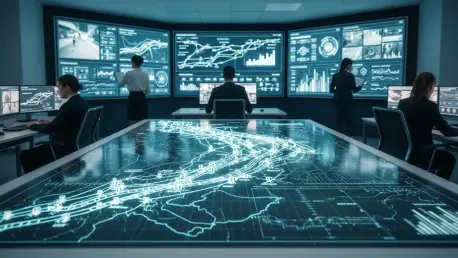
Geography is the defining characteristic of rail infrastructure, and spatial data provides the “live” view necessary for effective coordination. A unified architecture integrates geospatial mapping directly into the planning workflow, allowing stakeholders to see the physical context of every intervention. This visual representation is critical because it highlights the proximity of various work packages. When planners can see that three different projects are located within a five-mile radius, they can immediately identify opportunities for efficiency that a spreadsheet would obscure.
This visual context improves the understanding of intervention impacts on adjacent sections and overall traffic flow. For instance, a planned track renewal might require a specific access point that is also needed for a bridge repair nearby. By visualizing these requirements on a map, the system flags potential logistical conflicts before they occur on-site. This level of foresight is a significant improvement over traditional methods, where such conflicts were often only discovered during the execution phase, leading to costly delays and emergency rescheduling.
Integrated Financial and Logistical Modeling
The bridge between engineering needs and financial reality is perhaps the most critical feature of a unified system. By linking engineering requirements with cost projections and delivery assumptions, the platform ensures that every technical decision is grounded in economic feasibility. This integration eliminates the reconciliation bottlenecks that typically occur between finance and operations. In the past, finance teams might approve a budget based on outdated estimates, only for the operations team to find that the actual delivery costs had shifted due to changing logistical constraints.
Integrated modeling allows for real-time cost-benefit analysis of different planning scenarios. If a delivery assumption changes—for example, if the cost of specialized machinery increases—the system automatically updates the entire workbank to show the fiscal impact. This transparency allows for more defensible decision-making, as every project prioritization is backed by accurate, up-to-date financial data. It creates a culture of accountability where planners must justify their choices within the context of the total available budget and long-term network goals.
Emerging Trends in Rail Data Consolidation
The current trend in rail management is the move toward a “shared view” of interventions, where every stakeholder accesses the same real-time information. This shift is being driven by the adoption of specialized rail planning platforms that act as a single point of entry for all network data. These platforms are increasingly being integrated with business intelligence (BI) tools, allowing organizations to run complex simulations and “what-if” scenarios. This trend is fundamentally changing industry behavior, as it encourages cross-departmental collaboration rather than the competition for resources that characterized previous decades.
Another significant development is the standardization of data protocols across different rail operators and contractors. As the industry moves from 2026 to 2028, the push for interoperability is becoming a primary focus. By utilizing shared data standards, organizations can ensure that information flows seamlessly between different software modules and third-party applications. This openness is crucial for the adoption of more advanced analytics, as it provides a broader, more diverse data pool from which to draw insights and refine predictive models.
Real-World Applications and Sector Impact
In practice, unified management has transformed how passenger and freight rail networks optimize their work bundling. By grouping local packages of work together, organizations can maximize the productivity of every track access window. In many notable implementations, this approach has drastically reduced the frequency of track closures, which is a major win for service reliability. Instead of closing a line three times for three separate minor repairs, a unified plan allows all three repairs to be completed during a single, well-coordinated possession.
The impact on network reliability is profound. By minimizing service disruptions, rail operators can maintain higher levels of customer satisfaction and meet their contractual performance targets more consistently. Furthermore, the ability to bundle work reduces the total number of hours that staff and machinery are required to be on-site, leading to significant savings in labor and equipment costs. These efficiencies prove that the investment in unified management technology pays for itself through the reduction of operational overhead and the extension of asset life cycles.
Structural and Operational Barriers to Implementation
Despite the clear benefits, the path to full integration is often obstructed by legacy data silos and technical hurdles during system migration. Many rail organizations are still using decades-old databases that were never designed to communicate with modern platforms. Cleaning and migrating this data is a massive undertaking that requires significant time and technical expertise. Moreover, there is often a cultural resistance to the transparency that unified systems bring. Departments that are used to working in isolation may feel threatened by a system that exposes their planning gaps or inefficiencies to the rest of the organization.
Ongoing development efforts are focusing on creating standardized data protocols to mitigate these limitations. Technical experts are working on “middle-layer” solutions that can extract data from legacy systems and translate it into a format compatible with modern unified architectures. While these hurdles are significant, the industry-wide consensus is that the cost of maintaining the status quo—with its inherent inefficiencies and risks—is far higher than the cost of overcoming these barriers. The transition is difficult, but it is a necessary step toward the modernization of global rail infrastructure.
The Future of Autonomous Rail Management
Looking ahead, the trajectory of rail management is moving toward predictive analytics and AI-driven intervention forecasting. The next generation of systems will likely incorporate autonomous resource allocation, where the software not only identifies the need for an intervention but also suggests the optimal timing and crew assignment. This will allow for an even higher level of precision in maintenance scheduling, as the AI can account for thousands of variables—from weather patterns to fluctuating material costs—simultaneously.
Potential breakthroughs in real-time sensor integration will also play a major role in the future of the industry. As more assets are equipped with Internet of Things (IoT) devices, the “live” view of the network will become even more accurate. This continuous stream of data will feed directly into the unified planning architecture, allowing for instantaneous adjustments to the workbank. The long-term impact will be a global infrastructure network that is not only more reliable and safer but also significantly more sustainable due to the reduced waste of materials and energy.
Strategic Summary of Unified Rail Management
The transition to unified rail management represented a fundamental shift in how the industry approached its most valuable assets. By moving away from fragmented planning and toward a cohesive, data-driven environment, organizations successfully reduced their operational costs while enhancing the reliability of their networks. The integration of asset health, geospatial context, and financial modeling provided a level of transparency that was previously unattainable. This visibility allowed for more defensible decision-making and a more strategic allocation of capital, ensuring that every dollar spent contributed directly to the longevity of the infrastructure.
Ultimately, the verdict on unified management systems was overwhelmingly positive, as they proved to be the only viable solution for managing the complexity of modern rail networks. The technology moved beyond being a mere administrative tool and became a central driver of organizational performance. As the industry continued to evolve, those who embraced this integration found themselves better equipped to handle the challenges of increasing demand and aging infrastructure. The adoption of these systems laid the groundwork for a more efficient and sustainable future for global rail transportation.